Become the kind of leader complex times require.
We are living through a period of profound social, political, and environmental change. Leaders are increasingly being asked to navigate polarization, conflict, workplace tension, racial and social inequity, climate disruption, community trauma, and organizational uncertainty—all while trying to care for themselves and the people they lead.
Traditional leadership models often teach us how to manage problems.
This course invites you to understand the systems that create them.
Through the Radical Nature Framework, you will explore what natural systems can
teach us about:
Interdependence — understanding that people, communities, organizations, and ecosystems are connected.
Balance and homeostasis — recognizing what happens when systems become unsustainable and what is required to restore equilibrium.
Adaptation — developing the capacity to respond to changing conditions without losing your values or sense of self.
Regeneration — moving beyond simply maintaining broken systems toward practices that restore, renew, and create conditions for life.
Boundaries — understanding that healthy limits exist throughout nature and are essential to sustainable relationships and leadership.
Reciprocity — considering how relationships can move beyond extraction toward mutual benefit and care.
These aren't just concepts to study.
They become lenses you can use to lead.
Take this intro course as a primer for the full, 14 week, Nature Based Leadership Certification Program to become a nature-based transformational leader.
Earn 15 continuing education credits (CEU’s) to add to your skillset & portfolio
Build skills you can actually use.
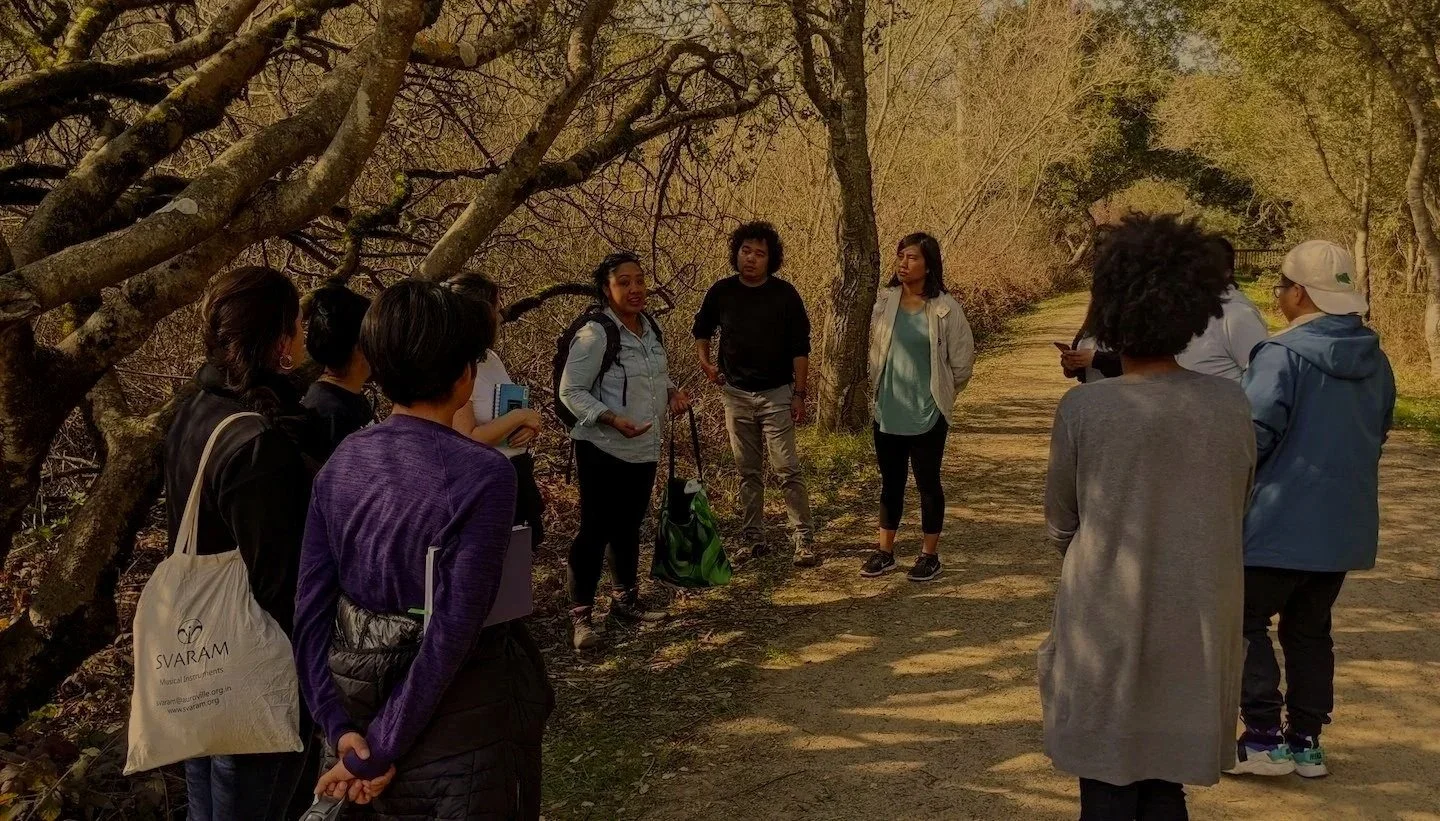
This course combines reflection, discussion, experiential learning, and practical application.
You'll explore:
Identity & Leadership
Understand how your identities, experiences, and relationship to nature shape the way you lead.
Systems & Social Justice
Examine how land, resources, relationships, and larger systems can reproduce inequity.
Conscious Relationships
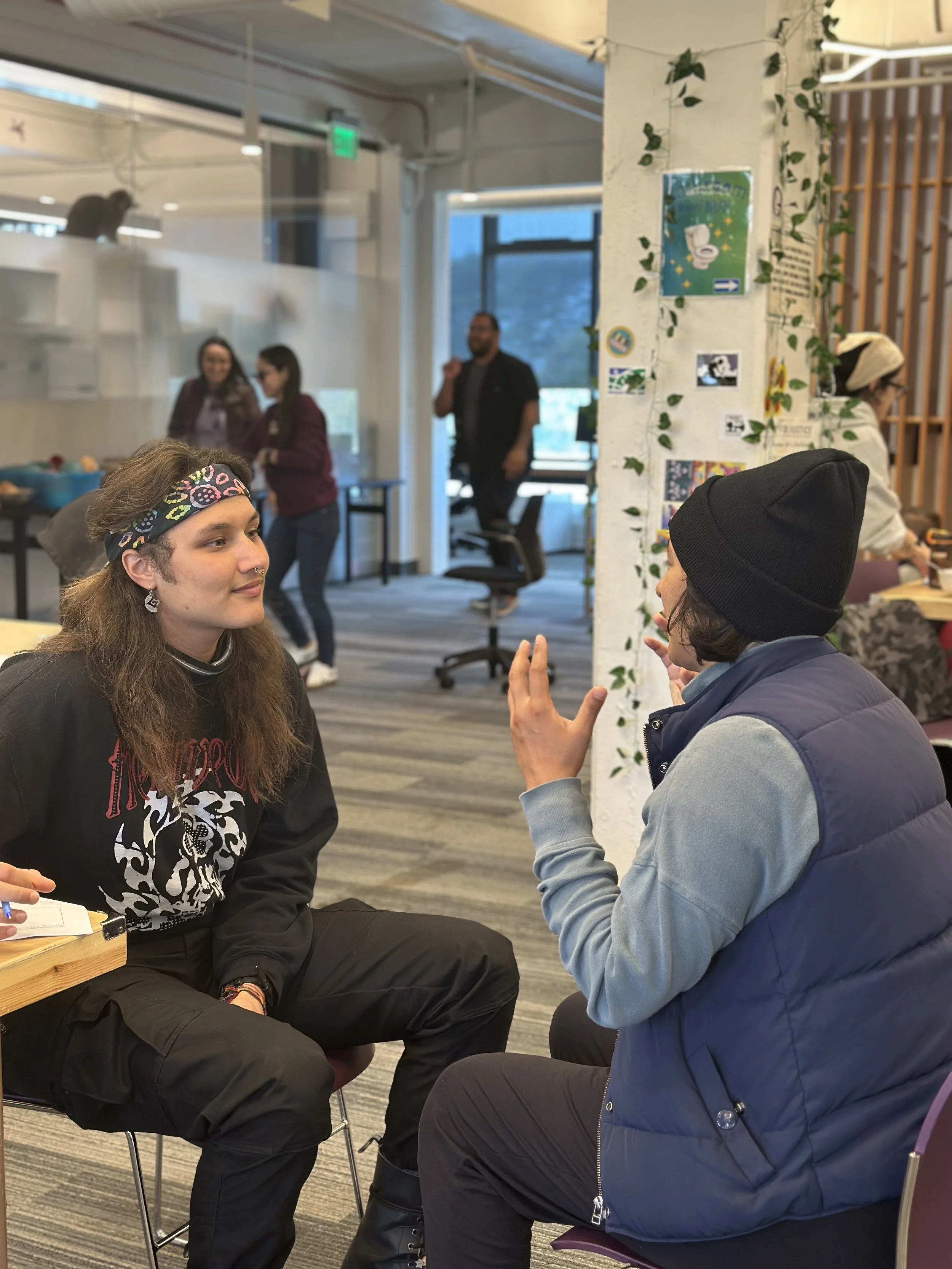
Develop skills for listening, communication, relationship-building, and navigating difficult conversations.
Restorative Accountability
Explore approaches that move beyond punishment and blame toward responsibility, repair, and relationship.
Embodied Leadership
Learn how presence, somatic awareness, rest, and wellness influence sustainable leadership.
Nature as a Guide
Apply patterns from natural systems to leadership, social change, and organizational practice.
This course is for you if...
You are a student, emerging leader, coach, organizer, educator, social worker, consultant, facilitator, or change agent who wants to:
Deepen your understanding of social justice
Strengthen your leadership skills
Work more effectively across difference
Develop systems-thinking skills
Explore the relationship between people, land, and society
Navigate conflict and political division with greater awareness
Bring ecological thinking into your professional practice
Lead social change without losing yourself in the process
No previous professional experience is required.
What you will walk away with
By the end of the course, you won't simply have learned new concepts.
You will have a new lens through which to see yourself, your work, your community, and the systems you are trying to change.
You will be able to:
Analyze intersecting identities and their influence on leadership.
Practice presence-based awareness in complex environments.
Articulate a leadership identity grounded in your values.
Apply whole-body and ecosystem-based approaches to problem-solving.
Use conscious language and communication practices.
Facilitate challenging conversations with greater awareness.
Apply restorative and relational approaches to conflict.
Recognize connections between ecological and social systems.
Develop leadership practices that support sustainability and collective well-being.
Identify a nature-based practice you can integrate into your own leadership.
Most importantly, you'll begin developing the capacity to ask a different question when facing a difficult problem:
What is this system teaching me—and what would a healthier system do differently?
What makes this different?
Most leadership programs teach you how to lead people.
Most social justice programs teach you how systems of inequity work.
Most sustainability programs teach you about environmental systems.
This course brings these perspectives together.
You'll explore what becomes possible when we understand people, communities, organizations, and ecosystems as interconnected systems.
Because the climate crisis and systemic oppression aren't isolated problems.
They are interconnected challenges that require interconnected thinking.
And the leaders of the future need new ways of seeing, relating, and responding.
“Active Listening was already a big part of my professional training. This felt of greater depth and a new perspective”
— Former Workshop Attendee
Meet Your Course Instructor
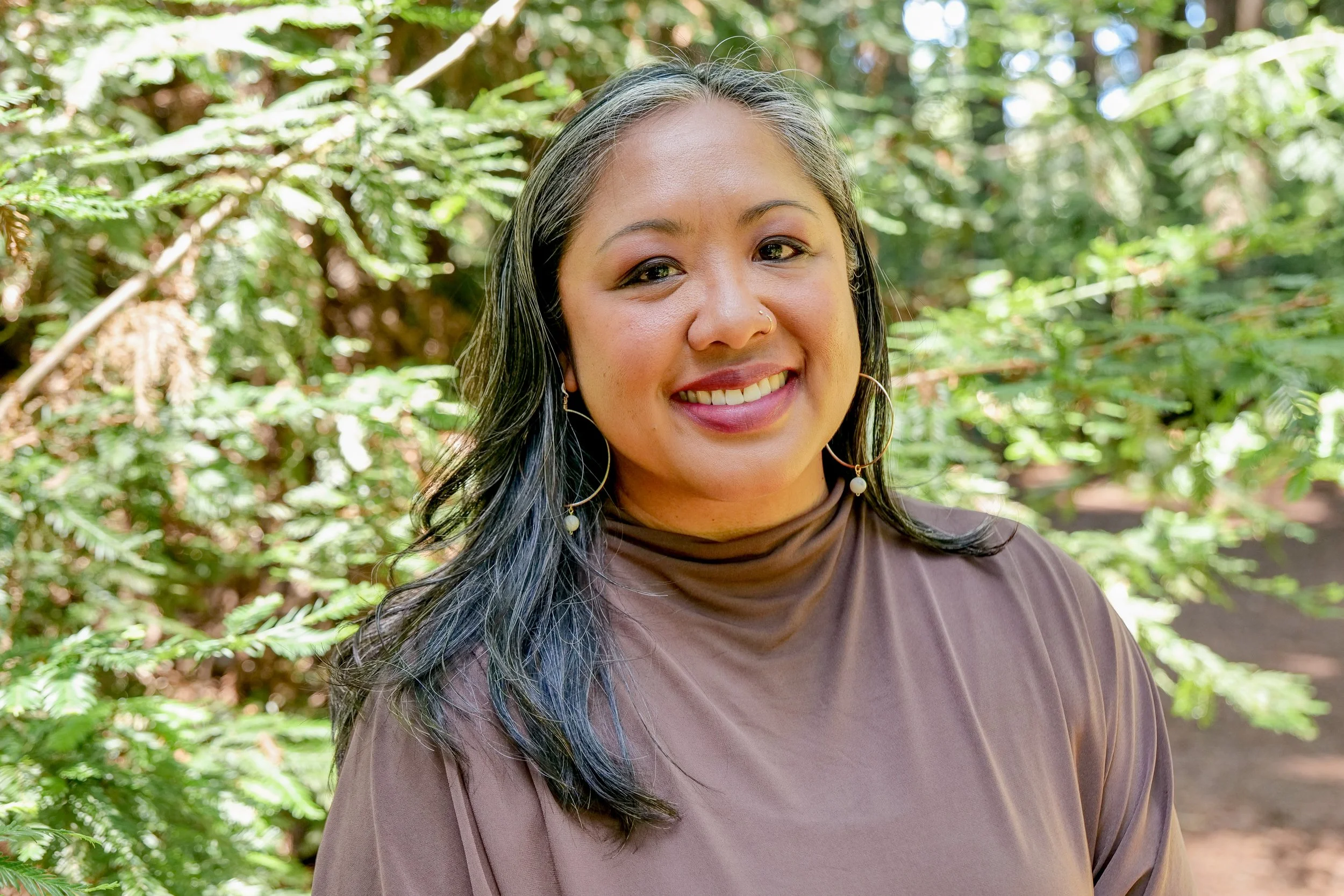
Raynelle Rino, CPC (ACC)
Principal Coach & Consultant
Rino Consulting Solutions
Nature-based coach & consultant, Raynelle began her career in the sciences
as an ecology field researcher then moved onto grassroots environmental
education and social justice organizing. Her love for nature and youth
development brought her to teach in unique settings like alternative high
schools, environmental justice neighborhoods, parks, and juvenile justice
facilities. Her personal journey through life up to now has carved a well-rounded
and powerful pathway with the support and guidance from her Spiritual Mentor, and Curandera, Tereza Iniguez-Flores.
In 2016 Raynelle started Rino Consulting Solutions, a nature-based consulting firm that provides coaching and consulting services for professionals and other businesses. Its mission is to support and inspire the leaders of today to live in the confidence of their identities as they move through a world in the midst of social, racial, and environmental transformation. Raynelle is a certified professional coach through Leadership That Works. Her "Hike It Out Coaching" Programs blend her science, environmental justice, and spiritual connection to nature by providing "Healing Hikes", where clients increase their capacity to create change with the support and guidance of the nature experience. To read more about the healing hike experience, read this feature in Outside Magazine
Course Modules
-
Society & Nature Identities
Spirituality/Multidimensional Identities
Fragmentation & Social Justice
-
Conscious Relationship Building
Relationship Building Tools
Restorative Accountability
-
Communication Skill - Active Listening
Coaching Skill - Empowering Questions
-
Somatic Healing
Reclaiming Identity - Ancestral Healing
Rest & Wellness
Teaching Methodology
This Extended Learning Course will be administered via virtual learning platform, Canvas. This individual course is completely self-study and self-paced. Completion of the course must be completed 6 months after enrollment to receive CEU’s. Student assessment will involve self-reflective assignments, such as journaling or video/audio-recorded submissions, evaluated against established learning rubrics. A required component of the course is the completion of peer coaching sessions outside of scheduled class time, reported on through assignment submissions. Students are responsible for coordinating the logistics and modality (e.g., telephone, video conference) of these required peer coaching engagements.