To Release, Be Resilient, and Embrace Hip-Hop

Kristi Davis
Student Conservation Association Regional Gift Officer &
Center for Diversity & the Environment Board Member
*Edited by Moira McEnespy
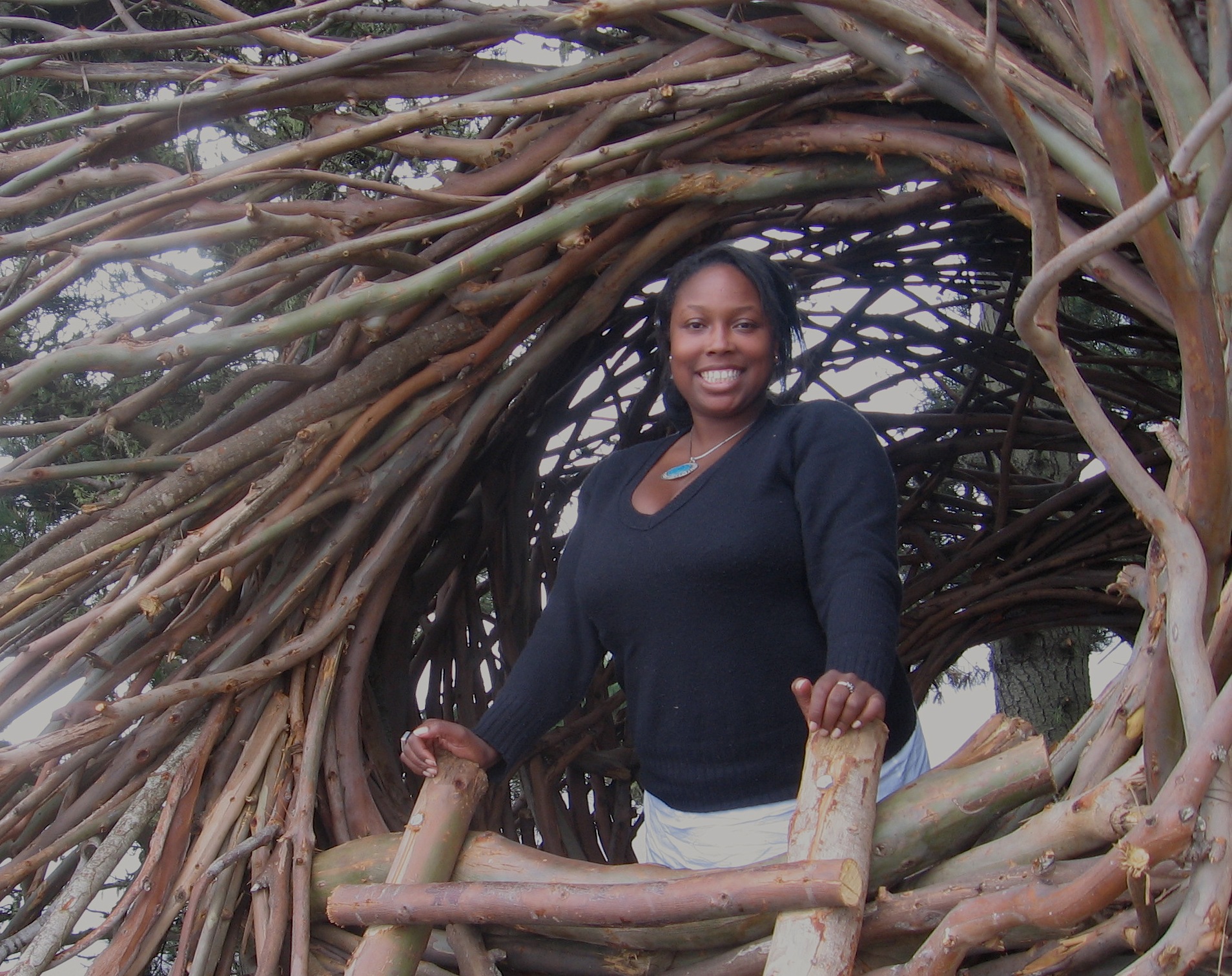
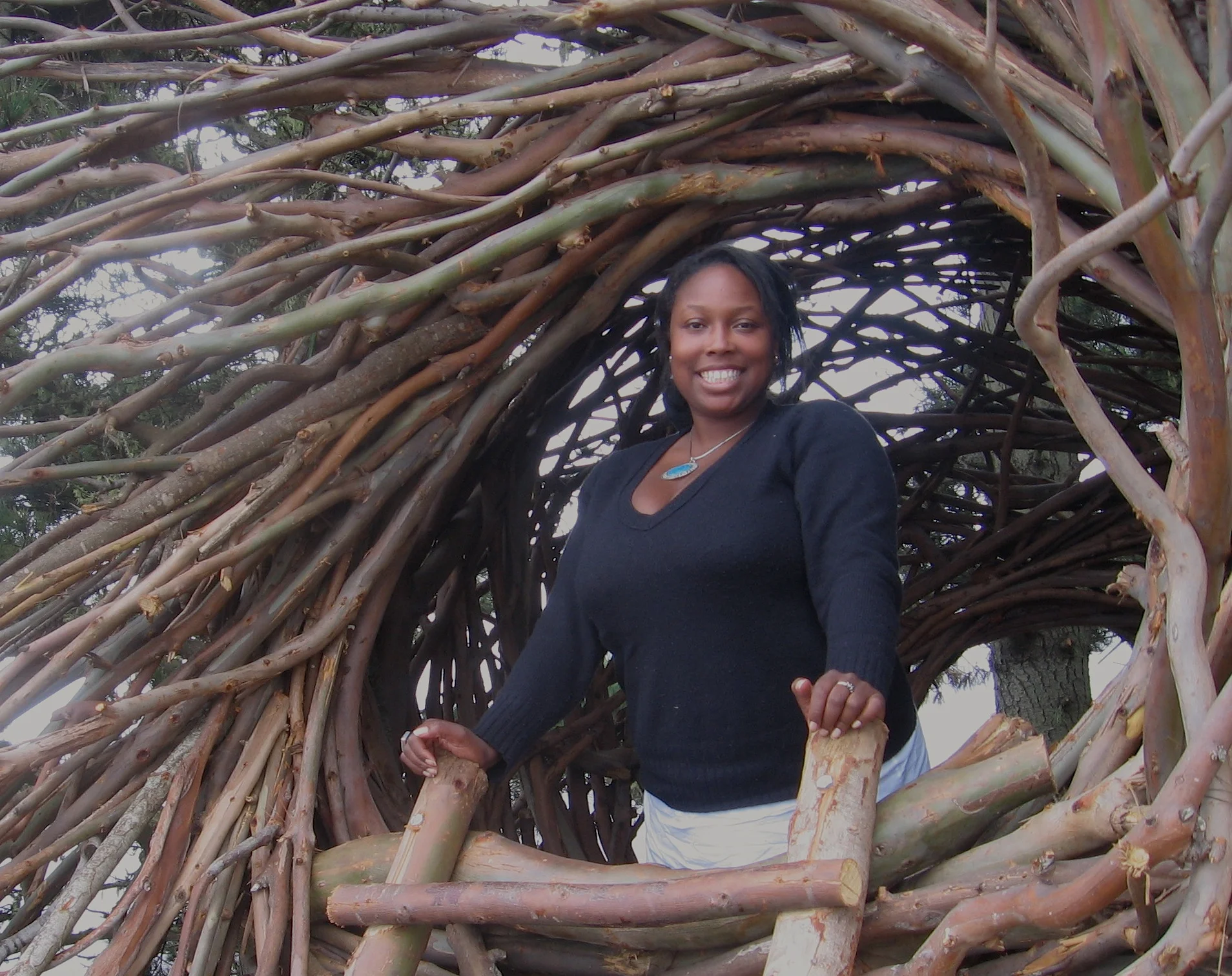
RR: I want to start by sharing how we got to this interview. We met through your attendance at the Environmental Educator Collaborative listening session at Lawrence Hall of Science. But being part of what feels like a small community or people of color in the environmental community, what interested me is knowing how you moved from being the Executive Director of a major California advocacy organization to what you’re doing today…I want to know your story.
Let’s start from the beginning. I found a profile of you on the internet naming you as a conservation heroine, or a “real mama grizzly.” Where did this initial interest in conservation come from? What inspired you to be interested in being outside and to make a career of it?
KD: Well, there was not one particular moment. There were a number of milestones. The first time I went fishing with my Dad and godfather, I was six years old and it was the early ‘80s…I had “ROOS” shoes with a quarter zipped in and a brown bomber jacket, and we went down the coast in Big Sur. Being in the car with the cooler and fishing equipment is a special memory. We literally went tromping through the marsh and I remember distinctly thinking, “Where am I?” Even though we were honestly probably only 45 minutes from house. I caught a fish that day, and still have a picture of me with my Dad and godfather and a big fish. I loved being outside in nature with my Dad. I was a “tomboy” and needed space. Growing up in the suburbs, it was outside that I could roller-skate and bike ride and run and play and jump and not be confined…I had the freedom to run and play.
Then I got to do it with friends. I grew up in Monterey, California and did not realize how privileged I was to grow up between the Pacific Ocean and lush forests. I joined the Girls Scouts (Troop 2014!) and we went to Big Sur or the mountains, went creek walking, roasted s’mores, set up tents, and learned about giant sequoias in the Santa Cruz mountains. I remember looking up and learning about constellations, never realizing the stars were so bright, and thought “this is awesome!” I wanted to duplicate these memories, so in high school I joined the Earth Club and the Science Club, and in my sophomore and junior years volunteered during spring break to be an assistant naturalist to lead 6th-grade science camp in the Santa Cruz Mountains. For some of these kids it was their first time to be outdoors. It was the late ‘80s, early ‘90s, the beginning of green conservation movement. Our goal was to reduce and reuse, and the kids did not realize how simple it was (we split a napkin each meal and by the end of the camp it seemed like we had saved enough to make a whole tree), how you can do one small thing to decrease consumption and it adds up.
Then I went to Mount Holyoke in the east coast for college. College was not hard academically, but it was hard socially to be a brown girl from California on the east coast. I had to acclimate culturally, and again, the outdoors was a place where I could just “release” and not have to figure out how to “read between the lines”…not have to think about anything but hiking the Appalachian trail, or the mechanics of snowboarding down a mountain.
Mount Holyoke is the oldest all-women college in the country, and was established as a “need-blind” school, meaning that if one had the academics, one was accepted, and then financial aid was discussed if needed. I went there because there was so much diversity; I met women from Somalia, Ethiopia, Japan, China, Massachusetts, Hawaii, women from all aspects of life. But then in my senior year, the school’s financial difficulties changed the financial aid system from “need blind” to “need-sensitive,” which meant prospective students’ finances came into play. I felt so strongly that it was not OK for students to be judged by financial capability that I stopped going to class, protested with other students and had sit-ins in academic buildings, on the main road into town, The Boston Globe came and interviewed us. And I almost did not graduate. I called my parents and explained, “Okay, I know you’ve spend hundreds and thousands of dollars, but here’s the deal... I just don’t think its fair that students are going to be judged based on their financial capacity because in all actuality that also means that it’s going to be based on their race.” So my parents were really proud of me and said, “We support you and we’re going to help you figure this out.”
The president held a campus-wide open house and I stood up and asked, “You know, this was founded on free education for women, who are we to deny women the access to education, which is how most women have brought themselves out of poverty and other situations they are in.”). In response, the president at that time said, “Well, I’m going to assume that you’re on financial aid and that that’s your concern…” In front of maybe, a thousand people I said, “Actually I’m not. My parents have worked 30+ years; my dad as a police officer and my mom as a Navy school accountant. They actually make just enough money that I don’t qualify for financial aid. Why would you assume I’m on financial aid?”. So in addition to advocating for free education access, there was also this interaction I had of, “you assumed this because I am black”. I’m positive that this is why this has happened. This became the starting point I started to see myself as an activist, to speak for the rights of women and the rights of the less advantaged and those who couldn’t speak for themselves.
The Fund for Public Interest Research approached me to become an activist, which gave me the opportunity to combine speaking for others with a love for the outdoors. Directly out of college, I drove cross-country from Massachusetts to California with my parents, then moved to the San Francisco Bay area and started canvassing door-to-door to raise awareness about clean air, clean water, and to raise money for those campaigns…a week later I was promoted to Campaign Director; one of five in Berkeley canvassing from Santa Rosa to San Jose. Doing this job, I realized how truly privileged I was to grow up in Monterey. I was talking about asthma, high infant mortality rates…talking to people and being in Point Richmond where the air smelled like oil and was murky bluish-green, talking to people who worked for big oil companies for 30 years. A lot of time people would say, “We get it, but this is our livelihood, and our kids have to eat and go to school”. I also learned about empathy as I watched people who were not truly affected give generously (of course there were also those who spit at our feet or called the police). I did this for almost two years, which is a long time in the canvassing business. Through these “boots on the ground” conversations, I realized that I had to be involved in this work no matter what.
I was 22 or 23 and was running the Berkeley and San Francisco canvassing offices, was singled out for an award out of the entire U.S. and had also piloted the very first national canvassing human rights campaign. Although I was getting tons of experience on the ground, I wasn’t learning how to run an organization. So I went to work for a for-profit organization, first as a research assistant and then as Director of Finance and Administration. I learned the ins and outs of business, and considered getting an MBA. It was such a good experience but there was no connection to the mission. Though I was making a lot of money, I went from fighting the good fight to talking about game theory and making as much profit as possible. So I volunteered.
I volunteered with the Bay Area Ridge Trail Council (BARTC) whose goal is a 350-mile trail around the ridge-tops of San Francisco. I experienced tons of government agencies coming together on a common cause and I realized had to get back into the nonprofit world. I applied to graduate school, went to work for Arriba Juntos (Upwards Together) to help young people find jobs, then for Women in Community Service (WICS). I loved the work, and got to do hands-on work directly with young people. Programs like the Treasure Island Job Corps taught skills like, how to dress for an interview, how to write a resume, etc… but a lot of kids did not have self confidence. So I decided to take a few young people out on a hike to teach them where they lived. This literally brought tears to my eyes. Kids born and raised in San Francisco or living on Treasure Island for years had no idea that just across the bridge is a beautiful State park, or that there are actually redwoods in Oakland! I was again trying to figure out how to empower young people through nature and conservation. A job at the Sierra Club Foundation enabled me to think big-picture and establish the “conservation and military program.” The idea was to take veterans returning from Afghanistan and Iraq into the outdoors as a place for meditation and relaxation, and to also take their kids. Most were brown faces, and I decided that was the work on wanted to focus on: creating space for communities of color.
I was always the one brown face growing up in Monterey, then private school, then college on the east coast. And I realized that if anything was going to change I had to be in position of power. I finished my masters at UCSF, and then had the privilege to become the Executive Director for the California Wilderness Coalition (CWC), an organization with a great reputation for change. The CWC’s mission is to create wilderness areas around California, but what makes it especially unique is its tactics.
The organization employed innovative advocacy methods; empowering, organizing and training local diverse (race, class, religion, etc) communities to become advocates and stewards of the land, something very special, something CWC became known for, and something I am very proud of.
RR: You have a wealth of experience and have had opportunities to jump into many positions…and amazingly each position seemed to inform your next step.
KD: Yes. Although my resume looks scattered, each move was always done purposefully and my end goal was always to become the Executive Director of a conservation organization. And one thing funders appreciated was the confidence given me by my Board of Directors; they saw that I was experienced and gave me that position. I was under the age of 40 and represented the next generation of conservation leadership.
RR: You talk about your end goal being the Executive Director of large conservation organization, but you are no longer with the CWC. Where are you now, and has your end goal changed?
KD: It is still my goal. I enjoyed almost five years as an executive director. It was an amazing opportunity to lead a statewide advocacy organization. I continue to be interested in politics, community building and advocacy. I chose to leave, so that I could focus not only on implementing solutions to our environmental challenges but to also focus on developing the next generation of conservation leaders. My current position with the Student Conservation Association (SCA) has allowed me to bridge this gap, while at the same time building a diverse community in support of this mission.
For example, there is so much anger and lack of hope in the City Oakland at times. I was inspired by Angela Davis and her belief that the answer is in self-love. If you give someone a job and teach them skills, that will empower them and create self-love. So providing young people with a strong skill set and self-empowerment while connecting them to nature will empower them to become the next generation of conservation leaders advocating for protection of our planet. SCA is taking those steps; it’s not only working in communities, but hiring from within those communities.
RR: So it feels like your current position is the culmination for you…it has it all?
KD: No one organization will ever be perfect, but my current position has it all right now, and provides the greatest opportunity to create impact and change.
RR: Let’s dive deeper into topic of diversity. You mentioned you were the only brown face in the crowd through school, etc. Have there been other moments professionally, and how did you approach them?
KD: Ever since I was little, my parents said to me “We want a better life for you, and you will be in certain situations where you will be only brown face or the only girl; so you have to be better than everyone else; people are expecting you to fail.” As a result I have always strived to be the best, not in terms of competition with others but the best for myself.
In terms of professional work, there have certainly been times where although I was not the only brown face, there were not a lot of us…and it was hard, especially in the beginning of my career. There have been occasions that there were other black women in positions of power. The organization was founded by a diverse group of women that stressed the importance of diversity; there were a number of women of color in positions to affect change. There was camaraderie between us. It was an empowering moment, I took notice and was grateful.
I have been able to meet more and more people in the field that “get it,” and new statistics indicate that funders are recognizing the importance of diversity. They understand the importance of diversity within an organization, which will allow for an organization to maintain its relevancy as the country’s racial composition changes. There are a number of courageous people (within our community) working to create change. We may find ourselves alone within our organization, but there is a community of support within the conservation field. With the globalization of communication (internet, email, Twitter, Facebook), communities of color, advocates for diversity are able to connect, share struggles, empower each other through shared experiences and build successes together.
RR: Being one with a different perspective can be a challenge, not only in the nonprofit world but in academia and other professions. I recall first wanting to know who is accountable, and what policies are in place. But at the end of day it’s about relationships. If you are not used to people of different backgrounds, then you don’t have the social practice to interact with difference. Talk about the importance of specifically being with communities of color; how important is that safe space?
KD: First, It is important to identify a support network. When I went through challenges in my career and thought about whether to continue within the conservation community, I had the opportunity to attend a talk with Angela Davis speak. She was asked, “You’ve been imprisoned and persecuted as you work to build a movement of equality and create change. How do you continue to do this challenging work?” She stated that she received support and recognition of her challenges from so many people, she recognized that she was not alone in her struggle. She had the support of a community.
It was then that I realized, if you feel alone, you become hopeless. But if you know others are going through the same struggles there is a community, a connection- a hope in knowing that others support you. We cannot do this challenging work alone; we are building a movement. It takes a community. Even if you are not a person of color, this conservation work is hard, hard work that often takes 10-15 years to see real change. Having a support network makes it easier. And I in turn it becomes increasingly important to not only receive support but to share and give support. My hope and goal is to give to those that come after me, to provide support to the next generation of young women leaders.
Secondly, I think that it is important to build a diversity of thought within an organization or a movement. Creating and affecting change should be a bit messy. When a diverse group of people come together you must create compromise, you create an end product that is better than if it had just come from one homogeneous group. In building a movement built upon diversity and compromise, you create a movement of buy-in and legitimacy. You have worked to create a constituency of diverse voices in support of one mission.
Advocacy creates the most legitimacy and the most power. I had the opportunity to speak with Van Jones, who equated the environmental movement to the civil rights movement: Blacks alone cannot effect change, we need allies. Similarly, conservationists need allies and people of color need allies. There needs to be groups that come together to effect the most change.
RR: But it’s important to have that safe space. The challenge is that sometimes it turns into more and smaller boxes of people…more segregation than collaboration. So how do we challenge ourselves to recognize the need for safe space, but to mix and get true diversity?
KD: That is the million-dollar question! It was posed at conference last summer, and a woman who is a renowned international advocate and fundraiser, Lynne Twist, author of The Soul of Money. We come from a standpoint of competition of resources (i.e., there are only so many pieces of the pie). We must let go of the idea of competition. We must celebrate our shared successes, which will draw more attention to the issue and the work we all do, and eventually it will come back to all of us. This is actually a spiritual idea and a practice: a practice that I hope to incorporate into my everyday life as well as in my professional life. It is tied to how you were raised (self-worth and self-value)…not everyone will be at that same space.
RR: This idea really sounds like Buddhist practice…ego-less and letting go.
KD: It really brings an inner peace to yourself.
RR: Let’s talk about the challenge in working with stressed communities, and Maslow’s hierarchy of needs. Personally this is where the challenge is, figuring out how to flex between different upbringings, priorities, and needs.
KD: A lot of people operate out of fear, which holds you down. You have to be able to remove the fear and operate out of courage and faith. And it is hard to have faith and courage when rent is due in two weeks! But there comes a point where it’s about quality of life, and where it’s less of a job than a movement. Sacrifices become not for me but for the future of my children, i.e., so they can have clean air and water. But it’s still really, really hard! I would suggest that being grounded in some sort of support system with in-depth relationships beyond the professional helps to maintain my faith. I am extremely lucky to have a strong support system. My parents continue to support and empower me every day. I am every grateful.
I reached an age where I just took a leap of faith and gave my resignation to the CWC…and one and a half weeks later I had a job offer! It’s about doing what is best for you and your family and your environment…something will come.
RR: We’ve touched on a lot of details about your life and your perspective. Is there anything burning in your mind you want to say about diversity and the environmental movement, or being an environmental professional?
KD: Only one last thing: Truly in all honesty, we need to look to the next generation of young people to be our leaders. And I am hopeful. I don’t think it will be like the civil rights movement, where there were single unifying leaders such as Malcom X or MLK, Jr.…It will be more like a “hip-hop” environmental movement, where like in hip-hop its taken on so many different colors and has been molded to fit many different things. It’s important for us to think in terms of hip-hop when we think about the environmental movement. Similar to hip-hop, it will have so many different leaders, facets and faces. We need to be receptive to that and not try and mold the next generation into what we are used to and have seen in the past.
Does this make sense? To think in terms of hip-hop?
RR: Yes! Totally! But at the same time I want to say, I think it makes sense “to us”. But I think that nails it in that sense that hip-hop is a global phenomenon!
KD: And I’ve talked to people before about, how do we change it? Do you work within the system or from outside? And I think its a bit of both. It think there are some organizations that are huge and have been around for a really long time. Change happens slowly. They may have the best intentions, but it just is taking them a long time. Organizations like the Audubon Society or the Trust for Public Land, they’ve been doing this work for a really long time and have made true strides in the past 10 years; in terms of changes to their boards, who they hire, and their programming. It is possible, but it takes time and patience, and takes the operating from all levels and structures.
RR: The bigger the organization, the slower the change. But like you said, we need to rely on youth. Eventually there’s going to be turnover. And that’s why I say, hip-hop is a world-wide phenomenon and is relevant to more youth than ever. And the old guard is going to have to surrender to this movement.
KD: Yes, you have to be relevant, you have to be.
Knocking Down the Diversity Box

Amber Finely
Executive Director, Northstar Council
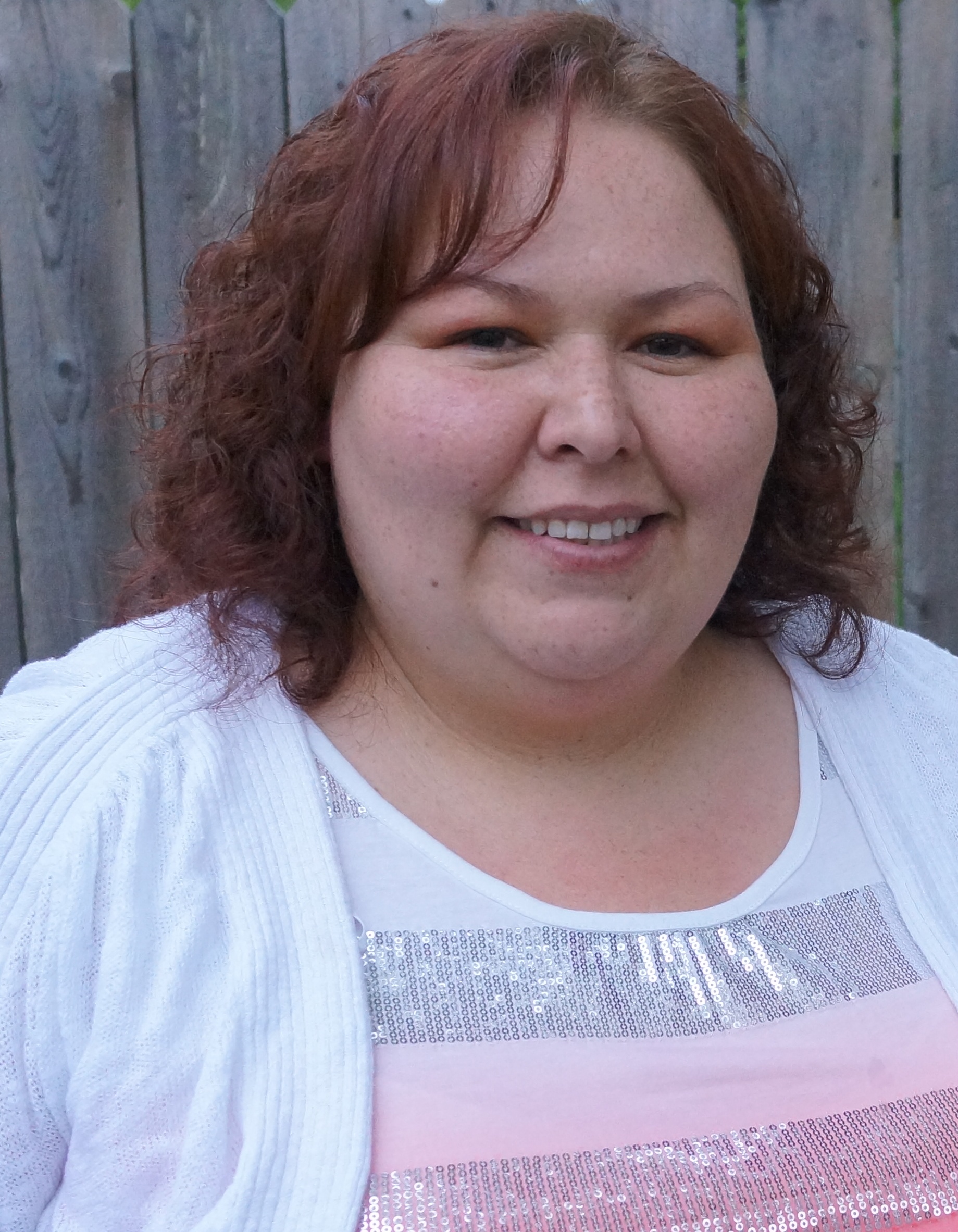
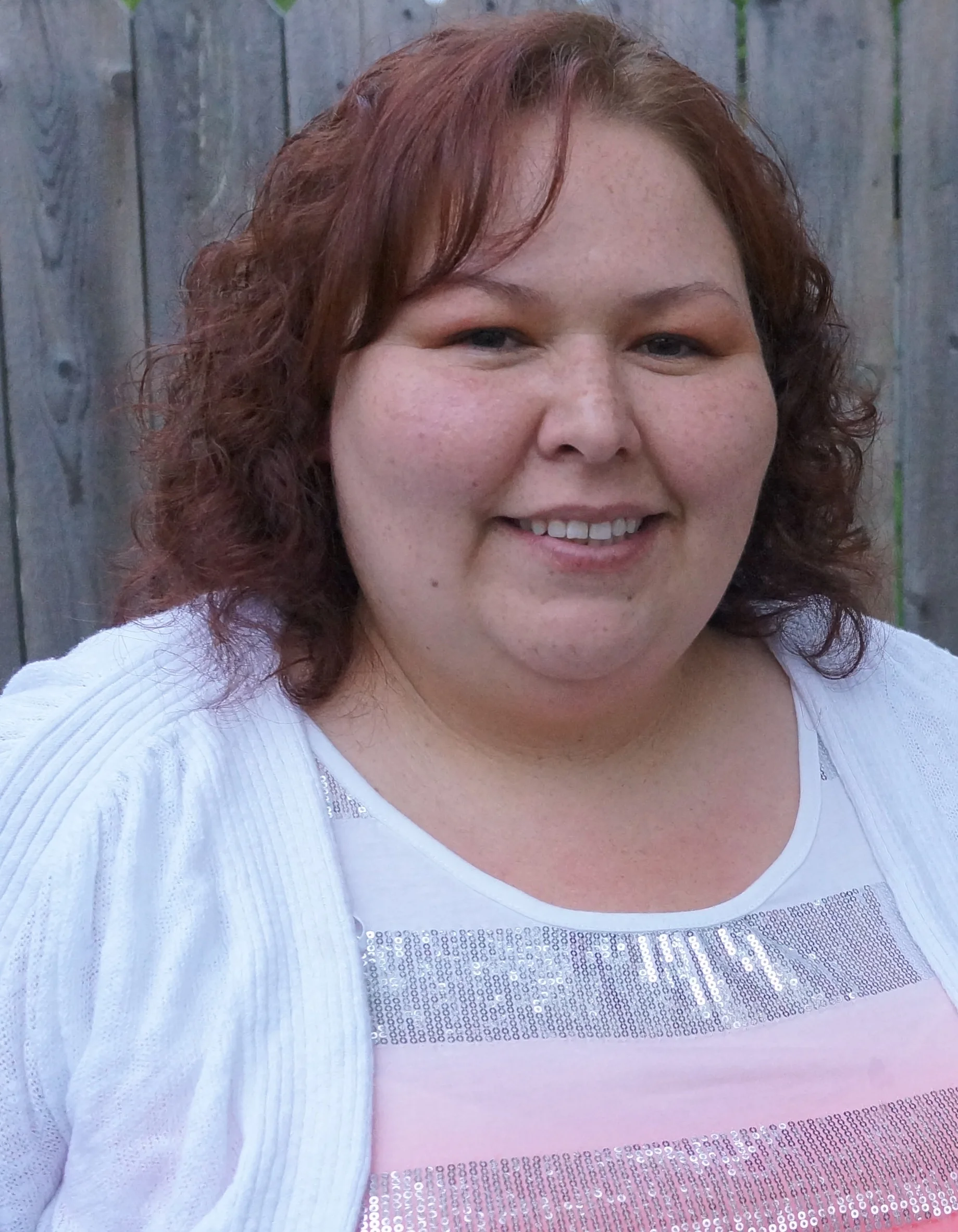
Amber holds a pretty special place in my life. Our friendship really began when we became SEEDS students back in 2004. As young adults in the thick of our undergraduate experiences, we met during what many students felt like, was one of the most amazing SEEDS field trips ever. We were in Calgary, Canada. Since then we’ve been close friends, attending many of the same SEEDS events and conferences, collaborating on projects, and visiting with each other when she’s in town.
An amazing aspect of our friendship is that who we are as individuals has always stayed integral to our interactions. More importantly, we share a similarity in how we see the world. When we talk "diversity", we touch on all its aspects of race, culture, ethnic identity, and what it means to be a person of color in the sciences. Many times those conversations were provoked by actual experiences we had on the grounds together in the context of an “us versus them” circumstance.
The projects we’ve collaborated on range from workshops on diversity, facilitating deep dialog, and even creating the ambitious SEEDS alumni network we called, SNAP (SEEDS Network for Alumni and Professionals). So, it was only natural for me to ask her to contribute to The D Word and offer her perspective as a female, single mother, and Native American Scientist.
Amber is of Mandan-Hidatsa-Lakota-Dakota ethnicity and is the Executive Director of a North Dakota-based non-profit organization, Northstar Council. Their aim is to strengthen and empower indigenous people through research, education, and community development. In our conversation, Amber brings to light this notion that diversity has always been placed in a “box” and it’s time to start breaking down those walls, one by one.
RR: Describe how you got started with career and where you are now.
AF: I started my education at Fort Berthold Community College (FBCC). I was always interested in science and good at math. I ended up in advanced math classes and as a result met an important figure, Trudy Ruland who nominated me for the Gates Millennium Scholarship (GMS). I was part of the inaugural GMS and used those funds for my first year at FBCC. That catapulted me to move on. At that time I just had my daughter and it allowed me to finish one degree.
I was also introduced to groups like AISES (American Indian Science & Engineering Society)and SACNAS (Society for the Advancement of Chicanos & Native Americans in Science), which built my interest in Biology. With the GMS I transferred to University of North Dakota (UND) thinking I wanted to be veterinarian because I was always interested in working with animals. So the options were to major in Biology as Pre-Vet or take Fisheries & Biology and be Pre-Vet. I chose Wildlife Biology because I was interested in wildlife and working outdoors. I stayed at UND for 5 years before graduating. I met you three years into it; in 2004 and that was the first time I was introduced to the SEEDS Program, the concept of ecology, and the fact that scientists gather for annual meetings. Prior to that I didn’t really know that academics went to conferences, present work, etc…I just thought we get a degree and do some sort of technical job with your hands experiencing the field. I didn’t know there was this other part, where you get together and discuss the work.
The Calgary field trip with SEEDS opened my eyes to the idea of doing things outdoors and going beyond a Bachelor's of Science with higher degrees. I was able to attend more SEEDS field trips after that. And all that experience built upon each other, I continued an interest in Ecology. Since I was pretty far into my degree, I didn’t want to switch gears, which is probably why I didn’t take that step to go fully into Ecology.
I did my Masters Degree in Environmental Management at University of San Francisco (USF). This campus was more diverse, smaller than UND, and in the Bay Area where I grew up. I felt like going home and gaining a new perspective from a more progressive view and approach on the environment. In contrast, North Dakota, where I am now, caters to hunters thinking of wildlife to preserve for hunting vs. preserving for the sake of preserving.

As I continued my MS, you and I continued with SEEDS and decided to develop SNAP together, which is an important group to have because undergrads need to see some of the success stories whether they continue into hard science or not, like myself. I realized I’m actually good at teaching. And to me, it was more important to see more people of color in ecology and in sciences, so I realized that there needs to be more teachers that look like students of color and are able to relate to them.
I really didn’t get into Biotech and hard science research was because I realized it would take up a lot of time away from raising my own daughter; I would sacrifice family time. So it was a natural choice to avoid those things because they were not aligned with what I valued. I don’t feel bad for it, but I can understand why especially single parents won’t go down that road and say, “I want to dedicate my life to travel places to study a certain type of fungus or some small insect that has absolutely nothing to do with most important thing in life, which is my family”.
I see a trend that natives usually tend to have kids much younger and start families earlier than the average American. So, if Ecology isn’t going to offer opportunities that include family, or things that are going to allow us to bring our families with us, or compensate for those areas where we’re not the average student, then we probably won’t accept positions anyway. We’re not going to pick research over family.
After completing my MS, I came back to Grand Forks and applied for multiple jobs with no luck. It fell into place that a group of us Natives with families and degrees all lived in Grand Forks. We were looking for something unique to us and we just weren’t finding it in the community. So, we put together a non-profit organization that was perfectly aligned with our interests; Northstar Council. Here, friends and colleagues put together a new approach to science for our kids; a new way to engage Native Youth in the field without making them feel stupid, incompetent and unable to perform tasks. It would also help urban natives connect to their own culture even if culture was not reflected where they live right now.
RR: Do you think that the tendency to sacrifice family life in academic achievement is linked to cultural disparities? Can any single parent, white or not, say the same thing of rejecting a position because it doesn’t allow them to have a practical life?
AF: I’m not sure, but it does play a role. I think its not only white people. Anyone who is trapped in this idea that in order to be successful in this society you have to be a good consumer in society, then that means you have to have lots of money in order to reach areas of success to maintain this type of lifestyle. For myself and I think most Natives, it doesn’t matter how rich or famous you are, if you’re not taking care of your own and your own kids with a good upbringing, then you’re not really a success. You’re failing along the lines and you’re a bigger failure if you chose to allow society to raise your child instead of raising them yourself. In some ways it can be said for the average American, you MUST be a consumer if you want to be successful or else you’re nothing. And I don’t agree with that, that’s not a measure of success.
RR: And with regards to being a science professional it means publishing and in order to publish you work lots of hours to do the research, etc…
AF: Right, and often times when that happens, those who suffer the most are the ones we care about the most. I’ve read several stories of successful scientists who are married couples bringing their families with them into the field. And that’s a great success story for them but that doesn’t happen for most people. In reality, the opportunities where you can bring your kid aren’t available for everyone. I also don’t think that most Natives relate to the idea of publishing, owning knowledge, or taking credit for knowledge that has inherently been there the whole time. And the idea of somehow professing yourself as the “discoverer” of this knowledge. We know that publishing is an extremely important part of academics and research, but I feel like it is a major area of disconnect for most people of color. Not because we are lazy, but because culturally this is the complete opposite of what it means to be honorable and humble, two cultural values that are highly regarded amongst Natives.
RR: Can you talk about the great work you are doing now?
AF: I’m the Executive Director of Northstar Council, a state recognized non-profit working on submitting papers to get to 501c3 status. In the meantime, the main goal is to have a Native American community center for Grand Forks, North Dakota. We started with Native families that continue to reside here after graduating from UND and who really felt a disconnect in community. UND provides Native services but they’re restricted to students. When it comes to needs of the community, there are no resources besides directing them to the social service agencies to help. Our mission is to create a community center for Natives that has an emphasis on culture, services, and outreach into communities. We not only want to provide cultural awareness, but cultural inclusivity. Making us more a part of the tapestry than relics of the past.

Our program, All Nations Culture Camp (ANCC) is funded through the North Dakota Medical Association. It aims to bring Native Science to two middle schools in North Dakota by presenting lessons of Native Science. Native Science and culture comes first, then we help students link this to Western Science. Lots of times, the students identify it as native culture and they don’t realize it’s connected to science until we start connecting the dots with them. Some ways we help some kids define what science is in general. Then they start to make connections that the knowledge is not only textbooks or what western science shows them.
We also have a summer session for ANCC, which is much more culturally based. We work more with language, crafts, and traditional activities for 4th-8th grade students. Northstar Council also offers community sweat lodge at a site we maintain outside city limits. We invite Natives and Non-Natives; all that want to participate.
RR: Along your pathway, you have gained lots of experience and knowledge with diversity and equity within different contexts, especially in the sciences. Would you say there were any specific incidents or lightbulbs that went off in your head about the state of diversity while on your journey?
AF: Yes, when I was younger I was naïve or not able to recognize what I would now identify today as racist or demeaning to me or other people. One by one many of these experiences, opened my eyes to the way mainstream Americans view Natives and their role in society. Sometimes in high school playing sports, there were some with racist attitudes and comments towards Natives. And this is in North Dakota where the norms of people are that "we are a nice state with people that are homegrown, hardworking and persistent”. And that’s the American way here. They fail to acknowledge how this state was settled in the first place. They are ignorant to how that has affected the relationship between Natives and non Non-Natives.
When I got to UND we had the Fighting Sioux logo and I didn’t know it was big controversy until I got to campus. I started hearing what Natives were saying and experiencing some of the proof that some people are denying “the existence that Natives were being mistreated without anyone being reprimanded”. I began organizing and stepped into my activist role of, “Stop stereotyping us, treating us inhumanely and start accepting our opinion about this logo that you love so much. Just because majority likes it, it doesn’t mean that it’s the right thing to do.”

I spent time protesting the logo with the Vice President of the UND Indian Association and we became poster children of a campaign that was everything "anti-logo". I started getting weird looks, people hesitant to talk about anything sports or careful to say anything to offend me. And prior to this campaign, before I took a very public and vocal stance against the logo, I was able to experience this “fly on the wall” role in the classroom. I have red hair and am light skinned, and I don’t have the stereotypical Native look to me so, I got to hear some Non-Native people’s opinions about Native people based on the fact they didn’t like the logo. When I would speak up in defense, it always made things awkward. And whether they felt a certain way or not, you always feel on guard all the time and it’s a weird feeling to be in class where you can’t relate to anyone because there is this other thing going on and it has nothing to do with academics or anyone’s ability to understand an academic topic.
So this experience enlightened me to be more aware about how I felt Natives and other minorities are constantly perceived. Even as minorities we often times stereotype or put other minorities into these categories as well. That triggered a response to your idea of diversity and ecology and why it was important.
Really, we do filter ourselves a lot in order to fit into the classroom, we filter ourselves to make our plead to why Native research is valid and important and how its going to benefit society in general and sometimes that means that we have to pull back on own cultural values in order to be successful or bring out what teachers want to hear out of you or develop a research project that will be validated. If you end up with people who don’t know anything about Traditional Ecological Knowledge (TEK) or Native Science, its tough because you have to explain why it isn’t a waste of two years or your time. Its frustrating for me and I would like to be in a place where there are more people understanding of it and value it as a serious research component and contribution.
RR: Four years ago, you were in the midst of graduate school and your mindset then was different. Now you’re the ED of an organization focused on Native communities and engagement. What in that four years have you learned and where are you with diversity in your career?
AF: We can’t just put diversity and multicultural education into a box. It doesn’t fit nice and neat and it’s always going to be considered separate if we don’t start incorporating it into everything. Instead, it’s this question of, “How do we fit it [diversity] into Ecology, Biology, etc…?" We try to get students to conform to the rigors of the academic disciples that are out there.
RR: So, this blog is focused on, but not exclusive to, people of color working in the environmental fields. But if the option is to NOT conform to the box, then how do we prevent ourselves from making our own separate boxes and working in silohs?
AF: We touched on this last night and started with our education system and how white-washed it is. It’s hard to (1) have this idea that somehow we can turn people’s cultures into some type of academic discipline. Like they can be studied and anyone can be experts on them. And that’s not necessarily what culture is.
Culture is a living thing. You either live the culture or you naturally become part of it and aware and understanding of it. It’s not possible to teach that perspective from a classroom, non-experiential and dislocated. Its kind of funny when you see institutions putting together ethnic programs and they keep putting cultures into these disciplines and trying to make them fit into the system of academics that clearly does not share the same values as the cultures they are trying to represent. It’s even more embarrassing when institutions have instructors not of these cultures, usually white, chairing these ethnic studies departments and even worse teaching what it is “to be” these cultures. That’s sort of what I get from the classes. They are there to give a completely sterile point of view on how America interacts with these cultures as opposed to actually having some culture there. It’s a mockery of the cultures and a disservice to the students and the institutions.
So a lot of people who would be able to teach the languages of those cultures aren’t going to be the ones who have PhD’s or tenure at an academic institution. But doesn’t that barrier devalue the information that they have? I don’t think so. But how do we now say to that institution, “Hey, you need to change your standards for someone to be teaching at college level.” We see lots of Tribal Community Colleges employing people with BS or MS and even that creates a barrier because people who maintain cultural knowledge are automatically weeded out. There is no Master’s degree in how to be Hidatsa, Mandan, Dakota, Cherokee, Cree, Anishinabe, Crow, or any other tribe. What academics fail to realize is that those people who hold that sacred knowledge and would know what and how to share that information have spent just as many years of rigorous work to obtain that knowledge.

Part of problem is that we’re adding more barriers every time we’re saying there’s a minimum amount of education that one must have to be a teacher and we miss out on individuals. Not disregarding the skills for teaching, syllabus creating, currculum development, etc…Yes, everyone should have it, but do they have to take on a whole degree where they have to take all these classes that may not have any meaning to what they will actually teach? That’s what we’ve agreed to as the standards to our students at Northstar. We are falling short of including all teachers of knowledge, especially those that hold knowledge that cannot simply be taught in a classroom, but must be lived.
RR: Well, that brings up a lot of hurdles because success is institutionalized and to get to that point where you will see more engagement of folks, the institution needs change itself in process of how they get to higher degrees.
AF: Yes, and I think right away it’s a turn off. I’m Native so I can only speak from my point of view. I don’t know how some of the other cultural minorities are doing, but we see that in order for students to be successful, they have to conform to what the institution already has in place. Then what we end up seeing is this, “living in two worlds”. And why do we have to continue to be code switchers and switch back and forth from, “okay this is my academic/scientific voice and I don’t feel much place for my cultural voice to be part of that?”.
At the AISES conference we talked about coming up with terms like TEK and Native Science and really there is no such thing. Its just knowledge. It was just a way of being. You didn’t have to label it. It’s information that was always there. And people earned it by actually living it. We actually went out and you learned how to hunt and you learned how to make artifacts, you learned how to put together your regalia. Our culture already teaches this by living it. But now Western academics is trying to do this idea of “experiential learning”. That was what cultures were already using as a way to teach their children. And then they were told that wasn’t the way they should be taught; they need to sit in a classroom, they need go learn all of these academic disciplines in order to be successful.
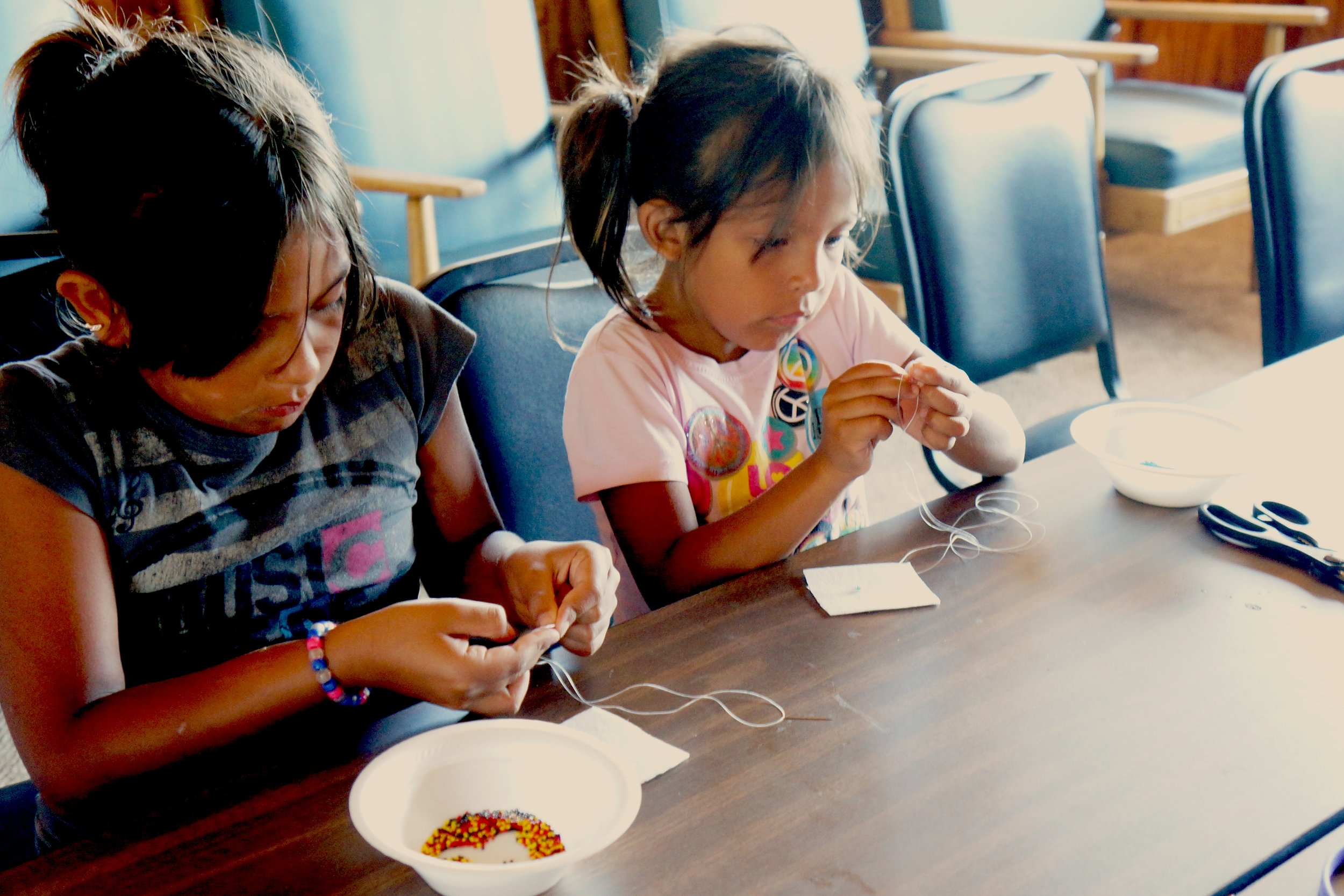
I think change will have to come from somewhere and it’s probably from the most influential place that it can come from. And that would be from the parents. [Parents] being the first teachers of students being able to say, “I don’t agree with the way the system works and I don’t like what I’m seeing happening and I want to see something better and something different for my children.” I see why lots of native kids disconnect from the school system and the academic system because it doesn’t offer them something that is somehow going to relate to them or lead into something beneficial.
There’s also so much emphasis on the idea that in order to be successful you have to make a lot of money, that you have to be able to sustain a certain type of lifestyle. I know for a lot of natives, that doesn’t matter. They can be as poor as it can get, but because they are rich in culture, they’d much rather have that then any financial wealth. Sometimes, especially academic institutions try to draw us in by saying they will provide us a better lifestyle, allow us to do so much more, and contribute to our community. But who is to say that Natives aren’t doing all those things already? In order to get something to change we do have to change the way everyone looks at academic success.
When we think about how we train teachers we’re not getting enough minority teachers in the classroom and male role models. The rapidly changing demographics are now 53% female scientists, but it’s disheartening to think about how much we lose out by not being able to interact with someone they can relate to. Even if its just that students get that ONE teacher, to get ONE experience with one teacher that IS, it makes such a big difference for them and changes the success rate of that student in whether they pursue an education. I appreciate institutions doing teacher trainings and multi-cultural education, but the approach is still, “us vs. them”. What can we do FOR them as opposed to, how can we engage them in how we make curriculum beneficial and relevant TO them? We know the disparities in getting students to come to class. Teachers not being understanding of that and systems not apathetic weeds certain students out.
In Grand Forks, the graduation rate is 42%, so not even half of our Native students will graduate. So what happens to the other 58% of those that chose to drop out or go a different route because they don’t feel welcome in the school district and can’t contribute? The answer is not to constantly put them in special education classes or go into intervention programs. If you’re putting them into intervention, you’ve already failed that student. By then it’s already too late, they are already dislocated from the system. Programs are not working like expected.
If kids don’t want to graduate in general, then what happens when we want to draw them into the sciences? We make it into a scary

subject that doesn’t relate to us at all; new language, new way of thinking…This is why we still have same the conversation and questions like, “Okay we have 3 token students of color here, how do we get some more of you, etc….?”
RR: Anything you can say specifically as it relates to environmental careers and making it more of an inclusive effort?
AF: We need to have constant conversations about diversity. Not saying that diversity programs should be done with, but there needs to be more investment in that. Let’s look at the fact that SNAP is still in its development phase. It’s a really great idea but we don’t know how to make it happen. Partly because there’s no investment in it. And not to the fault of the director of program, but there is also our response and the work for us (students) to get people invested in it. There are a lot of SEEDS students that have gone on to be very successful professionals that enjoy the research aspect of Ecology. Those professionals are still also culturally relevant to up and coming SEEDS students.
Lots of people go through tough economic times, but the first things to go are these programs that are successfully getting students of color into fields they say they are lacking of that engagement. It’s problematic when we create these groups like TEK (Traditional Ecological Knowledge). It becomes an “us vs. them” again. TEK has tried to incorporate them selves into the whole ESA conference program, but in general ESA doesn’t really believe or support those types of sections. They say, “Oh, now we can boast we have this section”. But what can we say about incorporating TEK into ALL of the sections of ecology?
RR: It’s a band-aid effort to a discrepancy in diversity engagement strategies.
AK: There needs to be more work to incorporate that to the whole. For example, the TEK talks during conferences, why isn’t that being presented the same time these other mainstream ecological talks are doing their talks? They have a tendency to box everything up and sometimes things don’t fit nice and neat into a box. We need to have these cross-disciplinary interactions and discussions going on. Isn’t that what Ecology is about? Relationships and how they are intertwined and what reactions they have upon one another?
I just think the [ESA] society in general has to step up their game as well. I don’t know that I’m invested enough in ESA to make that one of my goals. Because people are interested in SNAP bringing some culture to science, it would be nice to have instead of trying to separate it out like its a different thing.
RR: Any last words about diversity?
AF: I do think conversation needs to be had beyond two people. The ecological community needs to talk about it in a real sense and not pussy-foot around it. Not just saying they support and want to see more people of color, but engaging cultures. Most troubling thing is that there is no expression of culture in sciences.
I think about the AISES. They do such a great job of doing both; of honoring hard science and acknowledging students successful and acknowledging parts of their culture; elders, prayer, unexpressed knowledge. I would like to see the mainstream societies like ESA be able to do some of these things. But what we see is this very cookie-cutter way of doing research and presenting to each other. We see few and far between where people actually bring culture into it.
I also think about Tyrone Hayes where he ends all of his discussions with a rap. He has all these conclusions, and throws a piece of himself in there. And maybe people think its funny and maybe some don’t respect him as much, but he’s still doing himself. He’s presenting who he really is. That’s cool and we need to see more of that. We need to see more people being able break down the sides of the box and say this is still Ecology even if we’re bringing our culture into it, even if we’re not doing it the way that Western science says.