
Strengthen Your Relationship to Land With These Resources
Ultimately, this work is about healing our relationship to land. I share some resources critical in shaping my decolonization journey, my relationship to nature on unceeded Oholone Territory that influences how I guide others to reclaim an identity to their own nature.
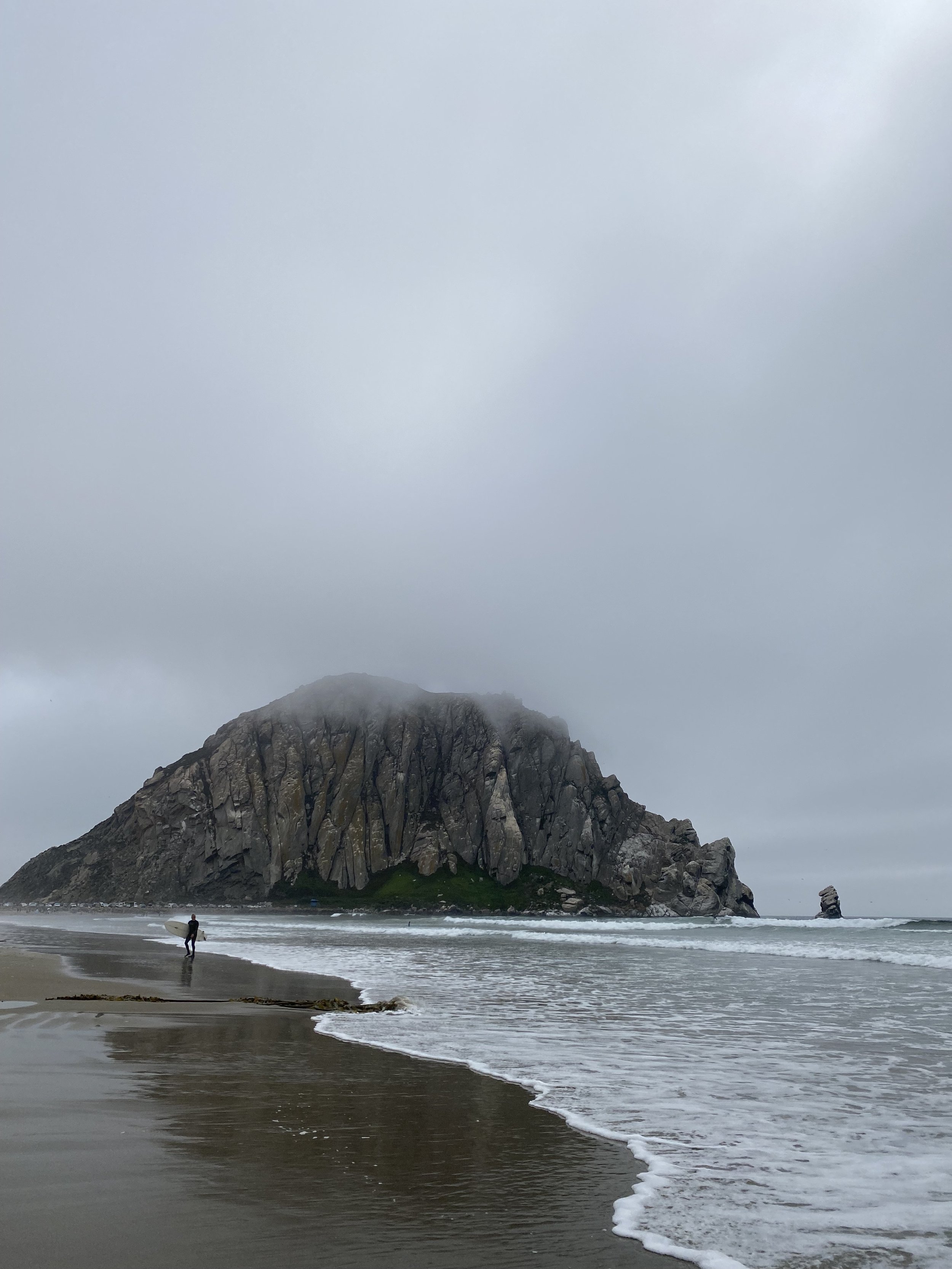
Morro Bay, CA. the site of the first landing of filipinos onto turtle island on October 18, 1587.
My practice offers many resources and cultivates stories of communities healing themselves with the support and guidance of nature’s lessons. And I think its an important topic to center wellness with nature, but I’d be remiss if I did this work without bringing in the opportunities to heal WITH the land we occupy and benefit from, whether that’d be learning the historical events and impacts on and from the Native community or partnering with communities to leverage what we can offer to be in solidarity to their sovereignty. So, in short what I’m saying is that it’s an important value I hold in my work have the Native perspective especially if we’re working directly with the land such as in stewardship, education, or movement building. This upcoming year is going to be my intentional effort to cultivate more direct relationships with groups and local descendants as best as I could.
Ultimately, this work is about healing our relationship to land. So I'd love to share some resources I found critical in shaping my decolonization journey, my relationship to nature and this land of unceeded Huichin Oholone Territory that influences so much in how I guide others to reclaim an identity to their own nature.
As a second-generation Pinay my parents immigrated to the Bay Area/Ohlone Territories in the late 70's. I was born and raised here and most of my life I've been a settler in this lovely West Coast. Being drawn to the nature around me and drive to have a career working in some capacity with nature, I have a special relationship to this landscape. But it wasn't until I really had to figure out my true path, did I start thinking about how much I felt like I did or didn't belong here.
Growing up in the South Bay (San Jose/Muwekma Territory) I experienced a lot of hurt and violence. So much so, I thought "the land" didn't want me there because every time I tried to lay down roots more hurt came. A dear healer friend of mine reframe this as, "perhaps the land was telling you to flee from the hurt and violence instead. Knowing how much you care for nature and love it, it may have been looking out for you."
Have you ever felt that sense of the a place "claiming you" as in, called you to come be there and it felt right?
Now that I've found a true sense of belonging and purpose here in Oakland/Confederated Villages of Lisjan, and lead most of the healing hikes around here, I try to deepen my knowledge of this place, connect to it's people, history, and land back efforts. But building relationships with native communities no matter where I am is important to me and to my relationship to any land I walk on. Because all land we walk on is native land.
So, some of the resources I'll share below have been places where I find resonance and a confirmation of my spiritual connection to nature. It makes me feel like I've been validated with the feelings and inner knowledge I hold within me, particularly about my love and advocacy for nature. Many of the teachings I've come to know from my dreams and life experiences feel like they have a home when I tap into these stories. It also activates the healing around my own lineage and search for similar stories and teachings about my own ancestral lands.
This winter as we reflect on our lives, honor and mourn the stories of our native relatives' violent loss of their lands, I hope you find that time to create connection and resonance with your own migration story, your lineage, and to the lands you occupy today. Connect to the resources and native communities in your own area as I'll share the resources that help me.
Book Recommendation: Dina Gilio-Whitaker, As Long As Grass Grows, The Indigenous Fight for Environmental Justice, from Colonization to Standing Rock, 2019
This book is really full of some critical and historical points that connect the fight for sovereignty of Native Americans to the culture of environmental justice, with reference to the events of Standing Rock. I think its also important to mention the author also offers the way forward and what that needs to look like for both natives and non-natives. It's definitely worth the read and offers details of the historical injustices that mainstream media might not include in their storytelling. I recommend this for your winter break!
Webinars: Indigenous Education Institute
I love, love, love listening to these talks while I take my lunch breaks or short walks. Knowing who the indigenous scholars and elders are and what teachings they have to offer help me get into my mind thinking about similarities I can see across other cosmologies and especially those I learn about my own lineage. Sign up for their newsletter to get notified of the latest talks to warm yourself into Traditional Ecological Knowledge (TEK).
In Person Event/Ceremony: Alcatraz Sunrise Ceremony
This might be sold out by now, but its good to know this happens as an opportunity to practice solidarity and participate in the Red Movement with our local native relatives. If you can't make this commitment (and I usually can't) I encourage you to think about your own version of honoring this land and the fight for native sovereignty and sit in a private ceremony of your own at sunset on the 24th.
Local Park: Coyote Hills in Fremont, CA
There's a reason why this is a frequented park for our healing hikes. I've mentioned this in other issues, but this park is still actively managed by its native community. The designated 'archeological site' is a protected sacred site of the community in which you can visit peripherally on the Chochenyo Trail. Every hike we visit the site to offer blessings and reflect on our relationship to the land and its people. The park is heavily visited but it's really easy to miss the location of the sweat lodge. If you do find it, make sure to make at least an energetic offering of gratitude and blessings for sovereignty.
THANK YOU FOR READING!
IF YOU FOUND THIS RESOURCE HELPFUL
AND WOULD LIKE MORE LIKE THIS, SUBSCRIBE
TO MY NEWSLETTER BELOW!

Shapeshifting The Panel - A Post that Set Me on a Trajectory for Racial Justice
I share this story in hopes that it serves as an example that WE CAN recover from harmful requests to be tokenized and shift our focus to impact those that matter the most; our diverse communities instead of the white majority.
A huge part of me has been rejoicing in gratitude that the pandemic caused us to ask really hard and existential questions about our lives and the critical needs for social justice became somewhat of a normalized conversation in this country. Because for such a long part of my career I thought I was the only one pushing for real change to happen. Back in the early 2000’s and 2010’s I felt like my radical voice was usually the loudest in a room full of crickets. Now that we’ve come to a point of no return of the status quo, I look back and remember what shifts I made and what beautiful things unfolded because of them. These are the moments I have to remind myself of why I go hard on making my points, why I choose the words I choose, and what purpose I serve to make this world a better place than I found it. I hope to share this particular story of the harm caused by diversity panels with my community of fierce game changers who love nature and call for social justice in the same room. I hope it serves as an example that WE CAN recover from harmful requests to be tokenized or put on the spot if we shift our focus to impact those that matter the most; our diverse communities instead of the white dominant landscape.

This was the last and final diversity panel I would participate in where I set my own intention to vocalize how harmful creating panels like this are to the efforts of DEIJ and all other efforts. It was held, organized, and moderated by Bay Area Wilderness Training (BAWT) instructors in 2014.
In 2013 I had already been in the industry of science and environmental education for about 15 years. I was in and out of small grassroots organizations, passionate and desperate to find a community of like minded disruptors to commiserate with and cause the wall of white supremacy in the field to fall. I didn’t fit any mold or mission of a particular agency and my ideas and opinions were often acknowledged as “courageous” and “glad you said that”, with an undertone of “but I wouldn’t be so bold myself, thanks for taking one for the team!”.
I have to say, I felt like I had created a small pocket of a following back then (without Instagram or Twitter), but nothing really supported this insatiable appetite I had to say what needed to be said. Some young leaders found me inspirational, some steered clear not knowing how to move forward with the ideas and questions I had presented in conversations about diversifying in the outdoors.
By 2014 I found myself needing to carve out my own voice. I didn’t want to give up and shut up. I knew I had something valuable to say! So I asked myself how can I express my beliefs in ways that others can understand what’s required for true social justice without compromising who I am? What ended up happening was me branching off into my own brand, my own consulting firm to push my radical messages through autonomously. But before my business became my livelihood, I created a blog called, The D Word. No longer active, this blog was a space for me to unleash my frustrations around the lack of diverse voices and stories by highlighting diverse professionals in the sciences and the outdoor industry, documenting deep and frank conversations about, well… “The D-word”, or diversity.
Then when my friends and colleagues at BAWT (Bay Area Wilderness Training) asked me to join a panel of other heavy-hitter POC professionals in the industry, I rolled my eyes and took a deep sigh of “ugh…here we go again…” and I accepted. I accepted because I took a quick pause in that breathe and asked myself, how can I take this opportunity and say what I really needed to say and end this form of harm to me and others like me? Also, I accepted because I had a few friends on the panel with me, including Jose Gonzalez, Founder of Latino Outdoors, Zoe Polk, then one of the Bay Areas first Outdoor Afro Leaders, Kim Bailey, and Ashanti Branch, Founder of Ever Forward Club. But despite it being a party of friends and respected colleagues on the same side as me, I was tired of the performance. I also had nothing to lose being unaffiliated with any specific agency. So, I said f-it! Let’s see what happens!
With a personal intention to have this be my last and final panel participation I went in. I played the part, answered questions as I would always and even mentioned that I was at a point in my career where I knew that working towards answering “the audience’s” (meaning mostly white people) questions and fulfilling their needs wasn’t benefitting me. I told the audience that I made a conscious decision to now put my efforts into supporting my fellow POC professionals (as I gestured to my folks seated on my left and right). That me supporting my own community and their needs was where my work was going. I continued on with an anger boiling up inside me, knowing this was just another show and pony. I needed to write out my thoughts and opinions on the matter.
So I went home heated but determined to speak my mind on paper. But a bigger challenge to myself was to not fall into a camp of disgruntled activists calling out and ascribing to the toxic cancel culture (it wasn’t called this back then). So I had to think really long and hard about creating a post that
(1) came from my own voice instead of blaming or shaming anyone else of the “industry at large”
(2) give solutions and recommendations to my readers instead of an open-ended, “so what are you going to do about it now?” cliff hanger
What I would write below in 2014 was my way of processing the many years of disappointment, heartbreak, fierce determination, and allow the healing of my wounds to show up in a way that was healthier for me and my readers. I won’t lie or sugar coat this, but it took me so much restraint and calming of my angry beating heart so I can come off on higher ground with this one. What saved me were the breathing exercises, the sitting with my anger, and the intuitive digging into my bank of knowledge and toolkit to respond to the hurt that I felt. The gist; it took a lot out of me to hold back my reaction to transform my anger into the proactive words in this piece.
Below is an expert from a previous blog site I created back in 2013 called, The D Word.
There is no epic report, online article, or twitter hash tag that can capture the true essence of this diversity crisis. Nor can they suggest solutions towards a more even participation of our increasingly diverse country. The only way to really understand what’s going on and gain insights on what you can do about it is to RECOGNIZE DIVERSITY AS A LIVED EXPERIENCE.
The very first interview posted on this blog back in April 2013 was with scientist, Yasmin Lucero. She mentioned, “I grew up in Oakland, one of the most diverse places in the world. And that diversity is very front and center and you have to deal with it. It really influences this issue of, “How do you deal with conflict? How do you deal with a difference in opinions? How do you think about it, feel about it, and how do you take care of relationships when people are different from you?”No tool kit, diversity training, or podcast can get you to a place of genuine understanding and ownership of your place in the spectrum of diversity in the environmental movement; you have to live through it.
As a woman of color working in the environmental movement, I am taking a stand against the harmful diversity practices that serve to “educate the majority” rather than “support the minority”. I want us to kill this idea that minorities serve as a resource for mostly white organizations to check their "diversity box" or to strategize a plan of action that might bring more color to their staff and participants. I'm calling for a shift the way panels are conducted and and an end to diversity trainings.
In the 15+ years that I’ve been involved in the sciences and environmental movement, I’ve been asked more than a handful of times to sit on diversity panels or contribute to some symposium on a diversity topic. And each time I find that there are similar questions and almost completely predictable outcomes. The questions often being about, “How did you get involved, what keeps you motivated to stay, and best of all, “How do we get more people like you into our programs/orgs?” The big RECRUITMENT question! One predictable outcome for me was feeling important in some way, having to exemplify myself as a ‘leader’, which in reality just translated into “look! I’m surviving the culture shock of being in a mostly white organization”. Another result was that I relived my academic/organizational journey to an audience of mostly white people because they asked me to. And last, there was nothing more that helped push my environmental career further by participating on these panels. I just kept the hamster wheel of a conversation going.
After all these years of “diversifying” my career field, I realized I was harming myself by sitting on these panels. Now I realize this practice is harmful for allpeople of color. Sure, it seems empowering and a good networking gig to be up there, but in general, I see these panels put together as resources that predominantly white organizations need in order to do at least one of the following: show examples of how they are reaching their “target audience”, gain insights from us on how to do “community outreach”, or prove to others that there are people of color out there doing work, see? How exactly does this serve to directly support our career success?
In a last ditch effort to find some sort of benefit to diversity panels, I participated in one (and final) earlier this year for a wilderness exposure organization. I was recommended by a friend to participate. He too sat at the table with me. I thought, let’s just see where this can go. Perhaps there might be something different that can come out of this one. Plus, I had some good friends up there with me. Sure enough, predictable outcomes. But one thing I did do differently was I took that stance at the end to shapeshift the panel. After the prescription-like questions were asked and somewhat remedied by our responses I chimed in one last time. I stated, that panels are a difficult position to place people of color in; to ask us to sit on and to testify our careers as successful participation and that we have some sort of knowledge on how to get you to be a more diverse organization. This is tokenizing, I reminded the crowd. I went on to say that being a person of color is a lived experience, as is working in a more diverse workplace. I expressed, that earlier in my career I would do my diversity work as a panelist talking to a mostly white audience. Then, there came a point where I realized that I needed to work in diversity, within my community(with the panelists) because that’s what supports me. I further encouraged the people of color in the audience to keep building relationships with each other and that our alliances are what’s going to count in the long run. Recognize that there are good allies to work with and bad allies to be cautious of. But we have to find a way to work that truly supports us.
And as far as diversity trainings go, I’ve organized enough of them with environmental organizations to know that these must die as well. I now realize that my impetus to organize trainings and workshops was to cope with the oppression and disappointments I experienced as a woman of color trying to conform to the majority. I felt I needed to do something about the disparities; to help the white people realize their impact and dominance on people like me. That was working to diversify; that was working with an expectation that other people can change their attitudes towards people of color in just a few activities addressing white privilege and oppression. Often times it just caused a defensive tone towards me or instilled white guilt in the form of comments given to me afterwards.
To work in diversity means I’m working within my diverse community and supporting the work of other people of color to bring our participation to a norm. I find areas for collaboration with other leaders of color and support and mentor younger folks that are passionate. The idea and resource sharing, even program development happens in the context of including cultural aspects and celebrating diversity rather than approaching it with a “lack of” mentality (which often leads back to "checking the diversity box"). Good allies play an important role in supporting people of color with similar intention and cultural awareness.
There are plenty of people of color out there doing great work and have been for many years. We don't need to resort to organizing panel discussions or diversity trainings to help us cope through this reality of a homogenous workplace. We have each other. The stories and interviews on this blog are meant to relate to, get to know, and build relationships with others so that we’re supporting each other through those tough times of disappointments, oppressive behaviors, and amongst other things, avoiding the route of having to educate the dominant culture.”
After getting this piece down and publishing it, the amount of levity that came from my body surprised me. I guess in today’s trauma informed language it may be called somatic healing. I’m no expert, but all I knew was that I was proud of myself for not being reactive towards my anger but finding a way forward that would benefit my well being and purpose as an advocate for inclusion and equity.
How do I know going in this direction of sharing my story and opinion benefitted me? Well, for one I wasn’t met with backlash or trolling. Instead, after several months of this blog post being published I was sent an email from someone in the US Forest Service, requesting my participation in an upcoming project that would involve many diverse constituents across the North and Pacific Northwest states. After the vetting process I would be appointed as an Advisory Council Member for the Pacific Northwest National Scenic Trail (PNNST). For the next couple of years I would serve and travel to different parts of the only National Scenic Trail that ran East to West, across the United States borders. And from this project I was also recruited to be on the Board of High Country News, which I still sit on today, in my 6th year of service.
Now, if this story serves any purpose for you, I hope you can see that voicing your ‘radical’ thoughts and ideas about something you’re passionate about can really work out for you in the long run. I don’t really wonder what would have happened had I not written that blog or said the things I said on the panel because I know what I have to say is worth whatever comes next. It’s just that sometimes It takes practice and a willingness to pause to reflect first before reacting with the next step.
Think about what your purpose means to you based on who you are and who you are fighting for. How will your ideas benefit us all in the long run?
In your mind, play all of the possible scenes over and over again in your mind, thinking about all of the possible outcomes from the steps you want to take after you speak your mind. Who will it benefit?
And last, remember what’s at stake with respect to the change you fight so hard for in this world. If you don’t create change and challenge the status quo, we’ll all be doing the same thing tomorrow.
THANK YOU FOR READING MY STORY!
IF YOU FOUND THIS RESOURCE HELPFUL
PLEASE SHARE WIDELY TO YOUR NETWORKS & FRIENDS
Comment below to dialogue with me!


"Root To Bloom" - A Program Born from My Healing Journey
Like many passionate providers, I thought vocalizing my needs would get me somewhere. But I’m about to share a story about the many years (10+) of a swerve-y, chaotic, and down right traumatic career path.

Each season we hire community healers, & wellness practitioners as guest speakers to add to the wealth of resources around us. Here we are in the EcoCenter with movement healer, Sammay Dizon.
I used to be a community-based service provider and vocal advocate for diversity within land-based organizations. I spoke out, led efforts, formed groups and containers to drive the narrative of “lack of diversity” and hold myself to the fire, challenging my higher ups and the authorities-that-be, for more inclusive space for people like me and the communities I serve, who often looked like me. But I quickly learned through many failed attempts and fallouts that this wasn’t where my fire for change was going to be affective.
Sadly, like many other passionate (I would even say wounded) providers, I thought vocalizing my needs would get me somewhere, but it only left me burnt out. I was left with bigger questions about “Who am I in this work?”, “Why do I feel the need to stay?”, and the most challenging, “Why can’t I be who I am and focus on the actual work of creating change for my community?”. Well, the story I’m about to share below is a story of many years of the unfolding story that answered these questions. And when I say many years, I’m talking about 10+ years of a swervey, chaotic, and down right traumatic career path.
If there’s anything I hope you gain from reading the origin story of Root To Bloom, its that
(1) the path to your true purpose is hella long and arduous. If it’s not, you probably have more to learn and grow from
(2) when you finally surrender and listen to more than your experience, meaning your listening to your heart, your ancestors, your guides beyond the Earthly realm, you begin to listen to the forces of nature that have always been guiding you since you were born. You begin to trust the things that are beyond this world and magic begins to unfold.
So, I’m grateful you can take the time out to hear how this program speaks so much to my journey of healing as woman of color in environmental education work and that’s it is possible to create beautiful things for the people to meet their blooming!
🌺 Years ago when I started my non-profit environmental justice career I worked as a Program Manager in San Francisco's Bayview/Hunters Point neighborhood. I thought it was my dream job and I would be there for a long time. Little did I know, the day I walked into the office on my first day...I was walking into what would be a 2 year nightmare. The organization's leadership had crumbled 2 weeks prior to me starting. Ironically the park site, Heron's Head & the EcoCenter's education programming centered the historic toxicity of SF's Southeast. I was teaching about toxicity and experiencing toxic work environments at the same time.
I don't know if you've ever experienced a level of workplace toxicity that causes you to flee from the community and distance yourself for your own safety and well-being, but I spent many years away from the community except for the few trusted relationships I kept close as I transitioned and explored other avenues of my career.
Almost 10 years after that job I found myself on the same park site, different professional path as an entrepreneur but still working with nature, focused on providing a healing learning space for community-based service providers. I couldn't believe that the path I walked to come back to a site that caused me so much harm would be a place that would not only provide healing for me, but also heal the providers in the program.

Our program theory of change disrupts the cycle and value on productivity in our providers with self care and healing practices
I am always in awe of Root To Bloom being in my life. Being my life's work. It could be that my healing needed this program to be designed to disrupt the toxic work environment of valuing productivity with valuing self care and provider well-being. Because from my experience, I knew that the productivity value that plagues many community-based service centered organizations can perpetuate capitalism’s engine of seeing people as a commodity of labor instead of seeing them as stakeholders of our greater community’s long-term health and wellness. I always wanted someone to acknowledge this in the organizations I worked in, especially those that targeted marginalized communities. So, in the Root To Bloom Program I made sure we talk about colonization’s design to keep us locked into productivity so that we don’t attain the awareness that we can value ourselves as gifted contributors to our own needs for a healthy and fulfilling life. Because if we attain such power, we can’t be controlled.
It always strikes me as my radical stance on loving my community by being able to create this program to say these things and teach emerging leaders to reclaim their power with tools we share in the program. Because I’ve been a product of burn out and being outcasted, “laid-off” or ostracized from leadership in previous organizations where I’ve attempted to integrate these values as was retaliated against in some form or fashion. But something many years ago kept me tethered to my beliefs and stayed steadfast in my search to find a way to still say these things and have autonomy as safety. It just so happened I needed to leave the non-profit structure and create an entity that, to be real, only I can fire myself from, lol!
Root To Bloom has unfolded as this safe place and container for fierce providers like me to have a home for processing and understanding our intergenerational traumas without retaliation or stigmatization; something I wish I had especially when I was providing direct service to adjudicated youth. Now, I have so many people, spirit guides, ancestors to thank for this. More importantly I can thank myself for saying yes to a path most wouldn’t dare step into. That inner voice of my WARRIOR SELF was definitely wounded but committed to my true purpose and I mostly send her rest and gratitude these days.
Testimonial from Denicia, Season 2 graduate
Allowing myself the surrender to other messages in my dreams or the synchronicities showing up in my everyday walk are just some of the reasons why I think Root To Bloom holds such a special vibe and space for the community that surrounds it. Together with my co-creator and conspirator, Kisai of CommUNITY, this program has consistently shown us the power of creating something so unique and exactly what we would have wanted as frontline staff; a holistic and transformative space where we could truly just be and heal.
And as we’ve begun to open our space for the fourth year of Root To Bloom, I’m reminded again of the power of my healing journey to heal some of our community’s deepest wounds. I can’t say that my healing has ended. I don’t believe its even possible to “be healed”. So as long as I’m on this Earth, my healing will continue on. But what I do know is that after these many years of diving into the scary parts, moving through the roller coaster of life and leadership, there are moments that I’m reminded all of my struggles and experiences can serve me later by showing up as healing for others. I just have to keep listening, keep trusting.
So I’ll leave you with some of the coach-y type reflections you can take as you continue on your journey of self discovery and healing in hopes that your journey can find a point of coming full circle. And I hope you can share your thoughts and responses with me below. I’d love to engage with your story of healing.

Click this image to listen to our IG Live session sharing the magic that birthed our program and its impact on our community
Reflections to Reclaim Your Purpose & Power:
🤔 If you were to spend a day doing exactly what brings you complete alignment with who you are and your natural born gifts, what would that day be like and more importantly how are you feeling throughout that whole day?
🤔 If you can speak truth to your power, as in say ALL THE THINGS you want to say to your current workplace/community about what real change looks like, what would you say? Make sure it’s as raw as you would say it if you had all the freedoms to say it all the way you want to say it!
🤔 What do people tend to say or witness in you when they describe who you are or what your leadership is like? You don’t have to agree or believe them because these can be signs of your true gifts and purpose in life whether you like it or not!
THANK YOU FOR READING MY STORY!
IF YOU FOUND THIS RESOURCE HELPFUL
PLEASE SHARE WIDELY TO YOUR NETWORKS & FRIENDS
Comment below to dialogue with me!

Life Re-traumatized & How I Stopped the Cycle of Harm
When I first started working in juvenile justice facilities I knew what I was good at. And that was to reach and teach environmental education to "high risk" youth populations. What I didn't know was that I was experiencing compounded trauma by placing myself in these situations. Let me be more explicit about what I mean by compounded trauma.

Life Re-traumatized
& How I Stopped the Cycle of Harm
Yes, working in prisons isn't for the faint of heart. It takes a certain type of person to be there on a daily basis. For me, it was one of the most rewarding and meaningful experiences of my career. In addition to that, I always tell people (mostly for people of color) if they have any interest in working in prisons don't do it. Well, don't do it unless you are fully aware of what you're getting into AND you've got a strong self care plan, fully loaded with resources and allies inside & outside of the facility.
When I first started working in juvenile justice facilities I knew what I was good at. And that was to reach and teach environmental education to "high risk" youth populations. What I didn't know was that I was experiencing compounded trauma by placing myself in these situations. Let me be more explicit about what I mean by compounded trauma.
As a woman of color working in direct service to said communities, it wasn't until I left my last non-profit where I was now able to observe a more privileged white woman doing a very similar job of educating in prison. After being an observer to her facilitation, I realized just how traumatizing it had been for me to have done this kind of work as a conscious (woke) woman of color. During her facilitation I noticed that when the dialogue from one student touched on a statement about the actual system of oppression that prisons represented, she listened, but her response redirected the dialogue to focus on something more superficial. I can't remember what she started talking about specifically, but I knew that was the point of difference for me. And I was triggered by that. I felt the dialogue was shut down, that the student wasn't validated or nurtured in their beliefs about "the system" and there was no space to continue to dialogue around that.
I started to sense that unlike her, (with checked assumptions here) who she can do the J-O-B, be in these facilities with these communities, then go back home to something different. I couldn't do that. I didn't have the privilege of putting my blinders on whenever, to not find commonality with my students in the way I looked, maybe the ways in which I grew up and had similar lived experiences and emotions as my students, etc... Then on top of that, I had to go home and wonder why there was so much trash on my streets and broken down cars, why did another kid got shot at the corner store?, why is it such a struggle to just get ahead in life?...
I realized then, thatI worked in trauma,
"walked the streets" in trauma,
and I went home to trauma.
I had no rest.
The serendipitous part of that moment was that I finally came into a reconciliation about the differences between privileged white folks working in these communities and my own identity as a POC doing the same work.
I was more prone to being re-traumatized while on the job
But on my long drive home from that observation I came into that knowing. I said to myself, hey the men in that facility have gained so much growth, healing, and a safe place to process that I can't disregard that. If she, (privileged white woman) can do it, handle it, continue to proceed after so many years, then good for her! She's able to facilitate and impact these men and this program needs to keep it going! So, now that I reached that reconciliation, I had to make my next move. How then, would I continue to do the things I'm good at and loved to do while still working with my community WITHOUT getting re-traumatized? First,
I needed to find a way to END my own daily
CYCLE of trauma
I needed to begin my own HEALING
So what were my first steps in this journey?
Gather (get a hold of) myself
Gather my tribe of support
Figure out what needed to be healed
Start practicing
During that specific time in my life where I was in that prison observing this woman, I had just gotten laid off from my last position. And that lay off didn't go down as a mutual agreement in any way. I was emotionally vulnerable and I felt a little lost, mostly defeated. Still I held my ground and trusted that there was a bigger purpose for me. And that there must be something behind the pattern of losses and frustrations of working in non-profit environmental organizations. I was reminded from a good friend that I couldn't possibly take on all of the blame for how things turned out for me; that there are always those components of this system at play here.
So in trying to figure out what needed to be healed, I doubled down on figuring out where I needed to be next. I continued working with a small and special group of women as a support system to heal daily as well as to develop my spiritual awareness, I engaged fully in my coaching certification program and utilized our practice sessions to address these specific pain points, and I asked for more of myself to just surrender to my spiritual path as a healer.
No doubt its constant work, learning, and growth.
But my everything and every part of me is affirmed every time I'm with a client
or out with a group on a healing hike; I'm now walking my path.
I say this to many of my clients in exploration and wonder around what is next. I say, pay more attention to the things that bring you light, levity, and fulfillment. Those are the places you want to go towards. And for those places that aren't so bright, maybe they are darker in feeling, they are places of hurt or bad feelings AND approach them head-on and ask in the most direct way, "What are you here to teach me?"
THANK YOU FOR TAKING THE TIME TO READ MY STORY. IF YOU ENJOYED THIS PIECE, PLEASE SHARE WITH OTHERS AND JOIN IN THE CONVERSATION BY COMMENTING BELOW!
MEET THE COACH
Raynelle Rino, CPC

A long time social sector professional, Raynelle began her career in the sciences as an ecology field researcher then moved onto environmental education and social justice at the grassroots organizational level in the Bay Area. Her love for nature and youth development brought her to teach in unique settings like alternative high schools, environmental justice neighborhoods, parks, and juvenile justice facilities.
In 2016 Raynelle started Rino Consulting Solutions, a nature-based consulting firm that provides coaching and consulting services for professionals and other businesses. It’s mission is to support and inspire the leaders of today to live in the confidence of their identities as they move through a world in the midst of social, racial, and environmental transformation. Raynelle is a graduate of Humboldt State University with a BS in Biology, a Rising Leaders and 2042 Today fellow, and lives in Oakland with her husband and daughter.

The Rise & Fall of the Sun
We lay witness to the days that have come before us and act upon creating what we need ahead of us. As the sun rises to birth a new day, it also sets- carrying all that we have endured throughout the day. Find space in this process to focus on what brings you peace.

We lay witness to the days that have come before us and act upon creating what we need ahead of us. As the sun rises to birth a new day, it also sets- carrying all that we have endured throughout the day. Find space in this process to focus on what brings you peace.
Since the launch of this business, I've been organizing weekly healing hikes for community to participate in. The act of my organizing hikes with an intention of offering a coaching and healing session was in direct response to the devastating results of our election. That's why they are called healing hikes, and not just "a guided hike".
I, myself experienced in my family and community the worry, fear, uncertainty, and disappointment that would later linger on for the next few days as the collective trauma our country was experiencing. It was in these raw moments where I gathered my most recent thoughts and plans to develop pathways to healing in nature. Then I got the message. It was time for me to act; no more planning and contemplating, no more thinking. I saw a friend post a yoga session in response to the election. That was my cue; my community needs an opportunity to heal and I can provide that. I quickly organized a sunrise hike in a nearby park location and blasted close friends to meet me at the trailhead.
Six people showed up as the sun began rising! As we all gathered in this rawness we asked Nature to be there for us, to heal us. In gratitude, we grounded ourselves, walked the trail intent on feeling better afterwards, WE DID THE WORK! The coming weeks would bring more healing hikes, some of them during the sunset; all were needed by each hiker. Here is where I recognized the birth of my abilities to lead these hikes to heal community.
The rise and fall of the sun is like the fire that sits within our hearts, rising with the passion and struggle we've held as a community of color for so long. And the falling of the sun into the night is the fall of those old destructive ways, negativities, and endurances in life that leave us taxed, damaged, sometimes dead.
The beauty of our fire, now ignited in full flame, was the organizing that happened right after the election. ALL the people, ALL the youth that came out in protest. That is our fire, our passion to be better people. Each day the fire became brighter, the groups of protestors grew larger. Solidarity was seen across the nation.
And as the sun sets in its natural process we must accept it. The end of the day, the darkness that prepares us for rest is honored by witnessing the winter sky turn from white to fiery red at sunset. In these moments we accept the change and ask the falling of the sun to take with it the things that no longer serve us. Sunset hikes are those opportunities to release our burdens. With respect to our current events, I view sunsets as the taking down of those destructive and negative mindsets and values that have have hurt us for far too long.
Just like we do on these hikes, we work to reclaim this communication and connection to Nature. We learn and relearn how these offerings can support our well being in these challenging times. Watch the sun rise and fall and pay attention to the messages that come to you.