Healing Our Soul Wounds
I first came across the concept of Soul Wounds when I saw this conference posted on Facebook. I was at the beginning stages of my healing journey, triggered by all the happenings in my life, mostly difficult circumstances. I was teaching at a juvenile detention center…
I first came across the concept of Soul Wounds when I saw this conference posted on Facebook. I was at the beginning stages of my healing journey, triggered by all the happenings in my life, mostly difficult circumstances. I was teaching at a juvenile detention center, going to therapy and practicing personal spiritual healing, and unearthing my ancestral information awaiting my DNA results. Seeing the two words, 'soul' and 'wounds' created a deep visceral response in my mind. I identified with it.
The stories of struggle and pain I held throughout my life now had a name AND I was able to see that the stories of trauma experienced by my ancestors helped shape who I am today

Click on the conference's website to listen to all the amazing talks
The fascinating information I listened to on this website gave me insights to things such as
Epigenetic research showing that the traumas my ancestors experienced are passed down as memories in our DNA molecules
How collective trauma recovery can be done with community support
And trauma, in essence, is when our sense of our identity is compromised by a tragic event,
And so much more
What was missing for me in some of the research was the aspect of the healing I will always believe in, which is incorporating nature as a tool for healing trauma. I did, however come across this article highlighting the author and psychologist, Eduardo Duran as he wrote about soul wounds from a Native American perspective. This online article in Counseling Today, Trauma and the soul wound: a multicultural and social justice perspective reveals a non-traditional approach to understanding trauma. From the article,
"Duran encourages mental health practitioners to address three levels of interventions when working with people who are suffering from trauma:
Working with individual clients who are experiencing problems due to trauma
Providing outreach, advocacy and healing services to the larger community of which the client is a part
Engaging in efforts that are aimed at what he calls “healing the land”
...Duran discusses the importance of counselors working to “heal the land.” He emphasizes the American Indian belief in the vital interconnections that exist among all animate beings and inanimate entities, as well as the spiritual energetic connections that exist between all people and Mother Earth. He further notes that the current trauma being inflicted on the Earth by our collective polluting and poisoning of the global environment has a significantly negative and traumatizing impact on our own mental health and sense of psychological well-being. "

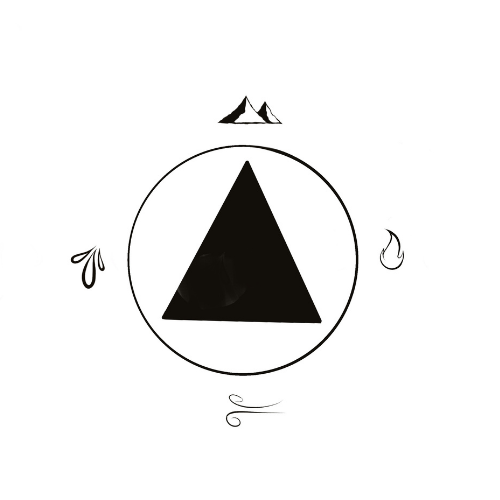
Our steps towards healing trauma heal our soul wounds when we hike. You can also say we are healing the land by being there, drawing upon a heightened awareness of the surrounding environment, giving gratitude, and asking for permission are ways we are healing our relationship with the land. Walking in meditation reclaims the same ancestral practices of communicating with the elements and all the life around us. Sure, it may be more evident on our vicarious trauma healing hikes, but in every gathering, in every circle and dialog we are practicing the steps that allow us to heal as we endure our everyday suffering. The simple act of acknowledging the four directions is one initial step in our ceremony.
Finally, as we exist in a world in which traumatic news and events are now somewhat normalized, we must remember that our collective healing is an important part of our continued effort to keep fighting for justice through this transitioning time. As some researchers discussed in the conference, we must recognize the different types of dissonance that comes from our trauma and find ways to reintegrate into our societal structures stronger than before our trauma entered our lives. This is the goal; to be more equip in navigating our lives and live in our true and full identities as whole, complex, and beautiful beings.
WANT MORE TOOLS AND INFORMATION LIKE THIS? SIGN UP FOR THE MONTHLY NEWSLETTER AND FOR TOOLS, INFO, & OPPORTUNITIES LIKE THIS DIRECTLY TO YOUR INBOX

Access this "Trauma Response Toolkit" That Includes My Healing Hike Activity!
I invite you to check out the entire Trauma Response Toolkit online series where other experts, including myself, were interviewed to talk about ways in which we can tap into our personal power to overcome the many challenges of our lives and current societal turbulence. MyLife is a meditation app used widely and especially with youth and schools. Check it out!

This year has yet to fail in its epic and ongoing show of turbulence.
So I must assure you that in these times, we pull together and offer up our best support. As a trauma-informed coach, its really important to know what tools and approaches are out there and how the deep healing work we do can provide some accessible and practical tools. In the case of referring out services or sending extra tools and resources during sessions, it’s critical to know where to send folks.

That’s why when I was invited into contribute to MyLife’s Trauma Response Toolkit, I was really excited about providing the opportunity to experience nature’s healing abilities via technology! Now you can access a healing walk through the meditation app, MyLife and connect with nature anywhere!
I had already experienced the need to pivot the in-person healing hikes into virtual space in 2017 when the first episode of CA wildfires ravaged The Bay Area. No, it wasn’t actually the pandemic that initiated the pivot although the virtual healing hikes did ramp up this year due to the pandemic!
So I invite you to check out the entire Trauma Response Toolkit online series where many other experts, including myself, were interviewed to talk about ways in which we can tap into our personal power to overcome the many challenges of our lives and current societal turbulence.
Also, to be real about this experience for me, you better believe the imposter syndrome came in strong! I leaned in, took a deep breathe, and let the experience flow. Because when I saw the list of experts in this series, I couldn’t help but notice how I was one of two “experts” in the series without a PhD! That darn imposter syndrome had a brief nano-second guest appearance into my mind and I quickly ninja-chopped it out and replaced it with a healthy dose of empowerment. I told myself that this was something to celebrate, loudly and proudly! That I was really proud of myself in being visible enough for a company to recognize me in this way. And I became overwhelmed with gratitude for being part of this spread of awesome experts. I definitely gave myself so love this week! Most importantly, I know it can be a testament to encourage others that have deep, maybe disabling or toxic relationships with their ‘imposter syndrome’ thoughts. That commitment to your truth and life experience is also important to stand by amidst the norms of this world needing credibility in the form of degrees or publications.
I truly do believe that if the support you’re getting from anyone makes sense to you and does something to shift you into your truth and healing, then it’s valid. It’s worthy. It’s real.

Here’s a breakdown of some of the other guest experts:
Some of the other topics I cover in this interview for the first time, publicly is the connection to our ancestors when we heal with nature and how important ancestral healing is to our efforts to heal relationships with each other and the land we live on.
You don’t want to miss this conversation!
Now, go ahead and head on over to MyLife’s YouTube channel and check out my interview alongside other amazing practitioners offering up their perspectives and tools. And don’t forget…each practitioner has an activity in the Trauma Response Toolkit, FREE for you to access by downloading the app! Just click the links below to access all of this good stuff!
THANK YOU FOR READING!
IF YOU FOUND THIS RESOURCE HELPFUL
AND WOULD LIKE MORE LIKE THIS, SUBSCRIBE
TO MY NEWSLETTER BELOW!


Life Re-traumatized & How I Stopped the Cycle of Harm
When I first started working in juvenile justice facilities I knew what I was good at. And that was to reach and teach environmental education to "high risk" youth populations. What I didn't know was that I was experiencing compounded trauma by placing myself in these situations. Let me be more explicit about what I mean by compounded trauma.

Life Re-traumatized
& How I Stopped the Cycle of Harm
Yes, working in prisons isn't for the faint of heart. It takes a certain type of person to be there on a daily basis. For me, it was one of the most rewarding and meaningful experiences of my career. In addition to that, I always tell people (mostly for people of color) if they have any interest in working in prisons don't do it. Well, don't do it unless you are fully aware of what you're getting into AND you've got a strong self care plan, fully loaded with resources and allies inside & outside of the facility.
When I first started working in juvenile justice facilities I knew what I was good at. And that was to reach and teach environmental education to "high risk" youth populations. What I didn't know was that I was experiencing compounded trauma by placing myself in these situations. Let me be more explicit about what I mean by compounded trauma.
As a woman of color working in direct service to said communities, it wasn't until I left my last non-profit where I was now able to observe a more privileged white woman doing a very similar job of educating in prison. After being an observer to her facilitation, I realized just how traumatizing it had been for me to have done this kind of work as a conscious (woke) woman of color. During her facilitation I noticed that when the dialogue from one student touched on a statement about the actual system of oppression that prisons represented, she listened, but her response redirected the dialogue to focus on something more superficial. I can't remember what she started talking about specifically, but I knew that was the point of difference for me. And I was triggered by that. I felt the dialogue was shut down, that the student wasn't validated or nurtured in their beliefs about "the system" and there was no space to continue to dialogue around that.
I started to sense that unlike her, (with checked assumptions here) who she can do the J-O-B, be in these facilities with these communities, then go back home to something different. I couldn't do that. I didn't have the privilege of putting my blinders on whenever, to not find commonality with my students in the way I looked, maybe the ways in which I grew up and had similar lived experiences and emotions as my students, etc... Then on top of that, I had to go home and wonder why there was so much trash on my streets and broken down cars, why did another kid got shot at the corner store?, why is it such a struggle to just get ahead in life?...
I realized then, thatI worked in trauma,
"walked the streets" in trauma,
and I went home to trauma.
I had no rest.
The serendipitous part of that moment was that I finally came into a reconciliation about the differences between privileged white folks working in these communities and my own identity as a POC doing the same work.
I was more prone to being re-traumatized while on the job
But on my long drive home from that observation I came into that knowing. I said to myself, hey the men in that facility have gained so much growth, healing, and a safe place to process that I can't disregard that. If she, (privileged white woman) can do it, handle it, continue to proceed after so many years, then good for her! She's able to facilitate and impact these men and this program needs to keep it going! So, now that I reached that reconciliation, I had to make my next move. How then, would I continue to do the things I'm good at and loved to do while still working with my community WITHOUT getting re-traumatized? First,
I needed to find a way to END my own daily
CYCLE of trauma
I needed to begin my own HEALING
So what were my first steps in this journey?
Gather (get a hold of) myself
Gather my tribe of support
Figure out what needed to be healed
Start practicing
During that specific time in my life where I was in that prison observing this woman, I had just gotten laid off from my last position. And that lay off didn't go down as a mutual agreement in any way. I was emotionally vulnerable and I felt a little lost, mostly defeated. Still I held my ground and trusted that there was a bigger purpose for me. And that there must be something behind the pattern of losses and frustrations of working in non-profit environmental organizations. I was reminded from a good friend that I couldn't possibly take on all of the blame for how things turned out for me; that there are always those components of this system at play here.
So in trying to figure out what needed to be healed, I doubled down on figuring out where I needed to be next. I continued working with a small and special group of women as a support system to heal daily as well as to develop my spiritual awareness, I engaged fully in my coaching certification program and utilized our practice sessions to address these specific pain points, and I asked for more of myself to just surrender to my spiritual path as a healer.
No doubt its constant work, learning, and growth.
But my everything and every part of me is affirmed every time I'm with a client
or out with a group on a healing hike; I'm now walking my path.
I say this to many of my clients in exploration and wonder around what is next. I say, pay more attention to the things that bring you light, levity, and fulfillment. Those are the places you want to go towards. And for those places that aren't so bright, maybe they are darker in feeling, they are places of hurt or bad feelings AND approach them head-on and ask in the most direct way, "What are you here to teach me?"
THANK YOU FOR TAKING THE TIME TO READ MY STORY. IF YOU ENJOYED THIS PIECE, PLEASE SHARE WITH OTHERS AND JOIN IN THE CONVERSATION BY COMMENTING BELOW!
MEET THE COACH
Raynelle Rino, CPC

A long time social sector professional, Raynelle began her career in the sciences as an ecology field researcher then moved onto environmental education and social justice at the grassroots organizational level in the Bay Area. Her love for nature and youth development brought her to teach in unique settings like alternative high schools, environmental justice neighborhoods, parks, and juvenile justice facilities.
In 2016 Raynelle started Rino Consulting Solutions, a nature-based consulting firm that provides coaching and consulting services for professionals and other businesses. It’s mission is to support and inspire the leaders of today to live in the confidence of their identities as they move through a world in the midst of social, racial, and environmental transformation. Raynelle is a graduate of Humboldt State University with a BS in Biology, a Rising Leaders and 2042 Today fellow, and lives in Oakland with her husband and daughter.
Healing Our Soul Wounds
I first came across the concept of Soul Wounds when I saw this conference posted on Facebook. I was at the beginning stages of my healing journey, triggered by all the happenings in my life, mostly difficult circumstances. I was teaching at a juvenile detention center…
I first came across the concept of Soul Wounds when I saw this conference posted on Facebook. I was at the beginning stages of my healing journey, triggered by all the happenings in my life, mostly difficult circumstances. I was teaching at a juvenile detention center, going to therapy and practicing personal spiritual healing, and unearthing my ancestral information awaiting my DNA results. Seeing the two words, 'soul' and 'wounds' created a deep visceral response in my mind. I identified with it.
The stories of struggle and pain I held throughout my life now had a name AND I was able to see that the stories of trauma experienced by my ancestors helped shape who I am today
Click on the conference's website to listen to all the amazing talks
The fascinating information I listened to on this website gave me insights to things such as
Epigenetic research showing that the traumas my ancestors experienced are passed down as memories in our DNA molecules
How collective trauma recovery can be done with community support
And trauma, in essence, is when our sense of our identity is compromised by a tragic event,
And so much more
What was missing for me in some of the research was the aspect of the healing I will always believe in, which is incorporating nature as a tool for healing trauma. I did, however come across this article highlighting the author and psychologist, Eduardo Duran as he wrote about soul wounds from a Native American perspective. This online article in Counseling Today, Trauma and the soul wound: a multicultural and social justice perspective reveals a non-traditional approach to understanding trauma. From the article,
"Duran encourages mental health practitioners to address three levels of interventions when working with people who are suffering from trauma:
Working with individual clients who are experiencing problems due to trauma
Providing outreach, advocacy and healing services to the larger community of which the client is a part
Engaging in efforts that are aimed at what he calls “healing the land”
...Duran discusses the importance of counselors working to “heal the land.” He emphasizes the American Indian belief in the vital interconnections that exist among all animate beings and inanimate entities, as well as the spiritual energetic connections that exist between all people and Mother Earth. He further notes that the current trauma being inflicted on the Earth by our collective polluting and poisoning of the global environment has a significantly negative and traumatizing impact on our own mental health and sense of psychological well-being. "
Our steps towards healing trauma heal our soul wounds when we hike. You can also say we are healing the land by being there, drawing upon a heightened awareness of the surrounding environment, giving gratitude, and asking for permission are ways we are healing our relationship with the land. Walking in meditation reclaims the same ancestral practices of communicating with the elements and all the life around us. Sure, it may be more evident on our vicarious trauma healing hikes, but in every gathering, in every circle and dialog we are practicing the steps that allow us to heal as we endure our everyday suffering. The simple act of acknowledging the four directions is one initial step in our ceremony.
Finally, as we exist in a world in which traumatic news and events are now somewhat normalized, we must remember that our collective healing is an important part of our continued effort to keep fighting for justice through this transitioning time. As some researchers discussed in the conference, we must recognize the different types of dissonance that comes from our trauma and find ways to reintegrate into our societal structures stronger than before our trauma entered our lives. This is the goal; to be more equip in navigating our lives and live in our true and full identities as whole, complex, and beautiful beings.
WANT MORE TOOLS AND INFORMATION LIKE THIS? SIGN UP FOR THE MONTHLY NEWSLETTER AND FOR TOOLS, INFO, & OPPORTUNITIES LIKE THIS DIRECTLY TO YOUR INBOX

SPECIAL APPEARANCE: Fist Up Film Festival & Upcoming Hikes
8th Annual Fist Up Film Festival, E14 Gallery, Oakland, 7-10pm
I will join in on the post-screening of Independent Lens Documentary, Ovarian Psycos for a conversation about healing, trauma, etc…
JOIN ME TOMORROW (5/16) AT E14 Gallery in Oakland
7pm-10pm
for the 8th Annual Fist Up Film Festival
for a special appearance after the screening of Independent Lens Documentary, Ovarian Psycos and other short films
I will join in on the post-screening conversation about healing, trauma, organizing, and the healing hikes that have mobilized the local community to go outside to reconnect with nature and our ancestors
Watch the trailer here
From PBS.org,
"In this excerpt from Independent Lens documentary Ovarian Psycos, Andi Xoch, one of the members of the Ovas bike brigade, talks about growing up as the child of Mexican immigrants in East Los Angeles and Boyle Heights, where Mexican culture was everywhere. This was the birthplace of the Chicano civil rights movement, in which women were respected core community organizers. Maylei Blackwell, author of Chicana Power!, talks about how she sees the Ovarian Psycos as a natural extension of this movement in which women are empowered to speak out."
Event is free and open to the public. Register on Eventbrite before they sell out.
Upcoming Hikes
Wednesday, May 17th
Coyote Hills Regional Park
Fremont, CA
9am-11am
Meet at the Quarry Staging Area parking lot
$5 parking fee
$30 Heart Offering
Friday, May 26th
Alum Rock Park
San Jose, CA
6pm-8pm (sunset)
Meet at the free parking lot
$30 Heart Offering
Wednesday, May 31st
Berkeley Location TBD
9am-11am