
The Last Episode of Your Telenovela
Over the years I’ve discovered more of the complexities that played a role in this self-deprecating language. There’s so much ongoing work I do in self-reflection, healing, reframing simple sentences in email responses, the list goes on and...it’s FOR REAL challenging sometimes. But if I can offer you three simple ways to reflect on your own story language, we can add so much more to this world by telling a more empowering story of ourselves!
Here are some reflections I offer you...
I used to joke about Filipino melodramas and movies because the story lines were always so predictable. Given I have minimal understanding of the Tagalog language I knew in general that the stories were always the same; lots of crying, cheating, lying, someone's parent always dies, there's several verbal altercations and insults thrown around and like all melodramas (or as they're called in Latin America, The Telenovela) the story takes FOR-EVER to progress. That's how they get you craving for more until you're hooked!
As I became a mother I began investing more time on improving my communication skills, engaging in my own healing, and leveling up in my professionalism. Then, I started seeing these shows in a different light. I started to realize just how toxic these stories were. As a conscious woman of color I couldn’t simply see The Telenovela as entertainment. They were negative and disempowering messages of women and relationships.
I've always craved positive portrayals of women and
healthy relationships because that’s
what I would want more of in my life
So speaking about my “leveling-up” in my career, I came across a really hard lesson in how I was portraying myself during presentations. After one of my training I shared my background then a colleague of mine offered her feedback and said I was using a lot of “self-deprecating” language. I guess I wasn’t thinking about how I talked about myself, but naively would just talk about my story the best way I knew how. But her feedback put me on this mission to find out what was behind all the negative self-talk and figure out what I needed to do to change my story language.
Living in a patriarchal family structure and society were obvious components influencing my disempowered female stance. And maybe cultural components played a part in being “humble” about my accomplishments, maybe not even acknowledging them at all. At the end of the day I knew I had to understand myself more deeply to know how to SHIFT and talk about me in a positive and impactful way.
Language has energy and words carry weight
So, when I reflected back on that self deprecating talk, I remembered that the story about my not finishing graduate school or not wanting this or that in my career, revealed language that focused on the negative aspects of my life. But in my mind at that time, I didn’t think it was a big deal because it was my truth. The biggest lesson was that it really didn’t matter what the outcome was of my specific story, people will remember more of the energy you bring to the room.
"I've learned that people will forget what you said, people will forget what you did, but people will never forget how you made them feel" - Maya Angelou
When I do deep listening with clients I pay attention to the language and words they choose when telling a story or giving a response. Just like my colleague pointed out for me, these are the underlying ways our notions of self-worth can manifest. It can passively reveal some of the hidden beliefs we have about ourselves that may not necessarily come from our own beliefs, but beliefs that other people/society have about us. So when negative self talk happens acknowledge it then get curious about it; where does it come from? How has it served you?
Over the years I’ve discovered more of the complexities that have played a role in this self-deprecating language. There’s so much ongoing work I do like self-reflection, spiritual healing, even reframing simple sentences in email responses, the list goes on and on...it’s FOR REAL challenging sometimes. But if I can offer you three simple ways to reflect on your own story language perhaps we can see how our empowering stories can add so much more to this world, YES?
Here are some reflections I offer you...
What you choose to talk about is what’s most important to you
Without judging yourself or having any expectations about your story, think about those stories you tend to tell others about yourself. Continually sharing specific stories that focus almost entirely on the situation (vs. how it impacts you) is a sign that something hasn’t been resolved in that story. Bring awareness to the drama.
Are they mostly positive or negative accounts, opinions, or beliefs?
Can you still feel the rawness in the emotion from that situation each time you tell it?
What larger lesson is attached to this repeated story or topic?
What’s important to you about the stories you choose to talk about?
Listen to yourself
There’s no harm in simply recording yourself talk. Oddly enough this action can reveal a lot about how you sound to yourself! Or if you have a trusty mentor or friend who is willing to actively listen to your stories, share with them the stories you hang onto. Ask them for some constructive feedback. You can even have them just ask the questions above after you talk.
Time to level up. Write the last episode of your Telenovela! NO MORE DRAMA!
Write that final episode about the person you were before you realized you were in a telenovela! Gather all your main characters and predictable scenarios for this episode. Consider this your character’s last chance to stay the same cycle of drama, or story line. Then set them free with an epic ending.
What disheartening stories do you have about your life?
What happened to you that created the negative outlook?
Have you given yourself permission to accept these situations?
Now, the challenge; create a new path with a different story language!
How will you put an end to the drama? Do you (as the main character) die? Transform?
And who is this new person you’re writing about NOW?
THANK YOU FOR READING!
IF YOU FOUND THIS RESOURCE HELPFUL
AND WOULD LIKE MORE LIKE THIS, SUBSCRIBE
TO MY NEWSLETTER BELOW!
MEET THE COACH
Raynelle Rino, CPC

A long time social sector professional, Raynelle began her career in the sciences as an ecology field researcher then moved onto environmental education and social justice at the grassroots organizational level in the Bay Area. Her love for nature and youth development brought her to teach in unique settings like alternative high schools, environmental justice neighborhoods, parks, and juvenile justice facilities.
In 2016 Raynelle started Rino Consulting Solutions, a nature-based consulting firm that provides coaching and consulting services for professionals and other businesses. It’s mission is to support and inspire the leaders of today to live in the confidence of their identities as they move through a world in the midst of social, racial, and environmental transformation. Raynelle is a graduate of Humboldt State University with a BS in Biology, a Rising Leaders and 2042 Today fellow, and lives in Oakland with her husband and daughter.

Life Re-traumatized & How I Stopped the Cycle of Harm
When I first started working in juvenile justice facilities I knew what I was good at. And that was to reach and teach environmental education to "high risk" youth populations. What I didn't know was that I was experiencing compounded trauma by placing myself in these situations. Let me be more explicit about what I mean by compounded trauma.

Life Re-traumatized
& How I Stopped the Cycle of Harm
Yes, working in prisons isn't for the faint of heart. It takes a certain type of person to be there on a daily basis. For me, it was one of the most rewarding and meaningful experiences of my career. In addition to that, I always tell people (mostly for people of color) if they have any interest in working in prisons don't do it. Well, don't do it unless you are fully aware of what you're getting into AND you've got a strong self care plan, fully loaded with resources and allies inside & outside of the facility.
When I first started working in juvenile justice facilities I knew what I was good at. And that was to reach and teach environmental education to "high risk" youth populations. What I didn't know was that I was experiencing compounded trauma by placing myself in these situations. Let me be more explicit about what I mean by compounded trauma.
As a woman of color working in direct service to said communities, it wasn't until I left my last non-profit where I was now able to observe a more privileged white woman doing a very similar job of educating in prison. After being an observer to her facilitation, I realized just how traumatizing it had been for me to have done this kind of work as a conscious (woke) woman of color. During her facilitation I noticed that when the dialogue from one student touched on a statement about the actual system of oppression that prisons represented, she listened, but her response redirected the dialogue to focus on something more superficial. I can't remember what she started talking about specifically, but I knew that was the point of difference for me. And I was triggered by that. I felt the dialogue was shut down, that the student wasn't validated or nurtured in their beliefs about "the system" and there was no space to continue to dialogue around that.
I started to sense that unlike her, (with checked assumptions here) who she can do the J-O-B, be in these facilities with these communities, then go back home to something different. I couldn't do that. I didn't have the privilege of putting my blinders on whenever, to not find commonality with my students in the way I looked, maybe the ways in which I grew up and had similar lived experiences and emotions as my students, etc... Then on top of that, I had to go home and wonder why there was so much trash on my streets and broken down cars, why did another kid got shot at the corner store?, why is it such a struggle to just get ahead in life?...
I realized then, thatI worked in trauma,
"walked the streets" in trauma,
and I went home to trauma.
I had no rest.
The serendipitous part of that moment was that I finally came into a reconciliation about the differences between privileged white folks working in these communities and my own identity as a POC doing the same work.
I was more prone to being re-traumatized while on the job
But on my long drive home from that observation I came into that knowing. I said to myself, hey the men in that facility have gained so much growth, healing, and a safe place to process that I can't disregard that. If she, (privileged white woman) can do it, handle it, continue to proceed after so many years, then good for her! She's able to facilitate and impact these men and this program needs to keep it going! So, now that I reached that reconciliation, I had to make my next move. How then, would I continue to do the things I'm good at and loved to do while still working with my community WITHOUT getting re-traumatized? First,
I needed to find a way to END my own daily
CYCLE of trauma
I needed to begin my own HEALING
So what were my first steps in this journey?
Gather (get a hold of) myself
Gather my tribe of support
Figure out what needed to be healed
Start practicing
During that specific time in my life where I was in that prison observing this woman, I had just gotten laid off from my last position. And that lay off didn't go down as a mutual agreement in any way. I was emotionally vulnerable and I felt a little lost, mostly defeated. Still I held my ground and trusted that there was a bigger purpose for me. And that there must be something behind the pattern of losses and frustrations of working in non-profit environmental organizations. I was reminded from a good friend that I couldn't possibly take on all of the blame for how things turned out for me; that there are always those components of this system at play here.
So in trying to figure out what needed to be healed, I doubled down on figuring out where I needed to be next. I continued working with a small and special group of women as a support system to heal daily as well as to develop my spiritual awareness, I engaged fully in my coaching certification program and utilized our practice sessions to address these specific pain points, and I asked for more of myself to just surrender to my spiritual path as a healer.
No doubt its constant work, learning, and growth.
But my everything and every part of me is affirmed every time I'm with a client
or out with a group on a healing hike; I'm now walking my path.
I say this to many of my clients in exploration and wonder around what is next. I say, pay more attention to the things that bring you light, levity, and fulfillment. Those are the places you want to go towards. And for those places that aren't so bright, maybe they are darker in feeling, they are places of hurt or bad feelings AND approach them head-on and ask in the most direct way, "What are you here to teach me?"
THANK YOU FOR TAKING THE TIME TO READ MY STORY. IF YOU ENJOYED THIS PIECE, PLEASE SHARE WITH OTHERS AND JOIN IN THE CONVERSATION BY COMMENTING BELOW!
MEET THE COACH
Raynelle Rino, CPC

A long time social sector professional, Raynelle began her career in the sciences as an ecology field researcher then moved onto environmental education and social justice at the grassroots organizational level in the Bay Area. Her love for nature and youth development brought her to teach in unique settings like alternative high schools, environmental justice neighborhoods, parks, and juvenile justice facilities.
In 2016 Raynelle started Rino Consulting Solutions, a nature-based consulting firm that provides coaching and consulting services for professionals and other businesses. It’s mission is to support and inspire the leaders of today to live in the confidence of their identities as they move through a world in the midst of social, racial, and environmental transformation. Raynelle is a graduate of Humboldt State University with a BS in Biology, a Rising Leaders and 2042 Today fellow, and lives in Oakland with her husband and daughter.

"Waiting For Them to Leave or Die..."
I found myself saying this a lot in my career as I made an effort to climb into organizational leadership. Coming from an industry where progress was stalled one way or another by leadership, new ideas were met with skepticism and fear,…
I found myself saying this a lot in my career as I made an effort to climb into organizational leadership. Coming from an industry where progress was stalled one way or another by leadership, new ideas were met with skepticism and fear, it was an easy excuse to just get through the day to day. It was that last ounce of hope I would give myself saying, "I can just wait for them to leave or die, then things will change, it will get better"
But knowing me, that wasn't going to last long. I needed to leave or it would crush my soul to stay! Now, don't get me wrong, if you're feeling the frustrations of a stagnant organization or one where your values aren't aligned, I'm not saying you should leave, but what I AM saying is
THERE ARE OTHER WAYS TO BE IN A SITUATION
For me, I realized that I can either be in REACTION to the situation or I can TAKE ACTION ABOUT the situation. So, what action did I take? I started to pay more attention to the PATTERNS that were showing up in my overall career as well as personal life experience. I realized that those patterns were actually messages telling me where I should or shouldn't be. And I say this to a lot of folks seeking their purpose,
"Whatever dims your light, move away from it. Whatever brightens or gives more light,
move in that direction."
Even after I reflected on the many things in my life that brought me joy and invigorating challenge, I still didn't now how to step forward. Now, as a coach, I realized what was missing in the process was a step I'll call
"NAMING"
Sometimes all it takes is just one quick and highly impactful session to simply NAME what life is placing in front of you to take the next step forward.
If you're at that stage in life of wondering, "what else could I be in life?", I encourage you to reach out to me for just a quick 20 minute talk to determine where you are in your journey towards a happier more fulfilling life's work and to set some goals!
Today, I know for sure that the "naming" step is just one of the three beginning steps I've laid out for the introductory level of work I do in supporting others through their journey. As we begin with naming what life is presenting you, we can get deeper into your knowing of Self and build your AWARENESS.
But I didn't get to the "naming" on my own. I had help. With the guidance of many others with their own life and professional experiences, I found those names. They knew the names of situations, they new the names of similar behaviors I was experiencing. And I took those as my tools to move forward.
I had to NAME my situation. I had to NAME what I was feeling, experiencing, and reacting to. Because without naming, I wasn't able to validate my situation or experience and contain it into a thing to work on. Without a name I would have no direction to look or walk towards. I was goal-less.
Curious to know what happens after
you name it?
Sign up for the newsletter to get information about what happens next!

A Directional Tool for Supporting Your Life's Purpose and Passion
As I was guiding high school students through a workshop on entrepreneurship, I gave my own story as an example of how my journey was reflected in the Medicine Wheel. So, I wanted to offer this priceless knowledge over to you as another reflection tool.
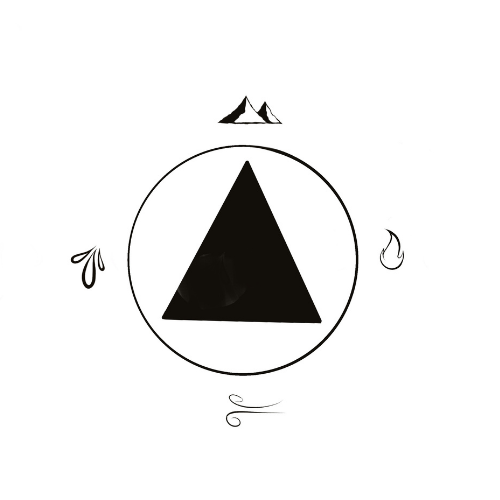
Who knew that something as simple as the directional compass can support and guide you through any of life's challenges and wanderings, both literally and metaphorically? Well, it wasn't until I began looking into more traditional healing when I realized the compass we were taught as young children also had some powerful significance for our ancestors and how THEY walked through life. In my work today as a nature-based coach, the compass, or Medicine Wheel is the central piece in reconnecting people to nature.
I even found it a valuable reflection tool for business development. As I was guiding high school students through a workshop on entrepreneurship, I gave my own story as an example of how my journey was reflected in the Medicine Wheel. So, I wanted to offer this priceless knowledge over to you as another reflection tool.
Download the activity and get deep into a reflection on your life's purpose.
Specifically, this downloadable activity is ideal for
- someone wanting to start a business or begin a major project
- a transition time where your next step can go one direction or the other
- if you need to re-evaluate where you are in life and need an organized way to sift through your thoughts
It'll help you to
- Intentionally reflect on YOUR PERSONAL PASSION, YOUR STORY, and YOUR SERVICE BACK TO
OTHERS - Reflect on what it will mean to you to begin walking this path or walking in it with more
ownership - Connect to the universal compass, the Medicine Wheel, and their respective natural ELEMENTS involved in developing your true path.
