
The Greatest Threat to Colonization is the Indigenous Woman: Part 1, Black Liberation
To understand a world in the midst of racial, social, and environmental transformation we must look into the belly of the beast and work to understand where the beast comes from, how it functions, and what its agenda is. The forces of Colonization and White Supremacy are those beasts. And the greatest threat to that is WHO WE WERE BEFORE those forces came in. Here’s part one of how I’ve lived through and view this battle.
To understand a world in the midst of racial, social, and environmental transformation we must look into the belly of the beast and work to understand where these negative forces come from, how it functions, and its agenda. The forces of colonization and white supremacy are those forces. And the greatest threat to that is WHO WE WERE BEFORE those forces came in. Here’s part one of how I’ve lived through and view this battle.

Quick Google Search
What I’m about to share with you is what my eyes have seen, what words I’ve listened to, what life experiences have taught me about our humanity and the state of the world today. My views are a result of the guidance from many of my teachers and elders, schooling, educating youth, as well as my abilities to see things this way. I’m grateful fro all of those gifts and I welcome dialogue around this post.
MY LIVED EXPERIENCE
When I was in my mid-20’s I was dating a Black man. My father caught wind of this and give me the silent treatment for about 6 months. I had no idea what his reason was for the silence. Then my mother asked me one day, “Do you have a black boyfriend?” I confirmed. And the next thing she said shocked me, but didn’t throw me off completely. She said, “Well Dad’s not talking to you because he doesn’t want Black in the family.” My response was, “Wow, you both are racist!” I felt safe enough to continue with her by telling her, “I don’t get why you think this wouldn’t happen when you raised me here in the Bay Area.” Even though in the back of my head I knew racism was very much alive in the Filipino culture, and in particular, anti-Blackness.
This was a “crucible moment” in my life that taught me that anti-Blackness was global. Because up until that point I was a brown girl navigating my life as a Filipino American. I wasn’t yet exposed to the histories and the stories of anti-Blackness outside of the United States. But it was clear to me in that moment in my parents’ faces, in their words, knowing their migration story, and the belief in anti-Blackness that it was an ideology they adopted from somewhere else. But where did they learn this? Back home in the Philippines? Or was it something they learned after immigrating here? I didn’t care to ask at that time. I was too disgusted and disappointed.
We never resolved anything around this situation, but I knew that for myself, resolution was not even an option. I had to just continue on with my life however I chose because I chose my free will.
OUR TRAVELING DNA
As a socially conscious educator and ecologist, my lens has always been one of curiosity and connection. I see things in terms of systems, inter-relatedness, and interdependence. So, personally as I went about my years teaching our youth, expanding my experiences, and getting to know me, who I am, and where I come from (because a lot of my work placed me in direct interaction with racism), I decided to take my own DNA test for ethnicity. This is where I began to understand my family’s history as well as our identity as it related to colonization.

My initial DNA results
While I was waiting for my results to come in from Ancestry.com I began asking my parents how much they knew about our ancestors. To my surprise, neither of them could tell me much more past their grandparents’ names (my great grandparents). Not much was recorded. If I wanted to dig deeper into their stories I’d have to actually go to the Philippines, maybe go to the Catholic Church for records. What was also striking for me was to see that all of my relatives had Spanish names, not Malay or indigenous in origin.
A sudden wave of emotion and information came to me and I realized
(1) they lost so much including the ability to retain indigenous names (i.e., because of assimilation),
(2) what they endured compared to what I’m enduring in this life was so much more deeper and heavier on their soul and
(3) what they endured brought me and my family to be here, now. I couldn’t help but be sad about this. But it also ignited more curiosity about ancestry, migration stories, and global race relations.
Shortly after my results came in I picked up this book by Christine Kenneally, “The Invisible History of the Human Race”. It was common knowledge to me that all of us have that <1% African DNA in us, but she confirmed it for me when she opens her Chapter 12 on The History of the World,
“When you visualize the human tree, picture its trunk firmly planted in African soil. Modern humans emerged there several hundred thousand years ago and lived only there from 250,000 years ago for at least 150,000 years - much longer span of time than we have lived across the globe.”
The chapter goes on to describe where this <1% comes from and how the band of humans that made the migration out of the land we know of as Africa remains in our DNA today. Kenneally goes on and says,
“Around sixty thousand years ago a small band of them - perhaps not much more than one thousand to two thousand five hundred individuals- went traveling. We don’t know why they left or if they had any sense that they were going somewhere new, but we do know their decision kicked off one of the biggest events in the history of the human genome.
Those who remained are the ancestors of most of the one billion people who live in Africa today. The small band that left are the ancestors of everyone else in the world, and the suite of NDA they carried was only a small sample of the variety of human genomes that existed in Africa at the time of their departure. Indeed, we know the migration occurred because even now we can see that the genomes of everyone in the world outside of Africa is a subset of the genomic variation still found in Africa.”
So basically what that book was telling me was that we all come from the land which we call Africa. Which means, WE ALL COME FROM A MOTHER FROM AFRICA. As trivial as it may seem, realizing it like this blew my mind!
ANTI-BLACKNESS
So, we all come from a Black mother. The DNA shows us that she is our most common ancestor, whoever that woman was on the land we know of as Africa. But this revelation always brought me back to this perplexing ideology of racism that globally, being Black, especially was bad.
Why is it that you can find anti-Blackness around the globe and ingrained in the beliefs of many cultures? Because I couldn’t see that there were other examples of other races being seen as so inferior in the same way. Well, the first reason is probably obvious: colonization.
THE COLONIZED MIND
There’s no other way colonization can happen successfully unless you also control the minds of the people that come from that land. Not only in Africa, but in all colonized countries (most land masses) if you don’t have pride in yourself and the land you come from, you won’t fight for it.
Colonization’s goal is to separate people from their connection to their land therefore severing a connection to themselves & their identity. This is how the colonizer can take all the power over that land and its people.
For Africa, it’s our human origin. It’s where our expansion to create and populate the rest of the world comes from.
There is a certain power that exists when you know you come from a story that began creating this world.
And that’s the type of power the colonizer DOESN’T want you to have.
The second reason is our need to …
RECONCILE WITH OURSELVES
This one is the more spiritual and existential reason.
It wasn’t until I had this frank conversation with a peer healer and Ancestral Healing practitioner, Dumbei Okonji, where I realized what the ultimate teaching was around anti-Blackness. I shared what I knew about migration, DNA, indigeneity, connections to our land and ancestry, and asked her frankly,
“But why Black? Why do we hate on Blackness so much and why is it uniquely global? I just don’t get it.”
And her profound response,
“Well when it comes down to it, we just don’t like who we are.”
Knowing this, I began to understand the deeply seeded weaponry of self hate. The more we choose to accept and adopt all forms of self hate, the more we perpetuate our separation from each other, fulfilling the colonizer’s agenda.
BLACK LIBERATION
When the evidence showed me the origins of humans coming firmly from Africa, I began to understand the importance of Black Liberation.
To support and advocate for Black Liberation is to connect us back to who we are as humans.
And this can be a form of radical healing
Knowing the history of Black people over time, what they’ve endured, their ancestral story, and the impacts that continue to destroy and perpetuate destruction due to enslavement and colonization, lives within their bones, blood, and DNA of their descendants. WE are all their descendants.
Over time, as our origin from Africa migrated out to populate the rest of the land globally, our lineages began with our own indigenous mothers, giving each lineage their own origin story. Each of our lineages have their own grandeur family tree deeply rooted and planted in the land that we each came from. This also helped me understand the importance of indigeneity as the greatest threat to colonization, but that’s for Part 2!
So, in partial conclusion, this exploration of my own individual identity has opened up so much learning and unlearning about who I am and how my identity can show up event in how we relate with each other.
I hope you’re able to gain a little bit more for yourself after my share.
Please comment and add to the conversation in the comments below!
In Part 2 we’ll go even deeper into the concept and cover:
INDIGENOUS SOVEREIGNTY & THE INDIGENOUS WOMAN
THANK YOU FOR READING MY STORY!
IF YOU FOUND THIS RESOURCE HELPFUL
PLEASE SHARE WIDELY WITH YOUR NETWORKS & FRIENDS!


How the Signs of Self Hate Deepens Our Understanding of Self Love
This journey of understanding my identity more deeply has surely brought up some stuff I really could not have anticipated. In this month's blog I share with you signs of self hate that I recognized and how it reinforced my current sense of urgency to do the work of self healing. In the process of really understanding the origins of my self hate, I'm reminded that the lesson is (1) it was a long road in history that brought me to this place of self hate, (2) there were/are many factors involved, and (3) we could have a long and windy road ahead of us, but it can also be so simple.
Just as much as we aim for the bright light and positivity around us, we must honor our full selves and our experiences even if it means visiting our dark and shadow sides

How the Signs of Self Hate
Deepens Our Understanding of Self Love
SELF HATE isn’t your typical coffee-table topic.
Maybe it’s a Red Table Talk type of topic, but not something we tend to bring out in casual conversations. But the thing about deep topics is that they allow you to take a courageous step on the path to truly understanding SELF LOVE. The origins of our need to do better are often born out of our stories of SELF HATE.
As a Transformational Coach, I’ve seen breakthroughs happen within myself as well as my clients when even just a little bit of exploration of shadow parts occurs. Because we are whole people, meaning made up of many parts of our personalities, life experiences, and past stories, we don’t have access to our highest potential if we don’t spend the time understanding shadow parts such as self hate that are usually hidden deep within our psyche . We just continue on having missing pieces.
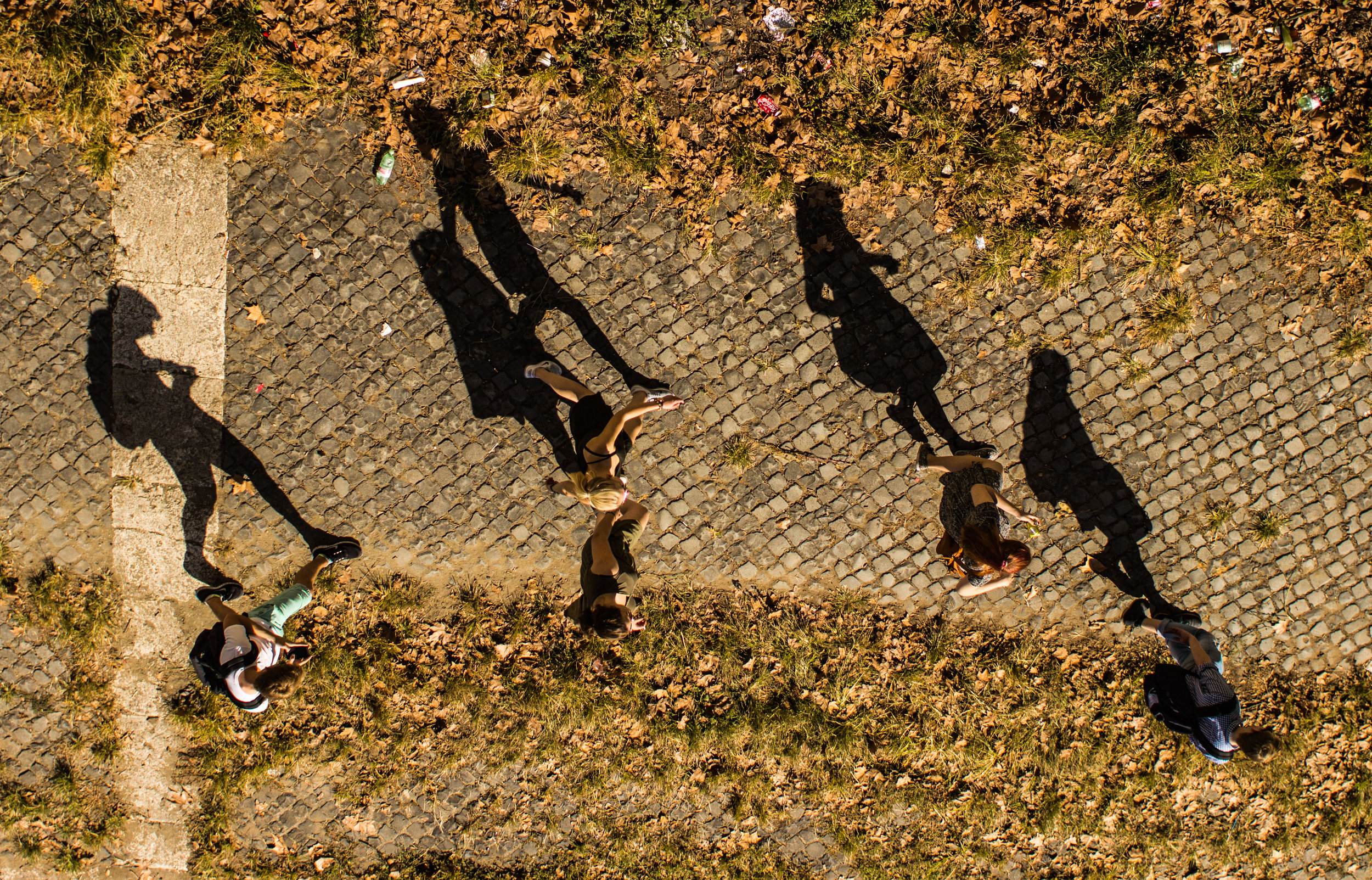
Self Hate is often referred to as one of our Shadow Parts because they are the parts of us that live in the depths and darkness of our
shame, guilt, judgement, and self criticism. Shadows don’t come out because it’s usually not safe to do so, none the less, they are there when light is present.
What I’ve come to learn and realize in the profoundness of this transformational journey, is that by better understanding the ORIGINS of my shadows like SELF HATE, we
acknowledge that they are an actual PART of us, but NOT WHO WE ARE in our wholeness. In other words they may come from something else outside of us and are not of our truest, most highest vibration, or true SELF
can explore our dark sides safely for the opportunity to NAME IT (our specific dark sides), or call it what it is. Because when we’re able to name what something is, its gives us access to the next step or action we need to take with it in order to work on ourselves
can understand our WHOLE SELF, not just the good parts, without judgement, criticism, or retaliation. And that can be liberating! It is in this freedom that allows us to SURRENDER to who we truly need to be in this world
So how did self hate show up for me?
Well, as a second generation, dark skinned Pinay life hasn’t been the most enjoyable or empowering experience. Not until most recently, thanks, Entrepinays! What it has been is a deep and serendipitous journey. At a certain point in my leadership development I felt stifled by all the bad things that happened to me. I kept coming back to my thoughts of self-depreciation, especially after I gave a presentation about my career path. The feedback I received from a colleague afterwards was that I was using a lot of self-depreciating language. I felt really sad and embarrassed by it, which probably didn’t help.
You see, up until that point I was focusing on all the negative outcomes in my career. The not finishing grad school, the layoffs, the ways in which I didn’t fit in the normalized career path. And my presentation would stop there. I didn’t talk about what each of those experiences taught me, what beauty they led me to. Probably because I wasn’t recognizing them at the time. So, what the feedback from my colleague offered me was a prompt for me to really question why those were my choice of words, why were those choices my tendencies? (Notice the shift I invited in; from WHY to HOW)
Breaking through these tendencies didn’t happen quickly thought. It’s been many, many years of processing, seeking guidance, professional development trainings, relationship fails that have brought me more awareness about how and why I feel the way I do about myself. When it comes down to it, the critical piece for me is to get down to the ROOT CAUSE of our shadows and do the work from there.
When tracing behind me, then back, then further back into my history
the origins begin to shed light on what BIRTHED MY SELF HATE

L-R: Dad, Mom, Me
For me it was about the family I grew up in. I come from an upbringing that comes from a culture of self hate. (Not uncommon for people who have a history of colonization and displacement, btw)
So in my experience,
growing up dark skinned, I was affectionately called Black Beauty, not really understanding why I even needed to have a name emphasizing my different skin tone from the rest of my family
I was expected to do well in school, make the grades, get a good and stable job, have a happy family and kids in suburban comforts and luxuries
I wasn’t supposed to be too vocal about things or, “rock the boat”. My mom would say, “Well, that’s just the way it is. They [white people] are like that”
I also was less celebrated, championed, and allowed to socialize in comparison to my older brother
For all of these points above, my inner voice understood me to be the exact opposite of the expectations. So in all the moments that I had relationships with diverse friends and lovers, was mediocre in school, didn’t land a stable or cush job situation or family, constantly rocked the boat in politics and work, celebrate myself…I began to silently hate myself for not being what was expected of me.
When it came to being in relationship with my family of origin, who have adopted the cultural norms of self hate, my subconscious began to believe that I was inadequate, disappointing, too loud, too this and that. And I began to believe that for myself and allow the bad relationships, job layoffs, and lack of confidence convince me that this is my reality; that this is the disappointment I came out to be. So much so, that when I presented my story to groups, that’s how I would talk about myself.
So now in the throws of my self healing journey and development of my nature-based practice, I know for sure, that IT IS NOT in our true nature to hate ourselves. But what is in our nature is CURIOSITY. So, I began asking and searching and tuning into my inner wisdom and gathering resources. And in that process I found where that sadness came from and found a lot of heartbreak in being reminded that the origins are a far more bigger force than in my immediate family. The act of hating on oneself was associated with the linear function and heirarchy that deems white and male as supreme in this world. It was that force that took away our understanding of self love and self pride in order to control the human mind for development and growth on land.
As the author and Filipino traditional healer of, “Way of the Ancient Healer”, Virgil Apostol puts it,
“…to restore our “pride of identity” means to respect who and what we are and where we come from, and to embrace and promote our fading traditions, which other cultures are both hungry and searching for.”
This book validated self hate to be a thing in my culture so engrained in our psyche that
“Ironically, it is usually when our Filipino traditions are practiced by foreigners that we remove our masks of share and claim these traditions as our own.”
Of coarse, there were more ways than one that validated self hate as a part of a bigger system. AND knowing that also allowed be to refocus my thoughts and actions for change to be one of my own journey. I was able to let go of the blame onto my family, onto certain individuals for shaping my world in whatever way I gave them consent. I took ownership of my own healing.
So, in order to restore my pride and identity, I started asking more intentionally, “Who am I, who are my people, and where do I come from?”
I became selfish and unapologetic about it. It’s where the Audre Lorde guidance comes from
“Caring for myself is not self indulgence. It is self preservation. And that is an act of political warfare”
Today, I’m more able to recognize different ways that SELF HATE can show up in my everyday life. But getting to SELF LOVE is definitely NOT a rose colored path and what often shows up as a road block can take the form of
self sabotage
undervaluing of myself in my work and language
tendency to feel imposter syndrome
the lack of boundaries and saying “no”
But since I know more about where these parts of me may be coming from, I can explore old stories, narratives, tactics, skills, reflections, and self-healing practices that help me move through these quicker. I appreciate these road blocks because they’re the triggers that come up, letting me know that there are parts within myself that need some sort of working out. They’re showing up needing some sort of process to help me move through them.
And honestly, it may sound cliche, but I really do believe it is SELF LOVE that will liberate us from the grasps of our SELF HATE.
“Letting love through us makes us the path love takes”
If you’ve ever felt the grips of self hate, you could start transforming it into self love by asking the same questions I asked myself long ago:
What’s causing me to do/say things that diminish me? Where did it come from?
Was this self hate something I learned from another?
When exactly did I begin believing this about myself?
What other influences around me reinforce or convince me about my self hate?
How do I want to view myself, if it is not in a hateful way?
Who can I call on to provide me gentle and loving support to work through my self hate and arrive to self love?
Get curious (instead of judgmental) about yourself and your life story.
Be open and accepting that there are things that cannot be re-written, but can be re-visited with a stronger sense of Self and compassion!
If you’ve enjoyed this post and would like to know more about moving through your Shadow Parts, book a quick consultation with me below to embark on your transformative journey!
Click below to check out the recent feature on Outside Magazine!


Nothing Left To Justify
…violence in every form; whether between people or in the extreme violence of Mother Nature onto this planet. The pains and hurts caused by humans onto each other are not separate from the Earthly destructions happening on our planet right now. That the more we continue on the way we have been with each other, the more vicious our environment will respond with its own destruction. It's all connected, I believe.
Everyday, every week, more and more I’m connecting today’s current events as metaphors about ourselves and our place in this world, identifying them as our “moments of truth” . For instance, this summer the gruesome killing of our young princess, Nia Wilson gave me the most clear message about what this tragedy is telling us about ourselves. Let me break it down for you, based on what I experienced here as an Oakland resident:
A couple of days before her killing, a local restaurant posted a call for a community counter action march from their venue to an expected meeting by a right-winged group, The Proud Boys. As the the hype intensified and community began answering the call to hold a counter, peaceful celebration of unity, I felt a sense of sadness and disappointment. Because what I actually saw were people in the streets screaming in anger towards the police and the flared up rage against the system being played out once again here at home. The sadness and disappointment was really rooted in my fatigue of all the death and violence happening here and questioning when will we actually stop resisting and be still to think about an actual way forward? I’m tired of seeing the resisting, the fighting, and the clashing. I’m not empowered by that anymore.
Then as I woke up the next morning to the horrific news that another young black life was violently taken at a BART station by a white man, I realized that this became the real moment of truth. Because as the day progressed, speculations and headlines in media questioned whether there was a connection to Nia’s murderer and the visiting Proud Boys. “Word around town was that he was one of them”, some of the posts read. But what we would soon learn about the killer was that he actually was a local resident who’s spent many years in and out of jail and had some mental health issues, unaffiliated with the right-winged group. So presumptively,
racism wasn’t the justification. It was mental illness.
(AND side note: I believe racism is a mental illness)
So can we even blame mental illness for this attack? It can’t be blamed AND serve as a way forward! Where does that blame lead us to anyway? Another hurt or attack on another, probably. So, the big takeaway for me, with respect to this particular story, was that we as a people HAVEN'T BEEN PAYING ATTENTION TO THE RIGHT THING. We aren’t listening to the core of the issue and taking action in the right way. Blame is NOT the name of the game, but the STILLNESS, finding the humanity of the situation is where we must be to open up a path forward with healing that leads to a solution.
Treyvon Martin’s parents spoke about what they’re advocating for isn’t a race issue, it’s an issue about right and wrong and that ultimately it’s about not hurting each other. When Nia’s family spoke during the press conference shortly after her murder, they gave us clues as to what we should be paying more attention to. At least, that's what my deep listening was telling me. They said, “stand down, don’t react”. They called on community to stand down and be still [while the suspect was still out there].
My intuition’s bottom line from all this? Well, since I'm an intuitive connected to Earth, the way I'm seeing this is...
The more we pay attention to REACTING to these incidents as we have been doing in resisting, the more and more gruesome the next incidents of violence will be
And violence in every form; whether between people or in the extreme violence of Mother Nature onto this planet. The pains and hurts caused by humans onto each other are not separate from the Earthly destructions happening on our planet right now. That the more we continue on the way we have been with each other, the more vicious our environment will respond with its own destruction. It's all connected, I believe.

So when will we as a nation, as a community realize that we need to be present with these realities and awaken to it FIRST before taking action? When will non-resistance be the expected next step after harm? To me, being present means going INWARD to “see”, to “listen deeply” to what our community leaders are telling us, requesting of us even, to do. Going inward means really opening up in a way where you can see these heinous crimes and the people who commit them as sharing something in common with you. Going inward means seeing the destructive natural events as connected to your own rage or exploitation of resources.
Because if we can't reach that connectedness with ourselves, the people around us, and the land we live on,

There will be nothing left of ourselves to justify our actions towards one another
There will be nothing left of this planet to justify our misuse and disconnection to our planet and all its beings
There will be nothing left for us to LOOK TO, to justify why things happen the way they do
There will be nothing left to look at but each other
So in conclusion,
what are the first steps in your awakening or awareness of our interconnectedness of ourselves and our place in this world? I realize its a journey, as it has been for me. That some of the beginning steps include
taking that difficult look at yourself and asking where the hurt exists?
what kind of hurt is it?
and what's available for me to begin the healing process?
Because when we begin to heal ourselves, we begin to heal those around us and the land in which we walk on.
The time is NOW, to understand our world more deeply. The time is NOW, to understand ourselves more deeply. The time is now because the world in which we know it is having its veil lifted. The systems and ways of thinking that are misaligned with the laws of nature are being broken down, so are the areas of land that have not been cared for sustainably.
I truly believe the way forward begins with YOU.
THANK YOU FOR TAKING THE TIME TO READ MY STORY. IF YOU ENJOYED THIS PIECE, PLEASE SHARE WITH OTHERS AND JOIN IN THE CONVERSATION BY COMMENTING BELOW!
MEET THE COACH
Raynelle Rino, CPC

A long time social sector professional, Raynelle began her career in the sciences as an ecology field researcher then moved onto environmental education and social justice at the grassroots organizational level in the Bay Area. Her love for nature and youth development brought her to teach in unique settings like alternative high schools, environmental justice neighborhoods, parks, and juvenile justice facilities.
In 2016 Raynelle started Rino Consulting Solutions, a nature-based consulting firm that provides coaching and consulting services for professionals and other businesses. It’s mission is to support and inspire the leaders of today to live in the confidence of their identities as they move through a world in the midst of social, racial, and environmental transformation. Raynelle is a graduate of Humboldt State University with a BS in Biology, a Rising Leaders and 2042 Today fellow, and lives in Oakland with her husband and daughter.

Life Re-traumatized & How I Stopped the Cycle of Harm
When I first started working in juvenile justice facilities I knew what I was good at. And that was to reach and teach environmental education to "high risk" youth populations. What I didn't know was that I was experiencing compounded trauma by placing myself in these situations. Let me be more explicit about what I mean by compounded trauma.

Life Re-traumatized
& How I Stopped the Cycle of Harm
Yes, working in prisons isn't for the faint of heart. It takes a certain type of person to be there on a daily basis. For me, it was one of the most rewarding and meaningful experiences of my career. In addition to that, I always tell people (mostly for people of color) if they have any interest in working in prisons don't do it. Well, don't do it unless you are fully aware of what you're getting into AND you've got a strong self care plan, fully loaded with resources and allies inside & outside of the facility.
When I first started working in juvenile justice facilities I knew what I was good at. And that was to reach and teach environmental education to "high risk" youth populations. What I didn't know was that I was experiencing compounded trauma by placing myself in these situations. Let me be more explicit about what I mean by compounded trauma.
As a woman of color working in direct service to said communities, it wasn't until I left my last non-profit where I was now able to observe a more privileged white woman doing a very similar job of educating in prison. After being an observer to her facilitation, I realized just how traumatizing it had been for me to have done this kind of work as a conscious (woke) woman of color. During her facilitation I noticed that when the dialogue from one student touched on a statement about the actual system of oppression that prisons represented, she listened, but her response redirected the dialogue to focus on something more superficial. I can't remember what she started talking about specifically, but I knew that was the point of difference for me. And I was triggered by that. I felt the dialogue was shut down, that the student wasn't validated or nurtured in their beliefs about "the system" and there was no space to continue to dialogue around that.
I started to sense that unlike her, (with checked assumptions here) who she can do the J-O-B, be in these facilities with these communities, then go back home to something different. I couldn't do that. I didn't have the privilege of putting my blinders on whenever, to not find commonality with my students in the way I looked, maybe the ways in which I grew up and had similar lived experiences and emotions as my students, etc... Then on top of that, I had to go home and wonder why there was so much trash on my streets and broken down cars, why did another kid got shot at the corner store?, why is it such a struggle to just get ahead in life?...
I realized then, thatI worked in trauma,
"walked the streets" in trauma,
and I went home to trauma.
I had no rest.
The serendipitous part of that moment was that I finally came into a reconciliation about the differences between privileged white folks working in these communities and my own identity as a POC doing the same work.
I was more prone to being re-traumatized while on the job
But on my long drive home from that observation I came into that knowing. I said to myself, hey the men in that facility have gained so much growth, healing, and a safe place to process that I can't disregard that. If she, (privileged white woman) can do it, handle it, continue to proceed after so many years, then good for her! She's able to facilitate and impact these men and this program needs to keep it going! So, now that I reached that reconciliation, I had to make my next move. How then, would I continue to do the things I'm good at and loved to do while still working with my community WITHOUT getting re-traumatized? First,
I needed to find a way to END my own daily
CYCLE of trauma
I needed to begin my own HEALING
So what were my first steps in this journey?
Gather (get a hold of) myself
Gather my tribe of support
Figure out what needed to be healed
Start practicing
During that specific time in my life where I was in that prison observing this woman, I had just gotten laid off from my last position. And that lay off didn't go down as a mutual agreement in any way. I was emotionally vulnerable and I felt a little lost, mostly defeated. Still I held my ground and trusted that there was a bigger purpose for me. And that there must be something behind the pattern of losses and frustrations of working in non-profit environmental organizations. I was reminded from a good friend that I couldn't possibly take on all of the blame for how things turned out for me; that there are always those components of this system at play here.
So in trying to figure out what needed to be healed, I doubled down on figuring out where I needed to be next. I continued working with a small and special group of women as a support system to heal daily as well as to develop my spiritual awareness, I engaged fully in my coaching certification program and utilized our practice sessions to address these specific pain points, and I asked for more of myself to just surrender to my spiritual path as a healer.
No doubt its constant work, learning, and growth.
But my everything and every part of me is affirmed every time I'm with a client
or out with a group on a healing hike; I'm now walking my path.
I say this to many of my clients in exploration and wonder around what is next. I say, pay more attention to the things that bring you light, levity, and fulfillment. Those are the places you want to go towards. And for those places that aren't so bright, maybe they are darker in feeling, they are places of hurt or bad feelings AND approach them head-on and ask in the most direct way, "What are you here to teach me?"
THANK YOU FOR TAKING THE TIME TO READ MY STORY. IF YOU ENJOYED THIS PIECE, PLEASE SHARE WITH OTHERS AND JOIN IN THE CONVERSATION BY COMMENTING BELOW!
MEET THE COACH
Raynelle Rino, CPC

A long time social sector professional, Raynelle began her career in the sciences as an ecology field researcher then moved onto environmental education and social justice at the grassroots organizational level in the Bay Area. Her love for nature and youth development brought her to teach in unique settings like alternative high schools, environmental justice neighborhoods, parks, and juvenile justice facilities.
In 2016 Raynelle started Rino Consulting Solutions, a nature-based consulting firm that provides coaching and consulting services for professionals and other businesses. It’s mission is to support and inspire the leaders of today to live in the confidence of their identities as they move through a world in the midst of social, racial, and environmental transformation. Raynelle is a graduate of Humboldt State University with a BS in Biology, a Rising Leaders and 2042 Today fellow, and lives in Oakland with her husband and daughter.

Racial Justice Every Step of the Way
Back in 2014 I published what would be a key blog post of my career; taking a stand against what I felt were problematic practices of “diversity and inclusion” panels and discussions. My Shapeshifting the Panel piece was me taking a stand against...
Back in 2014 I published what would be a key blog post of my career; taking a stand against what I felt were problematic practices of “diversity and inclusion” panels and discussions. My Shapeshifting the Panel piece was me taking a stand against the tokenization, the parading of our POC identities and experiences to predominantly white audiences as an illusion that we were doing something to “solve the problem” of diversity. It was a key post in my career because the article was picked up by a manager in the US Forest Service and I was invited to participate on an advisory council for the Pacific Northwest National Scenic Trail, which then landed me a board appointment for an award winning news magazine, High Country News.
This blog post opened up my voice.

I remember writing the piece over the course of just a couple of hours. I started with my heart rapidly beating in frustration and determination because I knew what I did and experienced on my last diversity panel was something I wanted to let the world know. I wanted the community to know why it was problematic. I also knew I wasn’t going to let my voice be violated by opening up the pathway for defensive responses, blame, or ranting. It needed to come from ME in every sense of the wording, flow, and emotion.
I knew I needed TO OWN this piece.
So looking back on where I was in my personal AND professional development, I can see how those parts of my story are now being implemented in how I function as an independent agent with Rino Consulting Solutions. My values of social and racial justice are more clear.
So how does it show up in my practice?
I focus on THE WORK from a JUSTICE LENS
When I was vetted to serve for the US Forest Service I had to make sure this wasn’t exactly what I was standing against. I asked what would my positionality be with the council, why they wanted me there, and made sure this was an invested working group, not just a talking piece for the agency. I made sure the entire council as a whole was diverse in participation and perspective.
In my Open Space Equity Presentation I challenge the notions of where our separations in environmental engagement come from by looking at the evidence in land use, historical colonization, and the socio-economic impacts of how we engage with the environment today. I show the systems at play and how our personal value sets influence the decisions made in our urban environments. I connect the evidence to show how social and racial justice are embedded in the landscape. Doing the work means presenting a different perspective and understanding how that impacts our personal value sets, which then drive our passion to participate in change and make choices.

We talk about the systems at play for perspective and knowledge
I do racial justice, NOT diversity and inclusion
I remember one presentation I did for a college group really bombed. I mean, really bombed. I lost the audience, there was silence when I was done, and the post Q & A session seemed to just perpetuate my frustrations with diversity work. I heard later that I left the audience drained of their energy, lost, and I seemed really bitter to them. And I was.
I became stuck. I didn’t know how to think differently about how I felt about “diversifying the industry” and my participation in this work in my career. Until a close friend of mine listened to how I spoke about my frustrations with diversity work. And when she said to me, “You know, I’ve always been confused about why so many organizations don’t understand that there’s a big difference between ‘diversity’ work and ‘racial justice’ work. They’re not the same thing.” Instantly it became clear to me! I do racial justice work, not diversity work!
Mind you, diversity as a “body of work” is more than a thing, it’s a BEING. And some strategies like increasing the number of POC staff is a stopgap to cultivating your being a more diverse entity, culturally. It just gets you the numbers. Racial justice on the other hand, focuses on the actual systems of society that create the separation of communities, land, economics, power, status, and the disparities in industry engagement. It gets to the belly of the beast and works from the core. And I'm presenting THAT as the take away or starting point for the work. That’s what I do.
So, going back to my bombed presentation. I had another opportunity to present to a similar audience. This time I changed the words on my presentation from “Diversity Engagement Strategist” to “Racial Justice Centered Engagement”. And I focused in on the language and content from a racial justice lens. What was the response from the audience? They wanted to know more about racial justice and what I meant by that. They shared stories of feeling the same ways in the workplace or in internships, and one student even came to me after the presentation crying because it brought up similar emotions and challenges in her identity at her agency. She found deeper moments of relating to me and my experience as a WOC. I have to say, I think I landed that presentation!
Calling IN, not calling OUT
I consider myself a super-duper empath. The level of sensitivities I have with people and energies around me are so enormous sometimes that I’ve actually had to devote intentional time and investment understanding how to manage my sensitivities. That’s the healer in me. So, when I see people in pain emotionally and physically it affects me A LOT.
In previous experiences as a training participant AND facilitator I’ve seen too many instances when activities done around power and privilege go nowhere the next day or just go south. I see and feel the pain and frustration. If not held and cared for in its delicacy and safety, triggers can bring out the ugly parts of us. I could shovel out a bazillion articles of what happens here, but I think we've all been around the tension in a room with diverse perspectives talking about race, power, and privilege. Why do I (1) want to risk being a part of that and (2) make efforts to try and manage and facilitate those types of incidents? That work drains me and always just leaves me with all kinds of negative feels. Or I have to go home and do all this extra work to decompress and level my emotions out.
What’s my conclusion and solution to this? I believe in doing A DEEPER KIND of work in these trainings. At the root of all of this we long to be seen and heard on our own individual terms AND as a source of greatness to the world. I want to see EVERYONE achieve THIS. So, bringing in deeper practices of communication skills to the individual level allows people to OWN their experiences. Also, understanding when and if the processing needs to happen in the safety and privacy of the individual, within a shared identity group, or in solitude. Identifying safety is a key approach I began to implement in my trainings and a key component of how I coach.
So, instead of asking folks to role play their power position or act out some implicit biases, I challenge folks to focus on language and deep listening during dialogue. I challenge folks to reach deep into their life and values and understand WHO THEY ARE FIRST before taking action. I offer tools that reach into our human condition after presenting our divided societal condition. I guide the development of individual growth towards impacting community growth, safely and effectively.

By knowing who we are in the world can we navigate it to create a world we want so that we are seen and heard on our terms
I CALL YOU INTO YOUR IDENTITY and reveal your unique gifts.
Check out what I did with Gateway Mountain Center’s Team by subscribing to my newsletter!
I choose to begin with the INDIVIDUAL
developing deeper communication skills IN SAFETY
Personally, this choice brought me some NEXT LEVEL adulting and resulted in some major shifts in my life and the people around me. And because I've practice this approach myself, I know how to hold this process for others. More importantly, when we take personal responsibility, it lands the overall responsibility of creating change in the world to the individual, not others!
Racial justice IS self-care
I have to credit my business coach, Anthem for handing this one to me! He said that when we’re not working on racial justice we’re not taking care of ourselves. It was a reminder and validation that all the self-care time and investment I have done and continue to do in my work simultaneously informs and develops me. All of these challenging times; the times I felt stuck and times I felt like I was talking to crickets in the room were all meant to be there for me as 'trail markers' for which direction to walk next.
And the way I feel about my walk is that it is more in alignment today with who I am and the values I hold in my life. What's your walk like?

What are your thoughts on a racial justice lens? Does any of this resonate or trigger you? Let me know by commenting below or forwarding to your awesome community of change makers!