
The Bigger Picture View Brings Healing & Mental Wellness
When I learned about The Overview Effect, I felt like I finally had a word for that feeling I have when I get lost in the drama of nature and start to feel just a bit smaller as a human being. It brings back a sense of humility, of being connected to something bigger than myself, and essentially my multidimensionality.
One of the things I’m interested in is the way hierarchies and systems of supremacies cut individuals off from the wider human body, so they’re not able to emphathize, or feel the pain of another. I once heard Jeannette Armstrong describe our Okanagan definitions of insanity, and one of them is ‘cut off from your whole earth part.’
- excerpt from, Turn This World Inside Out by, Nor Samara
Confession: one of my self soothing and decompression activities is to watch nature documentaries. Planet Earth, Blue Planet, Nature, you name it…I can get lost in it when my physical and mental being need a break from this daily life. Growing up as a latch-key kid in San Jose, the TV was where I turned to for my nature fix because it brought me the mystery and curiosity of the natural world. And it’s what that kept me close to a place that wasn’t “here”.
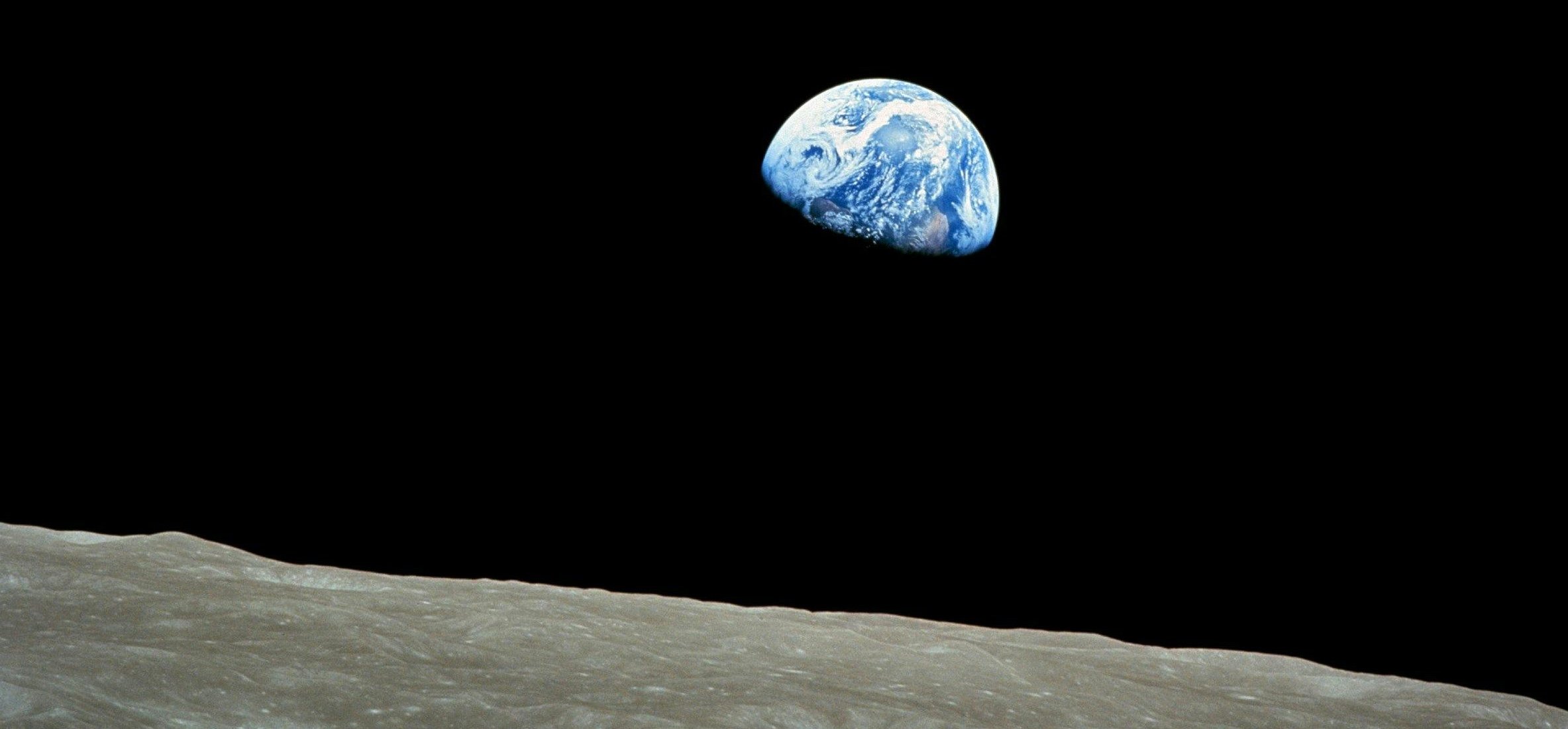
And after what seems like a lifetime of cultivating this love I have for nature, I recently found about this term that Astronauts know of as, “The Overview Effect”(watch the 15 min video with astronauts). When they’re there out in space, the view of Earth somehow changes the way you see your place on the planet. So when I learned about it, I felt like I finally had a word for that feeling I have when I get lost in the drama of nature and start to feel just a bit smaller as a human being. It brings back a sense of humility, of being connected to something bigger than myself, and essentially my multidimensionality. I realized this is what continues to nurture me and my mental health as my external environment seems to be imploding in on itself.
Now, if you’ve been to any of my talks, workshops, or trainings you know that this is the central message I give to manage the deep work many of us are doing in social justice and community organizing: our wholeness IS our wellness. And even if you’re not in social impact work, the lines between corporate and community-based are quickly fading.
So, if you’re curious about understanding the power of this nature-based approach to your work and everyday navigation through life, I offer my unique, nature-based way to engage with this material and begin your journey towards more self-awareness and intentional impact potential to your work.

You can start easily by reading more about my Radical Nature Framework and how this shapes the work of engaging with nature’s systems to heal our relationships with each other. Sharing this framework has been a profound exercise helping folks understand DEI, cultivate a social justice lens, explore spiritual guidance, and bring conscious land-based work forward. All this, guided by looking towards the natural world. Check out Our Approach and reflect on what comes up for you when you read about this framework.
Find that moment to tap into that Overview Effect by taking a walk in nature, visiting a local botanical garden, or zoning out on the next episode of a nature documentary! And share with me:
What views and experiences in nature bring you back to
a sense of wholeness and interconnectedness?

Coach, Therapist, or Both? 3 Questions to Help You Find A Practitioner
I often get asked what the differences are between these practices by prospective clients, especially those who haven’t worked with a coach before. So I want to offer some key questions to reflect on so you can get clear on who the right practitioner may be right for you, as you begin your search.
Ultimately, it’s about finding a match in chemistry with someone who’ll hold you through vulnerable and tender moments.
As the need for mental wellness increases in these times of social unrest, the amount of services and resources available for support has also increased. With online companies that provide easy access and almost on-demand support like BetterHelp or TalkSpace, beginning the search for the right practitioner can be overwhelming. Taking intentional time to trully reflect on what your self-development needs are can clear up some fog and help you see precisely who you’re looking for and where to find them.

Ultimately, the decision and investment to work with someone who is there to hold some of the most intimate moments and tender parts of you depends so much on the chemistry and overall vibe you receive when interviewing them for their services. So, before you start the “matching” game for your support person, let’s get clear on what kind of support might be more aligned with your needs and preferences for self-development and healing.
In this post, I wanted to share the specific distinctions between a coach and a therapist because I often get asked what the differences are by prospective clients, especially those who haven’t worked with a coach before or only worked with one for a very specific and short-term purpose related to the workplace. I want to offer some key questions to reflect on so you can get clear on who the right practitioner may be for you, and then begin your search.
I’ve never been a therapist, but I have had therapists before. So I can’t speak to that skill set or its requirements to be in practice. I can only let you know how I see coaching as different from therapy based on my perspective as a coach.
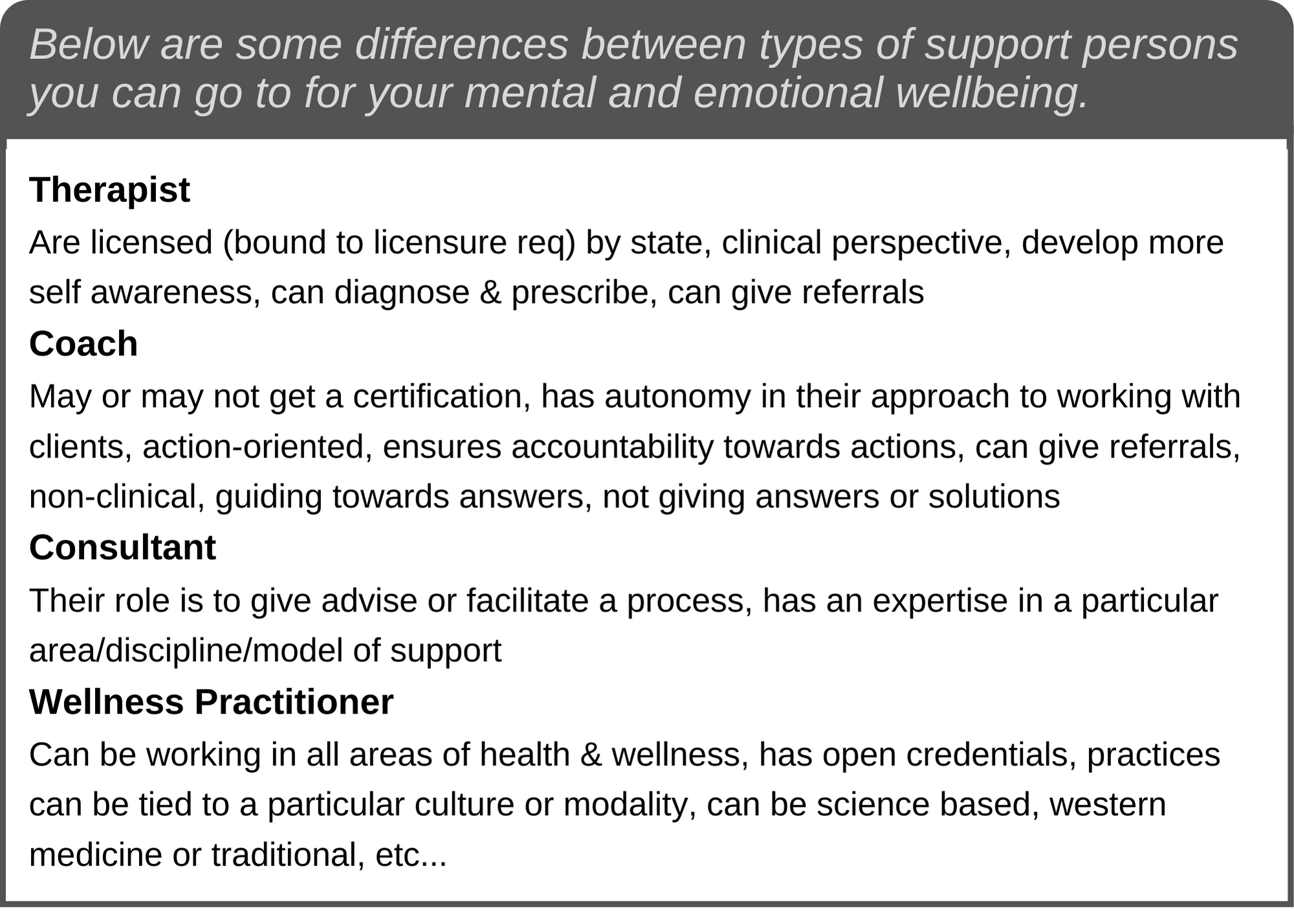
Image from nature-based coaching essentials workbooks. Rinoconsultingsolutions©️
First, coaching is often viewed as focused on a person’s career path and navigation toward higher leadership or productivity. No doubt, coaching is not as well known as therapy as a form of private support because the industry really began in corporate America. If you ask people what coaching is, more often than not, you’ll get vague answers or something to the effect of being a counselor or mentor to be a better worker/leader., I won’t get into the weeds of the differences between the roles of counselor or mentor, but they are different.
First, I’ll name what each practice is
Coaching often centers on a specific profession or industry for a certain period of time, or until you’ve achieved what you set out to achieve; a higher position, create a new business, etc. You can have coaches specific to building a business, developing speaking skills, helping you write a book, or like me supporting you in cultivating healing-centered empowered leadership. The industry of coaching isn’t highly regulated and most coaches don’t have to be certified to call themselves a coach. Doing your research and interviewing each one is highly advised.
Therapists are clinicians and often have to comply as such, like only providing service to the state they live in. So going through specific training/licensure and rigorous levels of certification and regulation are required because these clinicians are tied to the Western medical and clinical lens of addressing disease, disorders, or rehabilitation and such. They treat patients and can prescribe medications or identify diagnoses.
I believe both practices are beneficial in their own ways, based on what support a person needs. What I appreciate about being a coach is that I get to blend different modalities and frameworks of healing without the restrictions of licensure. I blend my life experiences, ecology and science education, and leadership development with my spiritual connection to nature. A therapist might have the flexibility to create a particular niche of therapy, but they are also required to avoid the risk of non-compliance. One simple example of a licensure limit is that depending on the state, a psychotherapist cannot provide services to clients living outside of the state they are licensed.
As a coach location doesn’t matter and I can also include things like dream interpretation, ancestral healing, or other psychotherapy frameworks and approaches. I have more flexibility and autonomy to blend, shapeshift, or adapt to my client's needs for healing. And because my journey to becoming a coach was heavily influenced by my identity and needing to find effective ways to support diverse leaders, I created my own framework of healing! My Radical Nature Framework grounds my practice in core principles of nature.
Now, I’m not here to sway you in one direction or another. I believe the right kind of support should go to the person based on their specific needs. So, personally an ideal situation for my mental and spiritual wellness needs would be hafing both a coach and a therapist.
So let’s start parsing out the types of support and what some main differences I can share so you can better discern what kind of support will be the most beneficial on your healing journey:
Here are three prompts you can reflect on:
What motivates you?
Thinking about what your wellness needs mean by thinking about how you want things to be different and who you want to be by the time you finish receiving support. As a coach, I need to hear goals or aspirations so that I know where I’ll be guiding you towards. A therapist may not ask you what the future of your time together can look like because the focus is on what you present each session and healing from the past, primarily.

Is accountability important to you?
Designing action steps and providing accountability for your growth and development is central to the coaching practice. I’m thinking about the shifts you want to make, what’s in the way of achieving that, and cheering you on as you approach those milestones. In my experience, a therapist isn’t so much tied to the outcomes but rather can be that supportive practitioner to help you see and name the things that may be coming up in your thought processes and behaviors. I think both can include accountability, but in coaching it’s essential. In therapy, it may be optional.
Where are you starting? Where’s your trailhead?
This is an important one to be able to speak on. As I mentioned, coaches aren’t regulated and therapists are clinicians. Because my industry isn’t regulated I need to be on my toes about the ethics of coaching. That’s why I went through (recommended) certification. If you feel that your mental health needs may exceed professional support and you’re not sure if there may be a clinical diagnosis to consider, start by talking to a therapist. If you feel ready to put some action behind your self-discovery and healing journey, you may be primed for working with a coach who can stretch or challenge you to do things outside of your comfort zone. Are you starting this work feeling extremely raw or tender? Consider a therapist. Or are you raw and tender and feel a burning desire to get proactive about changing how things are right now? You may be ready for coaching.
Other expectations:
These are a given, but are worth mentioning.
Unfortunately in our society, individual support services are expensive and often NOT subsidized by the government or your employer. So, many people go underserved and our society’s mental health needs progress slower than a snail’s pace. But I’m someone who lives my life with the value of self-determination. So, I believe we all can get free and those of us privileged to know how to do that can to share that!
Here are some other tips for making this important work of self-development arrive in your life:
Get serious about your wellness in the form of financial wellness because our money wealth is a mirror of our sense of self-worth and value. So start building that personal wellness fund and work out installment plans or barter with practitioners who are in the position to. Don’t be afraid to ask your community to pitch in. We need you at your best!
Believe there are those out there who can truly love and support you and won’t hurt or abandon you during your process. That’s why interviews and referrals are key in deciding who to work with. And always, always check the vibe (in your gut) and trust that! Let practitioners know that you’ve been hurt before and/or what’s not going to work for you when you’re in a sacred space with them. If you’ve given them notice up front, you’ve already won by advocating for yourself!
If you’re ready to step into a program with me, don’t hesitate to book a quick consultation with me to see if we’re a good match!
You can also find out more about organizations I’ve coached for or which community-based directories I’m on!
LEAP (Leadership Education for Asian Pacifics)

3 of Nature's Boundaries That Help You Cultivate Your Own
For empaths, caregivers, and nurturers like me, cultivating healthy boundaries can be one of the most challenging things to develop. When I started getting serious about pulling out of burnout, I didn’t expect boundaries to be the thing to figure out. Ultimately taking ownership of my lack of boundaries is where the transformation happened.
For empaths, caregivers, and nurturers like me, cultivating healthy boundaries can be one of the most challenging things to develop. Giving is natural and often gives us meaning and purpose. The downside of giving is that when left unchecked we can find ourselves exhausted and resentful; telltale signs that we’re on a clear road to burnout. The deeper impact is the feeling that we’ve lost ourselves to other people’s needs.

When I started getting serious about pulling out of burnout, I didn’t expect boundaries to be the thing to figure out. I thought it was everything else outside of me that needed to change, like my work culture, other people’s expectations of me, or my guilt when saying no. Which, all of those are real things to work on, but ultimately taking ownership of my lack of boundaries is where the transformation happened. That meant I had to be honest about how I handled saying no and how much I defaulted to betraying myself and my own needs before others.
Over the years I’ve learned effective strategies and dove deeper into setting serious boundaries. Certain tools were super helpful and I still use them today. Like legit - I use my Passion Planner religiously and schedule Sundays to schedule my week, making sure I block out self-care time first. I’ve shaved off so many projects with collaborators. I’ve processed the cost/benefits of committing to things and making big decisions around my business which is also my only source of income. With personal and professional relationships I’ve taken stock of how they unfold over time and have actively practiced ending relationships that start showing up misaligned. This is some grown-up stuff I’ve evolved into and it is absolutely challenging!
When I’m faced with enforcing my boundaries I always think about how boundaries naturally exist in nature. I often think about how these boundaries validate why I choose to shape the boundaries I have today. I truly believe that nature mirrors our own capacity to sustain, so I lean on the lessons nature has to teach us so we can better navigate this life. After all, since WE ARE nature, we’ll probably survive and thrive the same way nature does, right?
Blending what I know as an Ecologist and professional leadership coach, I’m sharing with you the three boundaries found in nature and how they function to preserve the cycle of life as well as our own capacity to move through adversities.
Edges
From an Ecological perspective, edges are the spaces between one habitat and another. Think about a trail in the forest. This trail cuts through the forest, and what’s deep in the forest differs from the areas adjacent to the trail. The buffer zone, or edge is the 2-3 feet of space between the trail and the deep forest. Animals are more aware of these edges because it’s the space between their safety and exposure to danger (like humans on the trail).
Thinking about edges metaphorically, we reach our edges when we have to navigate a situation or conversation that can potentially be unsafe or uncomfortable for us. We negotiate “Is this a safe conversation to continue or do I need to disengage?” (into the depths of the forest) to protect myself? Knowing your edges can be a critical piece of self-awareness for you!
What are my edges of safety or comfort?
Shorelines
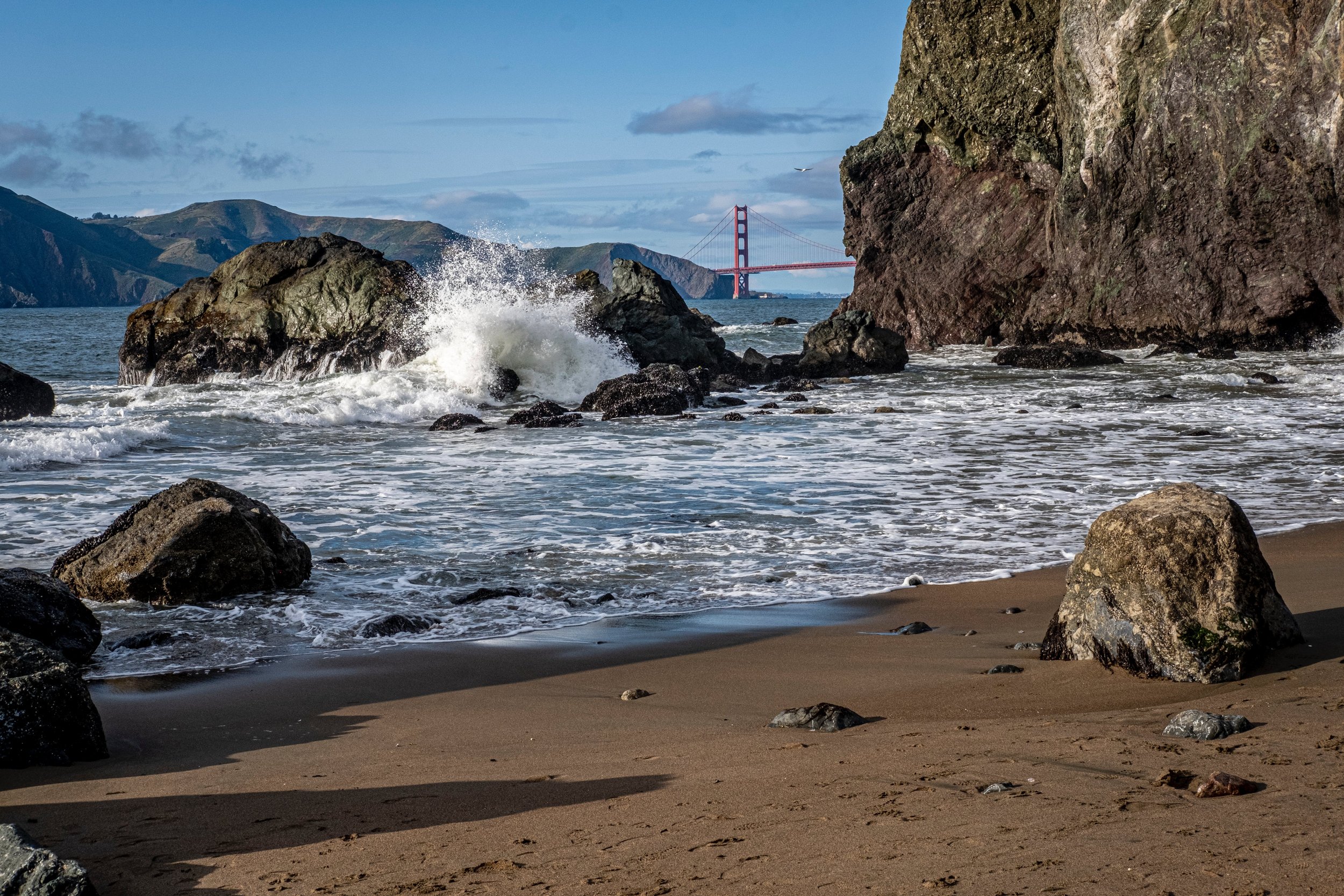
Beaches are the best places for contemplation, don’t you think? A powerful place to experience the power of the shoreline locally is at Lands End and Mile Rock Beach. Hearing the pounding of the crashing waves and seeing the sprays of seawater into the air is a display of an intense event. I think about the energy of the waves and how the shoreline is there to absorb all of that intense energy. Once absorbed, the water then softens and rushes back to the ocean as if carrying away anything that needs to leave or be cleansed.
When I think about being overwhelmed with big emotions I remember the shoreline. I think about having my own shoreline, or space in my mind or body where I can allow these intense emotions to land, absorb, and only hang onto the lesson I needed in that moment. I visualize the waves as those big emotions. The bigger the emotion, the bigger the wave.
Is my shoreline shaped to withstand these impacts?
I take a deep breath and visualize that wave being absorbed into my body as a form of acceptance, then see that thoughts or feelings that don’t belong to me wash away back into the depths of the ocean. Having your own mental shoreline can be that safe landing site for big and intense emotions.
Wetlands

Being in the Bay Area, wetlands are an important part of our natural ecosystem. At one point The San Francisco coastline only had 3% of its original wetland habitats remaining. Today, reclamation efforts have brought that number up, but more importantly, they need to exist because they serve a specific purpose for a healthy watershed system providing rich habitat and clean water from The Sierras to The Pacific Ocean.
Wetlands are that critical and unique boundary where fresh and saltwater mix. Specific plants and habitats soak up and detoxify water as it flows in and out with the tides. This boundary is a reminder that our bodies need regular detoxing and filtering amidst the daily physical and psychological pollution we’re exposed to. From chemicals in our food to the consumption of negative language or media, metaphorically “wetlands” are those places where these impurities can be processed with affirmations, guidance from wise teachers, or literally a cleanse of our gut!
Whether it’s certain toxic people, negative language, bad vibes/energy, or food, cultivating a boundary where you can transition, filter, or cleanse these areas of your life nurtures this boundary allowing you to manage the ebbs and flows of all that life has to offer.
How do I create structures in my life that can discern what is not working for me?
Reflect on the questions below as an alternative way to think about boundaries. Instead of thinking about how to “build up” boundaries and enforce them, try thinking about them more as an area of your mental and emotional wellness that functions to help you navigate life situations.
What “edges” do I have and what is on either side of those edges?
Ex. What brings me towards my limits of comfort or safety? Acceptable/unacceptable behavior or others or myself, etc…
What kind of “shoreline” do I have that can withstand the intensity of emotions that I experience?
Ex. What is my capacity to experience big feelings and emotions? Do I need to increase my capacity to withstand the pressures or impacts I’m experiencing?
How dynamic is my “wetland”?
Ex. Do I have different ways in which I can filter through the information and take what lessons can bring me back to myself or my wholeness?
Comment below and share with me how this post lands for you. Share as much or as little of your reflections. I’d love to know how you’re navigating your life!

Booklist 2: The Insatiable Human Nature Connection
I’ve been asked many times to share what books I read. So here’s a very short list of the key guides that have really shaped my work today. It’s not a long list, but they are the very few that have played a big impact on my worldview by informing my nature-based coaching process. Enjoy looking through this with some of the key teachings I’ve drawn out of each book.
I’m sure many of us have experienced their own scale of life lessons throughout this pandemic. For me, my life has recently gone through some major shifts. Earlier this year I made the courageous move (literally) to unburden myself from the things in my life limiting me from my highest potential. I recently separated from my husband, moved my daughter and I out of the home we were sharing for 6 years and found myself a gorgeous apartment in Downtown Oakland.
Along this journey I realized I was also RECLAIMING who I was before this marriage. The house we lived in was so small that a lot of my beloved books and personal belongings were left in boxes the whole time! Now that I was able to find a place of my own with much more physical space then the previous home, I found myself resurfacing these personal belongings and also resurfacing things I had loved so much about who I am and what my passions were.
And that’s when I started to reunite with some of the books I always loved having around. These books are what kept me so close to the wonders of the natural world. And as a kid who didn’t enjoy humans so much, it was nature that kept me safe and fed my insatiable appetite for curiosity of the natural world.
So with this short book list #2, I want to share with you some of the most intriguing finds I’ve kept over the many years. Enjoy looking through this and the key teachings I’ve drawn out of each book and continue on to see what I’m currently reading! You can also follow me on my Goodreads site to look at a bunch more brain food items I’ve got listed!
OUR TRUE NATURE AS LOVING BEINGS
Biological Exuberance
Bruce Bagemihl

My college Bio 101 teacher once told me that the point of all animal life is to eat, shit, and reproduce. A few years later my Mammalogy professor shared with us this book that defies all scientific belief about animals, showing that most animal groups have shown evidence of same sex interactions and gender bending behaviors. And this book is a THICK 655 pages of research articles, without the Appendix! It's a fascinating reference book.
If you ever need the evidence that nature isn’t as simple as you think, this is the book to pick up! At least rummage through it by checking it out from the library. I find it very fascinating every time I come across information about nature I never expected.
Like a text book on animal behavior and sexuality, this book covers it all and in fashion of a sort of field guide on the matters. Where each animal species is catalogued for their biology and researched sexual behavior, the studies behind the evidence are also a part of the book that makes it a solid source of information!
Dabble a little more into the book and you’ll find some interesting references related to the findings where articles cite other aspects of explaining the behavior in animals, often referencing indigenous cosmologies and beliefs about sexual behavior. Or other forms of psychoanalysis from other areas of study.
What I really appreciate in this book is that it continually keeps teaching me things that also make me think about the many different ways us humans find intimacy, sexual interaction, and even domination and power in social context. I highly recommend it!

LISTENING TO OUR ANCESTORS
Listening to Whales, what the Orcas Have Taught Us
Alexandra Morton
Science researcher and author, Alexandra Morton shares with us the years of experience and knowledge following families of Orcas and the unethical practices of marine aquatic attractions like Sea World. This book is super intense at times and reveals just how much Orcas are just like us, deeply connected to their family systems and emotional life experiences.
This book is also close to my experience and beliefs about whales and our relationship with them. As a scientist it’s fascinating to know that structurally (by examining whale bones) they are physically our ancestors. Fused bones in their fins indicate a connection to our own human feet and hands! Spiritually, these beings represent our ancestors. Being connected to them spiritually, many of my dreams where whales have been there have been dreams of messages being sent my way. That each time I had a dream about whales I looked at the context and paid attention to what they wanted me to know. They have always shown up in times of seeking guidance! To me, they are our protectors!

PLANTS HAVE FEELINGS TOO
The Secret Life of Plants
Peter Tompkins & Christopher Bird
I call this the OG of plant studies showing that we can form close bonds with plants, essentially a book about how plants have feelings AND that we surely influence those feelings in them. Think Emoto's water experiment, but the plant version. I love this book as it takes you through story after story of how scientists measured plant "feelings" and reactions to negative and positive emotions AND relationships with humans.
How many of you have increased the amount of plants or time with plants since the pandemic? Plants have surely shown up as those organisms in this world that can provide healing in many forms. From the need to care and nurture something outside of you, to needing a thing to talk to while in isolation, this book is the proof that it’s not a one-way interaction!
Read this one to take you through many experiments where plants were put to the feelings tests and probed to track reactions to things like a negative or violent person in the room to sending your beloved plants loving affirmations from afar, resulting in synchronous “good feelings”! I absolutely love the stories in this book and can surely do without some of the dry science explanations, especially in the last half of the book.
Either way, if you can find this original version, great! But chances are you’ll be picking up a newer version of this book if you can find it!
THANK YOU FOR READING!
IF YOU FOUND THIS RESOURCE HELPFUL
AND WOULD LIKE MORE LIKE THIS, SUBSCRIBE
TO MY NEWSLETTER BELOW!


Booklist 1: Gathering the Guides
I’ve been asked many times to share what books I read. So here’s a very short list of the key guides that have really shaped my work today. It’s not a long list, but they are the very few that have played a big impact on my worldview by informing my nature-based coaching process. Enjoy looking through this with some of the key teachings I’ve drawn out of each book.
I get asked a lot to share what books I read. So here’s a very short list of the key guides that have really shaped my work today. It’s not the whole list, but they are the few that have informed my nature-based coaching process. Keep in mind they’re not newly released books, best sellers per se, or on some trend right now; that’s not really how I pick books.
Enjoy looking through this and the key teachings I’ve drawn out of each book and continue on to see what I’m currently reading! You can also follow me on my Goodreads site to look at a bunch more brain food items I’ve got listed!
THE DIFFERENCE BETWEEN CARE & LOVE
All About Love New Visions
bell hooks

“Without love there is no justice” -bell hooks
My master guide, right here! Ever since I’ve read this one, I’ve recommended it, shared physical copies of it, talked about it, heard other people share how mind-blowing it is, and I just think its one to keep on your shelves forever. bell hooks is one of my “crucible guides”. You know, those key people or creators that offer you those precious gifts that heal you all along the way? You might see me quote her often!
This book in particular really shined the light on what parenting really is about and why we see the needs of youth of color show up the way they do. It also shines the light on what the consequences are for adult relationships if we don’t get THIS LOVE THING down, like fo’-real, fo’-real.
At the time I really read this book I was just beginning my career of youth education and development as a program manager with Standford University. I was also full-on in the dating game! But I was new to teaching teens and I had all the responsibilities; designing their program, partnering with the teacher community, remembering my science, booking field trips and interns, etc...I knew I wanted to get it right with the youth so I stared reading bell hooks. I wanted (and had the autonomy) to bring in whatever pedagogy felt right to make my program successful.
What I realized about my work after reading this book was that as a child, I WAS CARED FOR WELL, BUT NOT LOVED. Heartbreaking, yes. Most importantly, validating. There wasn’t as much “love” in my household as I thought. No one really said “I love you”. And I realized I was cared for well into my adulthood with a super middle class amount of privilege all around. But love in my family, well it was uncomfortable to really go there, resulting in all kinds of relationship experiences all the way into my marriage.
Read it if you haven’t. You might find it a fierce approach to love as well as…
drawing up a strong connection between knowing what love is to justice work
truly understanding what to be aware of when it comes to love and youth’s needs to be taught how to love
hard truths about how we go about our relationships, not knowing or naming the things that are missing or that are impacting our behaviors

NATURE’S NOT INVENTED, BUT I GET IT
The Invention of Nature, Alexander von Humboldt’s New World
Andrea Wulf
This book blew my mind personally because when I picked it up, I was many years an alum of Humboldt State University and would have had the tattoo on my arm for over 10 years already. This tattoo, I realized was connected to my passion for science and to Alexander von Humboldt’s work!
Anyway, the gist is that I’ve always loved existentialist views and writing. I was always drawn to the works of Ralph Waldo Emerson, Thoreau, Coolidge, etc...but didn’t know much about Humboldt, let alone that he was a major influence on these Existentialists. Well, this book took care of that and then some.
The things I most appreciate about this book is that it brings back the forgotten and powerful stories of this man’s expeditions, his discoveries as it relates to civilization/society during his time, and the immense influence he had on the people he worked with. He was one of those that advocated for natural law being the sustainable way for us humans to interact with the planet and very outspoken about the injustice of slavery and ‘monopoly’ as referenced during his time.
“Humboldt claimed that the colonies could only be liberated and self-sufficient when they were ‘freed from the fetters of the odious monopolyI’. It was the ‘European barbarity’, Humboldt insisted, that had created this unjust world.”
As a result of reading it I found it most empowering to know that Humboldt:
Used to be globally celebrated because of his infectious love for nature, science, and its diversity and advocated for indigenous people from whatever land he was exploring
Influenced Simon Bolivar to liberate his people of Venezuela from Spanish rule, slavery, and the destruction of his country’s natural resources
In the context of what was happening around the world at the time the US was becoming the “United States” I appreciated that he was always in disagreement with how the country was being built; off of exploitation and slavery of its people. He was one of the first and few voices to take a strong stance against the “European barbarity” and injustice he was observing in the locations he visited.
RECONCILING THE REMAINS OF ANCESTORS
Trace; Memory, History, Race, and the American Landscape
Lauret Savoy

This one’s a quick, informative, memoir-like poetic read. I love that it was a personal journey for Savoy, well equip with a historical lens on places, historical events, including the time’s social norms around land and race politics. I do recommend this book for folks doing work with land-based agencies like Trusts, Conservation, Stewardship, Recreation because it adds depth to the present experience of how we make decisions, create policies, and honor those who have been directly tied to this land in some way. She uncovers the past (her past) and connects it directly to where we are today as a society.
Some key things I think this book informed me about was:
The African American perspective of seeing, reclaiming, and bringing dignity back to her people, her specific family of origin
Additional context to our current struggle with anti-blackness and the origins of this ‘land ethic’
How and why places were named what they are
The common theme amongst people of color on this land is the feeling of not belonging to a land and not really having another option from that
How even a Geologist can bring her identity into her analysis, love this!
“How a society remembers can’t be separated from how it wants to be remembered or from what it wishes it was - that is, if we believe stories of ancestors reflect who we are and how we came to be. The past is remembered and told by desire.”
HOW REAL IS THIS DNA STUFF?
The Invisible History of the Human Race
Christine Kenneally

I literally had just landed in Washington State when my DNA results came to my inbox. I was there for a weekend meeting and remember getting into the rental car, astonished but not surprised by the results. I was slightly distracted the whole weekend with questions about myself and my past and ancestors. As soon as I had a break I hit the bookstore and this book popped out to me and screamed, “pick me up!”
This book has soo much intriguing information about the study of genealogy and the origins of DNA testing. The depth and detail about human history and how DNA provides the evidence of our migration are some of the more impressive parts of the author’s research, in my opinion. She doesn’t shy away from the history of genealogy’s hard truths and the destructive and evil acts that have occurred over time due to certain ideologies. There are some real truth bombs in this book!
The one thing I did leave myself a tiny bit disappointing is that this book is coming from a Eurocentric analysis of DNA. Although much of the data of DNA and human migration include points from China, I kept wondering if samples were taken of my people of East Asia and the Pacific Islands. But, perhaps the research for that is happening now, or has happened and I don’t know of it. Can someone please tell me where THAT book is?
Read this one, especially if you’ve done your DNA test and I promise it’ll add more life to your journey! Key teachings for me are:
“DNA confirmation” that racism is a social construct and genealogy has a much richer and disarming past
So much harm has been done to each other all because of the ideas we have in our mind about who is worthy or belonging to a particular group
There’s a subculture of people claiming to be decendents of Ganges Kahn, to the point of lawsuits and such. Like whoa, had no idea!
From a spiritual perspective, looking at DNA data only scratches the surface of who we are as a human organism in this world, a good stepping stone for a deeper exploration of Self
I’m really excited about what’s next for DNA research because she does talk about some of the work being done to further our understanding of our history and identity such as the intergenerational impacts to our search for ‘ourselves’. I’ve always been really interested in understanding the impacts of intergenerational trauma on our health and well-being as I wrote about in a previous blog on Soul Wounds. This book is like a good recourse to understanding the complexities of our identities!
WHAT I’M CURRENTLY READING…
Way of the Ancient Healer, Sacred Teachings from the Philippine Ancestral Traditions
Virgil Mayor Apostol

Words can’t even begin to describe how precious this book is to me right now. I think my love for my people is becoming even more profound now that I’m deep into some ancestral healing and discovering the ways that my people worked to heal others and what our relationship was like to our land. This book is such a comprehensive, yet surface dwelling understanding of how my people moved about this world. I’m floored by the information and how much I really identify with all the things I’m reading in this book!
And by surface dwelling, I mean I don’t honestly know how one book can really capture the depth and power of my people. So this book leaves me so intrigued by the traditions and stories included in here. Sometimes it’s soo hard to believe, the ways in which my ancestors did their healing work and to know that I can possibly bring some of these back. I can tell we come from a long line of very deeply rooted origins to this Universe.
If you are finding yourself on any level of spiritual awakening or curiosity to indigenous ways, I highly encourage you to pick this one up. And be open to the information as it may bring up some triggers or limited beliefs that come with a colonized mind!
How to Be an Adult in Relationships
David Richo

As a Transformational Coach I always drool at the opportunity to know more about struggles in ourselves and our shadows. This book, although its title sounds like it’s stuck in an industry of self help books, it’s SOOOO GOOD!!! It really is. Break into it and you’ll find page after page of truth bombs and stylistic prose like,
“Nature cannot afford to lose any of her stewards, so she has calibrated the heart so it is never permanently fulfilled”
Or
“Can I stand in the moonlight and feel its reflection as nature’s mirroring and let that be enough for now?
I just broke this open a few months ago and try really hard not to highlight almost every other sentence. It’s dense but in the best way possible! This, no doubt is going to be another permanent one on my bookshelf!
THANK YOU FOR READING!
IF YOU FOUND THIS RESOURCE HELPFUL
AND WOULD LIKE MORE LIKE THIS, SUBSCRIBE
TO MY NEWSLETTER BELOW!

The Last Episode of Your Telenovela
Over the years I’ve discovered more of the complexities that played a role in this self-deprecating language. There’s so much ongoing work I do in self-reflection, healing, reframing simple sentences in email responses, the list goes on and...it’s FOR REAL challenging sometimes. But if I can offer you three simple ways to reflect on your own story language, we can add so much more to this world by telling a more empowering story of ourselves!
Here are some reflections I offer you...
I used to joke about Filipino melodramas and movies because the story lines were always so predictable. Given I have minimal understanding of the Tagalog language I knew in general that the stories were always the same; lots of crying, cheating, lying, someone's parent always dies, there's several verbal altercations and insults thrown around and like all melodramas (or as they're called in Latin America, The Telenovela) the story takes FOR-EVER to progress. That's how they get you craving for more until you're hooked!
As I became a mother I began investing more time on improving my communication skills, engaging in my own healing, and leveling up in my professionalism. Then, I started seeing these shows in a different light. I started to realize just how toxic these stories were. As a conscious woman of color I couldn’t simply see The Telenovela as entertainment. They were negative and disempowering messages of women and relationships.
I've always craved positive portrayals of women and
healthy relationships because that’s
what I would want more of in my life
So speaking about my “leveling-up” in my career, I came across a really hard lesson in how I was portraying myself during presentations. After one of my training I shared my background then a colleague of mine offered her feedback and said I was using a lot of “self-deprecating” language. I guess I wasn’t thinking about how I talked about myself, but naively would just talk about my story the best way I knew how. But her feedback put me on this mission to find out what was behind all the negative self-talk and figure out what I needed to do to change my story language.
Living in a patriarchal family structure and society were obvious components influencing my disempowered female stance. And maybe cultural components played a part in being “humble” about my accomplishments, maybe not even acknowledging them at all. At the end of the day I knew I had to understand myself more deeply to know how to SHIFT and talk about me in a positive and impactful way.
Language has energy and words carry weight
So, when I reflected back on that self deprecating talk, I remembered that the story about my not finishing graduate school or not wanting this or that in my career, revealed language that focused on the negative aspects of my life. But in my mind at that time, I didn’t think it was a big deal because it was my truth. The biggest lesson was that it really didn’t matter what the outcome was of my specific story, people will remember more of the energy you bring to the room.
"I've learned that people will forget what you said, people will forget what you did, but people will never forget how you made them feel" - Maya Angelou
When I do deep listening with clients I pay attention to the language and words they choose when telling a story or giving a response. Just like my colleague pointed out for me, these are the underlying ways our notions of self-worth can manifest. It can passively reveal some of the hidden beliefs we have about ourselves that may not necessarily come from our own beliefs, but beliefs that other people/society have about us. So when negative self talk happens acknowledge it then get curious about it; where does it come from? How has it served you?
Over the years I’ve discovered more of the complexities that have played a role in this self-deprecating language. There’s so much ongoing work I do like self-reflection, spiritual healing, even reframing simple sentences in email responses, the list goes on and on...it’s FOR REAL challenging sometimes. But if I can offer you three simple ways to reflect on your own story language perhaps we can see how our empowering stories can add so much more to this world, YES?
Here are some reflections I offer you...
What you choose to talk about is what’s most important to you
Without judging yourself or having any expectations about your story, think about those stories you tend to tell others about yourself. Continually sharing specific stories that focus almost entirely on the situation (vs. how it impacts you) is a sign that something hasn’t been resolved in that story. Bring awareness to the drama.
Are they mostly positive or negative accounts, opinions, or beliefs?
Can you still feel the rawness in the emotion from that situation each time you tell it?
What larger lesson is attached to this repeated story or topic?
What’s important to you about the stories you choose to talk about?
Listen to yourself
There’s no harm in simply recording yourself talk. Oddly enough this action can reveal a lot about how you sound to yourself! Or if you have a trusty mentor or friend who is willing to actively listen to your stories, share with them the stories you hang onto. Ask them for some constructive feedback. You can even have them just ask the questions above after you talk.
Time to level up. Write the last episode of your Telenovela! NO MORE DRAMA!
Write that final episode about the person you were before you realized you were in a telenovela! Gather all your main characters and predictable scenarios for this episode. Consider this your character’s last chance to stay the same cycle of drama, or story line. Then set them free with an epic ending.
What disheartening stories do you have about your life?
What happened to you that created the negative outlook?
Have you given yourself permission to accept these situations?
Now, the challenge; create a new path with a different story language!
How will you put an end to the drama? Do you (as the main character) die? Transform?
And who is this new person you’re writing about NOW?
THANK YOU FOR READING!
IF YOU FOUND THIS RESOURCE HELPFUL
AND WOULD LIKE MORE LIKE THIS, SUBSCRIBE
TO MY NEWSLETTER BELOW!
MEET THE COACH
Raynelle Rino, CPC

A long time social sector professional, Raynelle began her career in the sciences as an ecology field researcher then moved onto environmental education and social justice at the grassroots organizational level in the Bay Area. Her love for nature and youth development brought her to teach in unique settings like alternative high schools, environmental justice neighborhoods, parks, and juvenile justice facilities.
In 2016 Raynelle started Rino Consulting Solutions, a nature-based consulting firm that provides coaching and consulting services for professionals and other businesses. It’s mission is to support and inspire the leaders of today to live in the confidence of their identities as they move through a world in the midst of social, racial, and environmental transformation. Raynelle is a graduate of Humboldt State University with a BS in Biology, a Rising Leaders and 2042 Today fellow, and lives in Oakland with her husband and daughter.

Your Year-End Deep Reflection Tool
So it’s the end of 2017 and the perfect time to get into reflection mode and see how all the events of this year impacted you and what you want to declare in the coming year for yourself. As a transformational coach, I’m here to…
So it’s the end of 2017 and the perfect time to get into reflection mode and see how all the events of this year impacted you and what you want to declare in the coming year for yourself. As a transformational coach, I’m here to offer you a deeper kind of reflection because what’s the point of keeping those reflections floating around in your head or aimlessly written in your daily journal? You can put a meaningful process into your annual reflection by taking it step by step until you take action!
If you received the newsletter, you probably downloaded part 1 of this reflection, have done it, and are ready to dive deeper with part 2 (below). And if you’re not getting the newsletter, make sure to sign up by clicking here. You don’t want to miss the next offering!
Let’s get started.
The purpose of this reflection is to elevate your view on the past year (or after a period of time where you’ve been working on your self development). My specific prompts will allow you to put pen to paper to
notice shifts you’ve made in mindset, attitude, and choices
find celebrations you might not have been aware of
Reflect on the year’s cumulative impacts on your growth & development
Part 1
Steps

Take a look at the first prompt, “I Used To...” Think about who you were at the beginning the year. Focus on areas such as your
View on something/someone
Choices you made
Undesirable/previous habits
Now, compliment the first column to the next column, “Now I...”.Think about what you did to change what you used to do and bottom line this as a statement. If you haven’t made a change, leave it blank.
Next, take a step back and CELEBRATE some of the key shifts you’ve identified.
Do this by adorning your statements with celebratory drawings next to some of the biggest or momentous changes that happened!Now, take a deep breath!Congratulations! You’ve (we’ve) been through alot this year. There’s always much to celebrate!
Part 2
Now that you’ve reflected on the shifts and changes that happened throughout the year, it’s time to put some action to them and begin to actually live in your new way of being!
Steps
Prioritize your accomplishments. Look at your list of “Now I’s...” and pick one or two that really stand out for you in being significant changes you’ve made.
Take those statements and transform them into, “Now THAT I...” statements of declaration. Name/bottom line/reframe what it is you are now able to do. This step helps you declare that you have stepped into a new way of being. See the example below.
Put it out there with “I Want to…”
Now that you have the awareness of who you are, state what you want in your life to support this new way of being.
(Continued from part 1)

Take this last step to
reach a pathway towards transformation!
Ask yourself:
What FIRST STEP can I take to create what I want in life to support this new way of being?
Download Part 1
Download Part 2
Book a complimentary 15 minute coaching session to guide you through this specific reflection and land a solid FIRST STEP to welcome a FIERCE 2018!

The "Being" and "Doing" Identity Crisis
Earlier this month I had this crazy idea to fast on what we know of as "Thanksgiving Day". When I mentioned it to my partner, his response was, "Well good luck with that!"....
Earlier this month I had this crazy idea that I would fast on Thanksgiving Day. When I mentioned it to my partner, his response was, "Well good luck with that!"
But the idea came to me because I was reflecting on the land-based work I do that is centered on giving gratitude for the Earth, its stewards of past and present, and our ancestors. I mean, that's my thing, right? Reconnecting people to nature and its elements, guiding folks into the process of sensing and feeling the elements in their bodies and "inner landscape" so they can start thinking about what that experience means to their outer, physical landscape/environment.
Ultimately, I began asking myself, "What Am I Doing?"
There's no doubt in my mind that the work I've stepped into has brought me closer to my true path. And the many signs around me confirm that this is what I'm here to DO and I know that
But now, the deeper question for me became,
Well, "Who am I being in this work then?"
Am I really identifying with what I'm doing as a reflection of who I'm being in my work? Am I working on what I say I'm about? Do I even have the permission to do what I'm doing?
And in this moment specifically, I began to question why the sudden revelation to fast on the one day of the year where everyone else around me is consuming everything? I realized that I was always aware of what "Thanksgiving Day" truly represented; also known as "Thangs Taken Day", this "celebration" of abundance and gratitude was only possible through the genocide of the indigenous peoples of this land. How am I supposed to continue walking my path of nature connection and reclaiming ancestral practices of intuitive living if I'm celebrating a time when it was all violently taken away?
Then the words started to come to me
REVERENCE, MOURNING, SILENCE, REFLECTION
All of that combined, meant to me, that FASTING ON THIS DAY is what I need to do to align myself with what my service to the world is. Let it be crazy to most! For me, its this message I was sent to align my identity in what I DO to who I'm BEING as I walk this path. And that was a feeling of REVOLUTION!
So, I'm not saying that you should join me in fasting, but I do encourage you to begin asking yourself those deeper questions,
- What are you doing? or What impact do you bring to this world?
- Who are you being? or What personal values are you honoring in your work?
These questions are important to self-development but can also apply to organizations that are looking to find more of a solid foundation, revisit a mission or vision, or create a new identity.
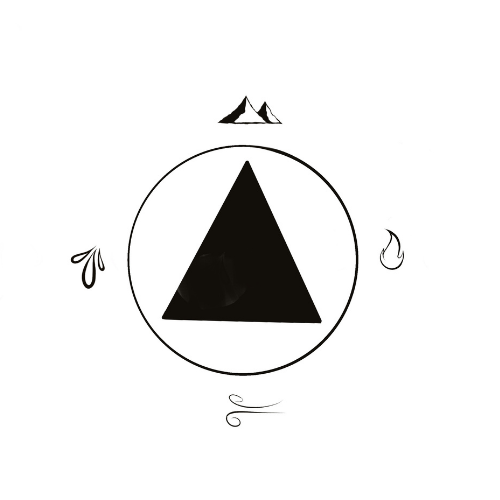
By looking at the two identities we hold in this world (diagram below) we can really begin to understand who we are in both society and the grander scheme of the world.

Click on my About page where you can reflect for yourself who you identify as in society and in nature. Ask yourself these questions:
- Where on the triangle does your work fall under? Is it fulfilling a basic need or is it bringing service to those closer to the peak? Am I creating or perpetuating equality?
- When do the elements show up for you in life? Do I gravitate towards watching the stars more, or do I find reprieve when I'm closer to water?
Then use your insights to draw upon a specific intention to bring more awareness of your values to your life.
When you look at how you answered the questions above, notice any information coming up. This process could bring up your Value Set. Make a list of what values are important to you and if possible, name your top 3 values!
Now examine:
- Are you aligned with your identities in both society and nature?
- Do any conflicting ideas come about when looking at the two?
- How does it make you feel to think about these two identities?
Finally, in this process remember to be gentle with yourself. Many times when we start to recognize disconnects or misalignments, our inner critic will come in and make us feel bad or guilty about it. Just know,
LIFE IS A JOURNEY!
FEEL LIKE YOU NEED A COACH TO GUIDE YOU THROUGH THIS PROCESS? SHOOT ME A DIRECT EMAIL TO BOOK YOUR FREE 15 MINUTE CONSULTATION!
In these 15 minutes we can walk through this identities activity and start to build a plan to begin aligning your work to your higher being!