Lead With Spiritual Intuition ✨: Nature-based Ways to Exercise Your Intuitive Listening Muscle
In the coaching practice, our ability to intuitively connect with our clients is key to facilitating transformation. And listening is a foundational part of tapping into those intuitive muscles. Are you really listening to what this person is saying, meaning, and experiencing in the story share?
We’re all intuitive. But not all of us are tapped in.
In a video conversation I had with First-Gen Latina Therapist, Claudia Parada way back in 2019, we spoke about communicating intuitively and how we’ve been conditioned to quiet our intuition as a symptom of colonization.
In the coaching practice, our ability to intuitively connect with our clients is key to facilitating transformation. And listening is a foundational part of tapping into those intuitive muscles. Are you really listening to what this person is saying, meaning, and experiencing in the story share?
As coaches, we’re simultaneously listening to what our clients are saying while intuitively listening to how our mind, body, and spirit are receiving it. Sometimes (most times) we share the same sentiments, maybe even trauma that our clients present. So we self-manage our own emotions so we don’t bring our baggage to the session. We’re listening on multiple levels & dimensions, and that’s actually hard work!
So how can you strengthen your intuition? Let’s start with listening intuitively.
Listening is more than just hearing words. True listening requires presence, openness, and trust in our inner knowing. In our fast-paced world, we often forget how to listen—not only to others, but to ourselves. As natural care-givers, people pleasers, and nurturers we often listen to respond to where we can help or fix things for others.
Nature offers us a timeless teacher.
When we step outdoors and listen deeply, we remember how to quiet the noise and receive guidance from both the outer world and our own intuition, i.e., our inner voice.
Here are 3 practices to strengthen your intuitive listening skills the next time you’re in a deep conversation. Remember nature’s lessons to help guide you towards a more impactful conversation.
Listen with More than Your Ears
If you're out in nature, notice the sounds around you—the rustle of leaves, the hum of insects, or the silence between bird calls and start to tap in. Then, expand your listening. Feel how the air touches your skin, sense the stillness of the earth beneath you. Intuitive listening is multisensory; it’s about receiving information with your whole being. Try this when you’re listening to someone share a story - listen with all your senses, even your spiritual/energetic sense like the vibe of the conversation, and name that vibe!
Listen for the Unspoken
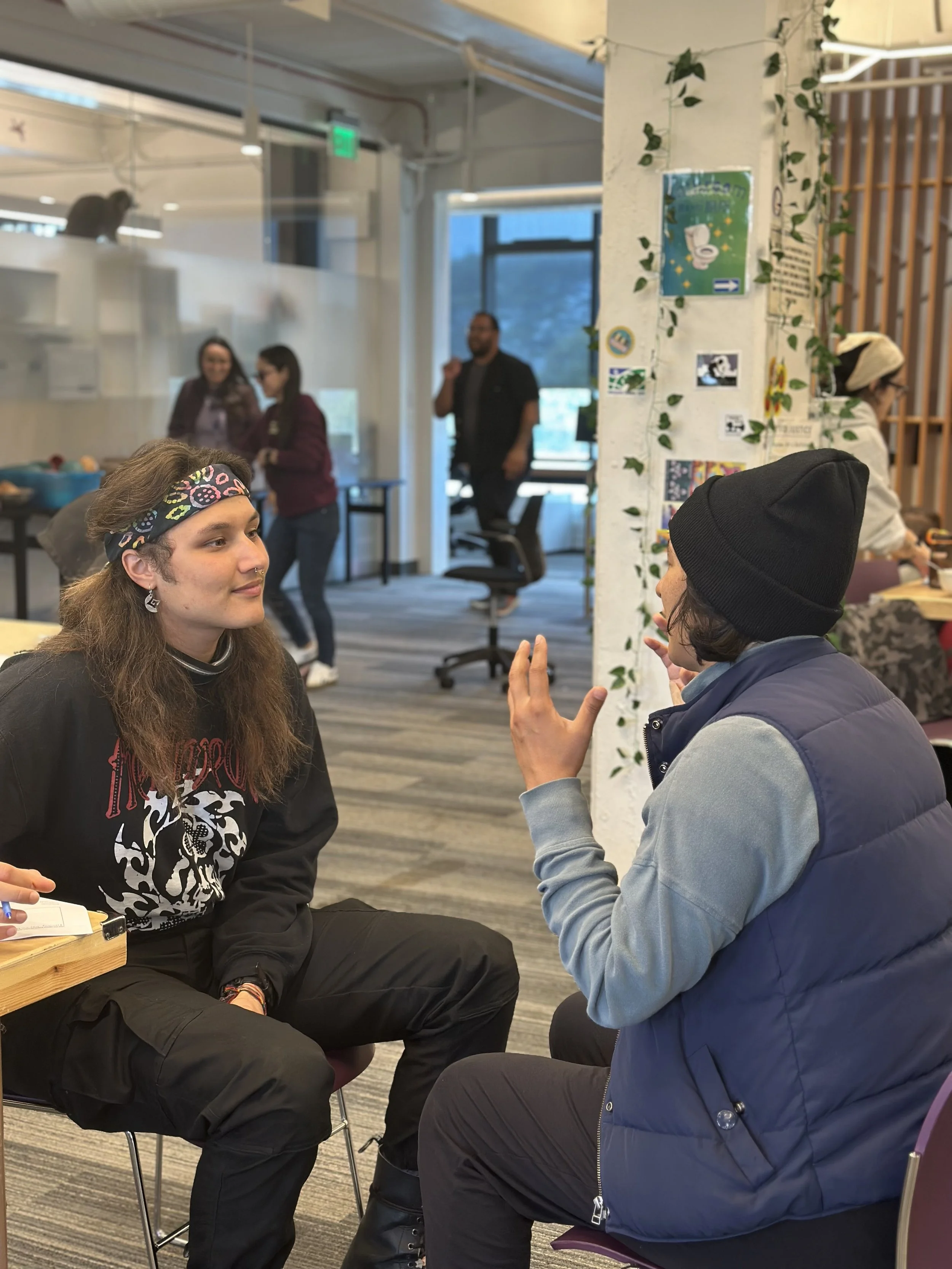
As you sit or walk outdoors, tune into what isn’t immediately obvious. Is there a tension in your body that speaks? A thought that repeats like a refrain? A pull toward a certain place in the conversation? Intuitive listening often comes as whispers, nudges, or sensations rather than loud or even verbal answers. What emotions are leading this conversation?
Let Silence Speak
Allow yourself a few moments of complete silence—no talking, no rushing, no expectation. Silence in nature can feel uncomfortable at first, but it’s often in those still moments that your intuition surfaces with clarity. When big emotions arise in conversations, try inviting silence rather than responding or making a statement of validation.
A Gentle Reminder
Intuitive listening is about slowing down enough to hear what is always present—within you and around you. Like a muscle, it grows stronger the more you practice. And nature provides the perfect space to cultivate this skill.
If you want to go into a practice with us, consider the next NATURE-BASED COACHING SKILLS COURSE and sign up for our Intuitive Listening Skills Course.
Sign up for our newsletter to see when the next class is offered!
THANK YOU FOR READING!
IF YOU FOUND THIS RESOURCE HELPFUL
AND WOULD LIKE MORE LIKE THIS, SUBSCRIBE
TO MY NEWSLETTER BELOW!


I Coach Disruptors ⚠️ Here Are Signs You're One Of Them 🛑
To fully accept myself I had to come to terms with my identity as a DISTRUPTOR. Once I did that I felt more whole, more complete in my identity. And I started to notice how my clients tended to be disruptors themselves!

Calm down.
Don’t be so emotional.
You’re overreacting.
You’re too intense.
All of these comments make my blood boil. Because I know internally these comments are meant to silence me, to make me smaller, tone me down, or control me. I’ve been told these things all my life. Growing up as an empathic kid, one who felt emotional overwhelm when someone was mistreated, I tended to speak up or ask questions to understand why the world was the way it was. And not everyone was comfortable with that.
But as I grew into my teenage years and young adulthood, I did what most people do; I molded to the comments and I consciously or subconsciously agreed to the judgments or gaslighting (we didn’t have that term growing up, btw). I think I submitted to keep myself safe from harm or from being ostracized.
But over time, as my career developed, I realized the choice to be silenced cost me my voice and my agency. Because I was outspoken, it cost me jobs. I literally was pushed out of positions because I was pointing out unethical practices and institutional racism with my higher-ups. This happened twice.
Now that I think about it, as I was building up my leadership, I really didn’t have role models for my rage. Coaching wasn’t a thing offered for professional development, and most of what was out there were diversity programs; aka, failed attempts to have us conform to the status quo, white supremacy culture in the workplace.
I wish I had the language, rhetoric, and supportive environments that embraced my fiery nature instead of teaching me how to be more likable.
So, how did I end up finding my voice/agency and embracing my natural rage? TBH, I had to reach outside of my professional career and resources and start working on myself on a personal level. I couldn’t have come to the place I’m in now, fully on my path as a coach, healer, and facilitator, had I not stretched myself to go into spiritual development.
Now that I’ve blended all parts of my leadership into my coaching style, I realized that I tend to have clients who resemble a lot of who I am and what I’ve gone through in life. I guess you can say it’s the way that my life lessons are now available to share and support others on a similar path!
To fully accept myself I had to come to terms with my identity as a DISTRUPTOR. Once I did that I felt more whole, more complete in my identity. And I started to notice how my clients tended to be disruptors themselves! Suddenly I can recognize the rage, the frustration, and support them in a way that celebrates and empowers the change agents they are (without them losing their jobs, of coarse)!
So, over these last 9 years of working with leaders 1:1, I noticed the traits below as the
DISRUPTOR ARCHETYPE.
Are you one of them? How many can you say "yes" to?
Stands firm on beliefs of justice and truth: They are willing to risk positions of power to advocate for what they believe is right, acting as altruists of truth and universal law.
Possesses powerful, often unseen accomplishments: Their past successes are not public but serve as a "secret weapon," providing a high moral ground from which they operate.
Highly aware, empathic, and educated on societal dysfunction: They understand the root causes of problems and are fierce advocates for solutions that align with nature and universal/natural law.
Needs balance and deep human connection: Despite their fiery nature, they crave validation, human-centered relationships, and deeper connections to prevent burnout.
Looks to nature for validation and guidance: They believe nature holds the answers for healing and "setting things right," trusting it to guide their approach to change.
If you answered yes to all, let’s flip the script on what it means to be a disruptor and make changes in our organizations without losing a job, having fallouts in relationships, or feeling alone and “too much” of anything. You’re more than enough, you’re meant to do this work!
My private 1:1 spaces are here to accept and witness ALL of you, to nurture and embrace all the rage you've been containing. Despite what your external environment tells you about who you should be, you already know who you are in all the heightened emotions that come up when in the face of injustices. Let's get to the root of your beliefs and how you see the world doing better, being better for the sake of the collective shift towards right relationship with each other. Let's work together to find a more effective way as you contribute on the frontlines!
Let’s find a time on my calendar to talk about ways you can cultivate your leadership THROUGH your rage and characteristic of being a DISRUPTOR!
THANK YOU FOR READING MY STORY!
IF YOU FOUND THIS RESOURCE HELPFUL
PLEASE SHARE WIDELY TO YOUR NETWORKS & FRIENDS
Comment below to dialogue with me!

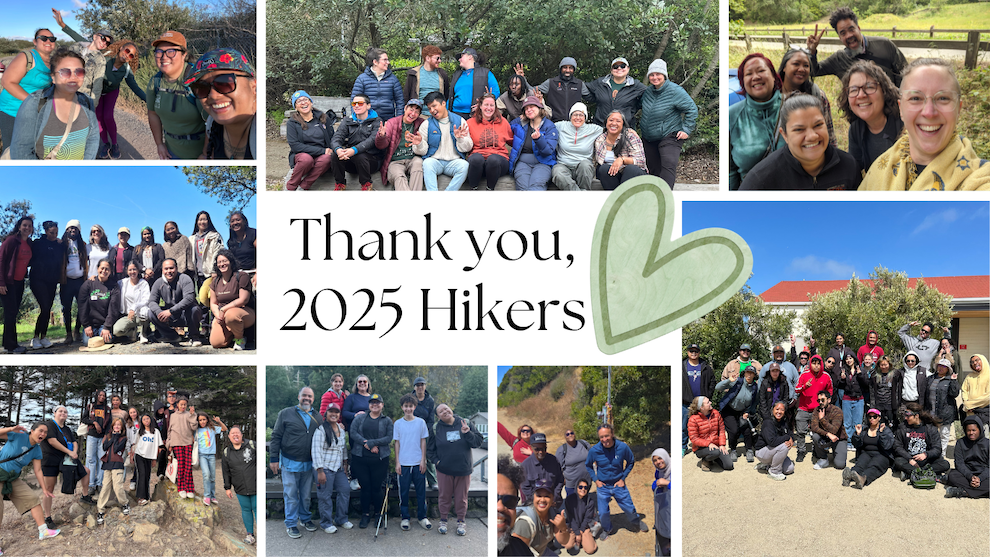
Recap Of Our 2025 Healing Hikes With Local Organizations
We hope you enjoy this short video recapping all the beautiful people we walked with and all the places we hiked. This work really couldn’t continue without the belief that what we do here at Rino Consulting Solutions is making real change happen in harmony with nature.
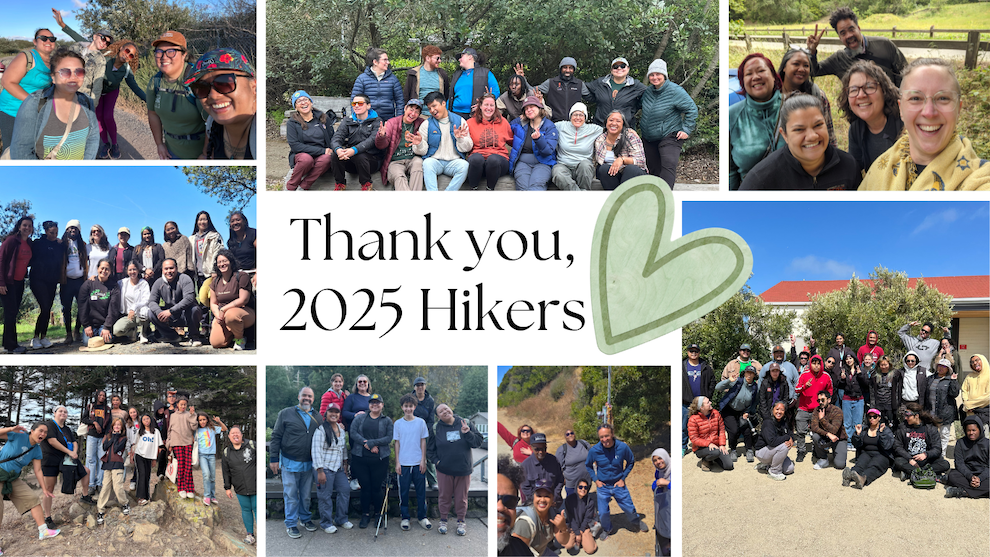
2025 was such a wild year, but what kept us committed to this work of healing in nature were the healing hikes.
Being in community with people who understood the power of nature to feel better, create deeper bonds with each other, and care for the land was all we needed to stay grounded and steadfast throughout a year that was so wildly tragic and magical.
We hope you enjoy this short video recapping all the beautiful people we walked with and all the places we hiked. This work really couldn’t continue without the belief that what we do here at Rino Consulting Solutions is making real change happen in harmony with nature.
We’re so grateful to the support guides, Julie Salzman, Maio Buenafe, and Patrick Brown who assisted our Founder & CEO in this year of growing the work.
It was truly challenging in many ways as we entered into another Trump administration. And we don’t anticipate this year, 2026 being any quieter or less dramatic than 2025. We believe we’re entering into the height of the administration’s attempts to amplify the colonizer’s and white supremacy culture’s agenda. Remember, our work in providing healing hikes began in 2016, the first time the administration came into office. So, this work is connected to those actions and also provide ways to support our collective community by building leadership capacity, self-determination, and a deep sense of belonging and unity.
We also understand that those efforts of the Trump adminstration and its followers are far less powerful in impact and numbers to distract us from our goals to create a more just and equitable world.
So we encourage you to keep staying close to us here as well as staying close to your community of love, equity, and unity as we face more challenges ahead. Continue to go to nature for grounding, supporting any efforts to better your relationships to others and your sense of belonging to your safe communities.
To book your agency or group for a private group healing hike, please fill out our application below to get started on coordinating your experience.
THANK YOU FOR READING MY STORY!
IF YOU FOUND THIS RESOURCE HELPFUL
PLEASE SHARE WIDELY TO YOUR NETWORKS & FRIENDS
Comment below to dialogue with me!

The Bigger Picture View Brings Healing & Mental Wellness
When I learned about The Overview Effect, I felt like I finally had a word for that feeling I have when I get lost in the drama of nature and start to feel just a bit smaller as a human being. It brings back a sense of humility, of being connected to something bigger than myself, and essentially my multidimensionality.
One of the things I’m interested in is the way hierarchies and systems of supremacies cut individuals off from the wider human body, so they’re not able to emphathize, or feel the pain of another. I once heard Jeannette Armstrong describe our Okanagan definitions of insanity, and one of them is ‘cut off from your whole earth part.’
- excerpt from, Turn This World Inside Out by, Nor Samara

Confession: one of my self soothing and decompression activities is to watch nature documentaries. Planet Earth, Blue Planet, Nature, you name it…I can get lost in it when my physical and mental being need a break from this daily life. Growing up as a latch-key kid in San Jose, the TV was where I turned to for my nature fix because it brought me the mystery and curiosity of the natural world. And it’s what that kept me close to a place that wasn’t “here”.
And after what seems like a lifetime of cultivating this love I have for nature, I recently found about this term that Astronauts know of as, “The Overview Effect”(watch the 15 min video with astronauts). When they’re there out in space, the view of Earth somehow changes the way you see your place on the planet. So when I learned about it, I felt like I finally had a word for that feeling I have when I get lost in the drama of nature and start to feel just a bit smaller as a human being. It brings back a sense of humility, of being connected to something bigger than myself, and essentially my multidimensionality. I realized this is what continues to nurture me and my mental health as my external environment seems to be imploding in on itself.
Now, if you’ve been to any of my talks, workshops, or trainings you know that this is the central message I give to manage the deep work many of us are doing in social justice and community organizing: our wholeness IS our wellness. And even if you’re not in social impact work, the lines between corporate and community-based are quickly fading.
So, if you’re curious about understanding the power of this nature-based approach to your work and everyday navigation through life, I offer my unique, nature-based way to engage with this material and begin your journey towards more self-awareness and intentional impact potential to your work.

You can start easily by reading more about my Radical Nature Framework and how this shapes the work of engaging with nature’s systems to heal our relationships with each other. Sharing this framework has been a profound exercise helping folks understand DEI, cultivate a social justice lens, explore spiritual guidance, and bring conscious land-based work forward. All this, guided by looking towards the natural world. Check out Our Approach and reflect on what comes up for you when you read about this framework.
Find that moment to tap into that Overview Effect by taking a walk in nature, visiting a local botanical garden, or zoning out on the next episode of a nature documentary! And share with me:
What views and experiences in nature bring you back to
a sense of wholeness and interconnectedness?

Coach, Therapist, or Both? 3 Questions to Help You Find A Practitioner
I often get asked what the differences are between these practices by prospective clients, especially those who haven’t worked with a coach before. So I want to offer some key questions to reflect on so you can get clear on who the right practitioner may be right for you, as you begin your search.
Ultimately, it’s about finding a match in chemistry with someone who’ll hold you through vulnerable and tender moments.
As the need for mental wellness increases in these times of social unrest, the amount of services and resources available for support has also increased. With online companies that provide easy access and almost on-demand support like BetterHelp or TalkSpace, beginning the search for the right practitioner can be overwhelming. Taking intentional time to trully reflect on what your self-development needs are can clear up some fog and help you see precisely who you’re looking for and where to find them.

Ultimately, the decision and investment to work with someone who is there to hold some of the most intimate moments and tender parts of you depends so much on the chemistry and overall vibe you receive when interviewing them for their services. So, before you start the “matching” game for your support person, let’s get clear on what kind of support might be more aligned with your needs and preferences for self-development and healing.
In this post, I wanted to share the specific distinctions between a coach and a therapist because I often get asked what the differences are by prospective clients, especially those who haven’t worked with a coach before or only worked with one for a very specific and short-term purpose related to the workplace. I want to offer some key questions to reflect on so you can get clear on who the right practitioner may be for you, and then begin your search.
I’ve never been a therapist, but I have had therapists before. So I can’t speak to that skill set or its requirements to be in practice. I can only let you know how I see coaching as different from therapy based on my perspective as a coach.
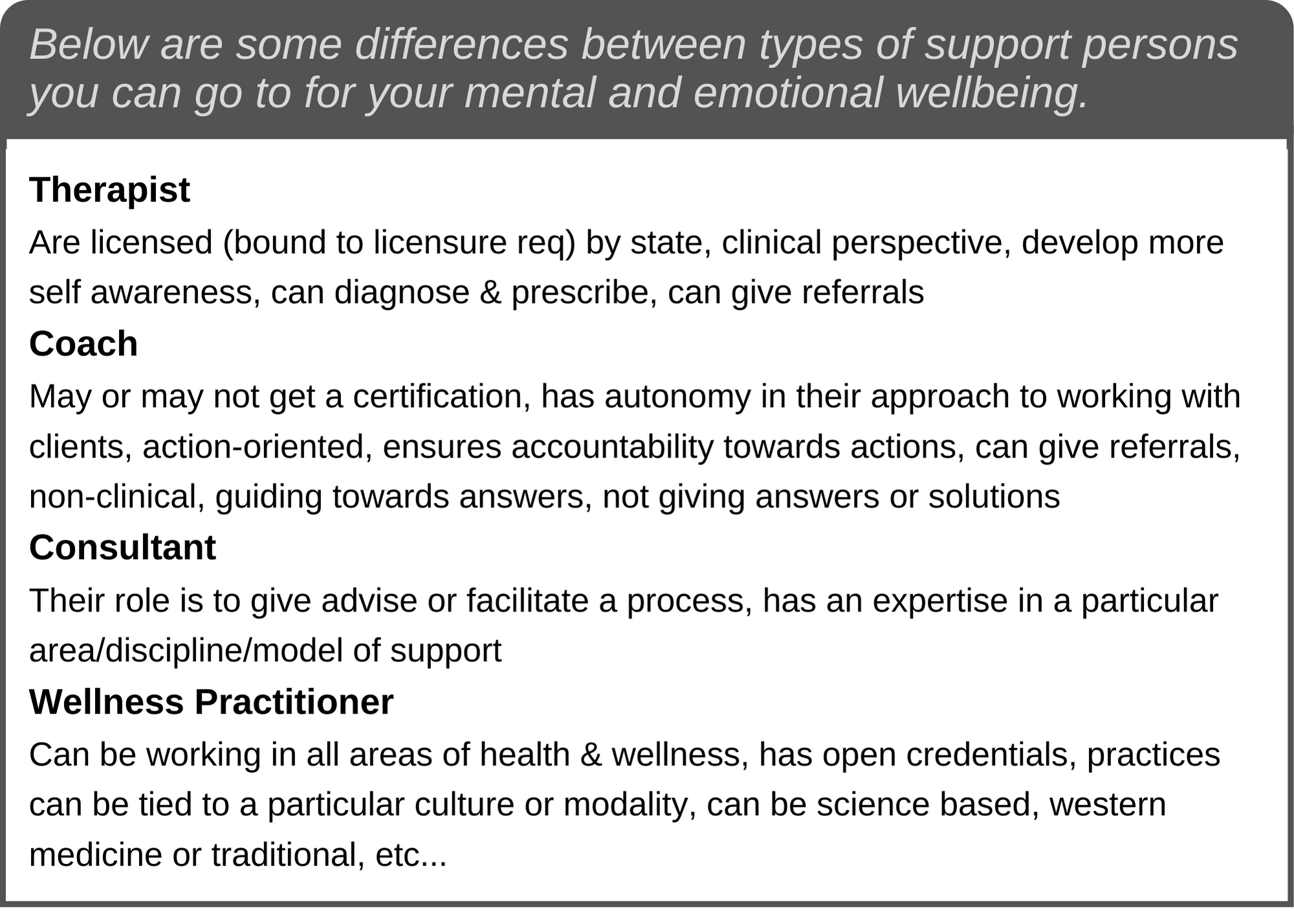
Image from nature-based coaching essentials workbooks. Rinoconsultingsolutions©️
First, coaching is often viewed as focused on a person’s career path and navigation toward higher leadership or productivity. No doubt, coaching is not as well known as therapy as a form of private support because the industry really began in corporate America. If you ask people what coaching is, more often than not, you’ll get vague answers or something to the effect of being a counselor or mentor to be a better worker/leader., I won’t get into the weeds of the differences between the roles of counselor or mentor, but they are different.
First, I’ll name what each practice is
Coaching often centers on a specific profession or industry for a certain period of time, or until you’ve achieved what you set out to achieve; a higher position, create a new business, etc. You can have coaches specific to building a business, developing speaking skills, helping you write a book, or like me supporting you in cultivating healing-centered empowered leadership. The industry of coaching isn’t highly regulated and most coaches don’t have to be certified to call themselves a coach. Doing your research and interviewing each one is highly advised.
Therapists are clinicians and often have to comply as such, like only providing service to the state they live in. So going through specific training/licensure and rigorous levels of certification and regulation are required because these clinicians are tied to the Western medical and clinical lens of addressing disease, disorders, or rehabilitation and such. They treat patients and can prescribe medications or identify diagnoses.
I believe both practices are beneficial in their own ways, based on what support a person needs. What I appreciate about being a coach is that I get to blend different modalities and frameworks of healing without the restrictions of licensure. I blend my life experiences, ecology and science education, and leadership development with my spiritual connection to nature. A therapist might have the flexibility to create a particular niche of therapy, but they are also required to avoid the risk of non-compliance. One simple example of a licensure limit is that depending on the state, a psychotherapist cannot provide services to clients living outside of the state they are licensed.
As a coach location doesn’t matter and I can also include things like dream interpretation, ancestral healing, or other psychotherapy frameworks and approaches. I have more flexibility and autonomy to blend, shapeshift, or adapt to my client's needs for healing. And because my journey to becoming a coach was heavily influenced by my identity and needing to find effective ways to support diverse leaders, I created my own framework of healing! My Radical Nature Framework grounds my practice in core principles of nature.
Now, I’m not here to sway you in one direction or another. I believe the right kind of support should go to the person based on their specific needs. So, personally an ideal situation for my mental and spiritual wellness needs would be hafing both a coach and a therapist.
So let’s start parsing out the types of support and what some main differences I can share so you can better discern what kind of support will be the most beneficial on your healing journey:
Here are three prompts you can reflect on:
What motivates you?
Thinking about what your wellness needs mean by thinking about how you want things to be different and who you want to be by the time you finish receiving support. As a coach, I need to hear goals or aspirations so that I know where I’ll be guiding you towards. A therapist may not ask you what the future of your time together can look like because the focus is on what you present each session and healing from the past, primarily.

Is accountability important to you?
Designing action steps and providing accountability for your growth and development is central to the coaching practice. I’m thinking about the shifts you want to make, what’s in the way of achieving that, and cheering you on as you approach those milestones. In my experience, a therapist isn’t so much tied to the outcomes but rather can be that supportive practitioner to help you see and name the things that may be coming up in your thought processes and behaviors. I think both can include accountability, but in coaching it’s essential. In therapy, it may be optional.
Where are you starting? Where’s your trailhead?
This is an important one to be able to speak on. As I mentioned, coaches aren’t regulated and therapists are clinicians. Because my industry isn’t regulated I need to be on my toes about the ethics of coaching. That’s why I went through (recommended) certification. If you feel that your mental health needs may exceed professional support and you’re not sure if there may be a clinical diagnosis to consider, start by talking to a therapist. If you feel ready to put some action behind your self-discovery and healing journey, you may be primed for working with a coach who can stretch or challenge you to do things outside of your comfort zone. Are you starting this work feeling extremely raw or tender? Consider a therapist. Or are you raw and tender and feel a burning desire to get proactive about changing how things are right now? You may be ready for coaching.
Other expectations:
These are a given, but are worth mentioning.
Unfortunately in our society, individual support services are expensive and often NOT subsidized by the government or your employer. So, many people go underserved and our society’s mental health needs progress slower than a snail’s pace. But I’m someone who lives my life with the value of self-determination. So, I believe we all can get free and those of us privileged to know how to do that can to share that!
Here are some other tips for making this important work of self-development arrive in your life:
Get serious about your wellness in the form of financial wellness because our money wealth is a mirror of our sense of self-worth and value. So start building that personal wellness fund and work out installment plans or barter with practitioners who are in the position to. Don’t be afraid to ask your community to pitch in. We need you at your best!
Believe there are those out there who can truly love and support you and won’t hurt or abandon you during your process. That’s why interviews and referrals are key in deciding who to work with. And always, always check the vibe (in your gut) and trust that! Let practitioners know that you’ve been hurt before and/or what’s not going to work for you when you’re in a sacred space with them. If you’ve given them notice up front, you’ve already won by advocating for yourself!
If you’re ready to step into a program with me, don’t hesitate to book a quick consultation with me to see if we’re a good match!
You can also find out more about organizations I’ve coached for or which community-based directories I’m on!
LEAP (Leadership Education for Asian Pacifics)

Attuning to Nature’s Rhythm by Mapping Out Workload Overwhelm
If an overwhelming workload is most present for you, I've got you covered with this simple diagram to help you chip away at that heaping pile of things to do so you can ease into a moment of pause or spaciousness. I share to help you manage your task list so you can manage your time, energy, and specifically your emotional well-being.
Attuning to nature’s rhythm can be challenging in a world…
that is structured around production and the engine of capitalism. Our bodies aren’t naturally designed to physically work through stress or times of the year, like wintertime. But how do we strike a balance of being in this word and in our human bodies? Here’s a tool I’ve found used across many industries from leadership development to corporate wellness so that leaders can avoid negative impacts such as burnout or exhaustion. If an abundant workload is most present for you, I've got you covered with this simple diagram to help you chip away at that heaping pile of things to do so you can ease into a moment of pause or spaciousness.
No doubt, you can use the graph below to manage your task list, which in turn manages your time, energy, and ultimately managing your emotional well-being so you can more effectively sustain the change in this world you’re working towards.

So, I'll be truthful to you, the graph below isn't the entire answer to your busy-ness and overwhelm, but it gives you a good start in thinking more critically about your time and what you're placing value on. It's a good "workload" reset with respect to what you think is important versus urgent. And yes, “important” and “urgent” are not the same thing!

So, let's get to sorting your mess out. According to your goals for the week, take your huge list and split tasks into either "URGENT" or "IMPORTANT". Don't think too hard about this and go with what your gut reaction. Now, we examine what kind of urgent and what kind of important is it?
Take a look at the graph I created below. The more urgent a task is, the more of a time suck it is and will get you caught up in a storm. The more important the task is for you, the more likely you'll make time for it and put it in your schedule.
So, let me break it down even more for you…

TORNADO - This is the danger zone. When a task is too urgent it tends to take up and drain us of our energy and attention, leaving you at risk of getting swept up in the chaos. Do you have a task that’s sweeping you away from your goals like a storm?
BOXING GLOVE - These tasks are both important and urgent, so these you want to just knock out. Get them done, that’s just what needs to happen. It’s like, LUNCH at noon!
TRASH - These tasks are neither urgent or important. Somehow they made their way onto your list, but the consequences are minimal and just get in the way. Toss it!
CALENDAR - I always say, what’s important to you will be what you make time for. So, if you regard a particular task as more important than urgent, leap into your planner and block off an empty slot for it!
NOW, let’s do a quick recap on the steps:
Gather or set some clear goals for your week.
According to those goals, list out all the tasks involved in meeting that goal or project.
For each goal, mark them on the graph in its respective place, or quadrant.
Take a step back and see if your graph feels reasonable to you, holding your GOALS as the anchor.
Are tasks in their proper places to meet your goals?
What needs to be switched around so that you are successful in meeting achievable goals?
Now take a deep breath! I mentioned before, this isn’t the answer to end all overwhelm with your busy and your impactful life, but rather it’s a worthy step forward in the direction of really understanding where your time is spent and how you value the limited amount of time we have in a day.
TIME MANAGEMENT IS A PRACTICE AND REQUIRES OPPORTUNITIES TO GROW FROM LEARNING MORE ABOUT HOW YOU FUNCTION
This activity can also reveal more clarity about how you hold boundaries. If you’re a people pleaser you might find that most of your tasks are in the “tornado” because you’re meeting other people’s needs. Or you might find the trash bin quadrant empty. Challenge that by really examining if tasks are really important or urgent; you might be “catastrophizing” the circumstances around tossing that task out.
The last thing I want to mention here is about your organization tools how they can be helpful for the follow through of your workload. I find these tools are often used by high functioning, leaders in high demand as a game changer that can tame the madness. For me, I looked into different journaling strategies (bullet journal, best self journal, etc...) to stay organized and have collected my own combination of reflection and planning sections. I made it work for me. And I would say I have my own customized diary-like planner/journal that I populate every Sunday night to get my week started.
Want more tools like this? Sign up for the newsletter to get tools and resources directly into your inbox!

3 of Nature's Boundaries That Help You Cultivate Your Own
For empaths, caregivers, and nurturers like me, cultivating healthy boundaries can be one of the most challenging things to develop. When I started getting serious about pulling out of burnout, I didn’t expect boundaries to be the thing to figure out. Ultimately taking ownership of my lack of boundaries is where the transformation happened.
For empaths, caregivers, and nurturers like me, cultivating healthy boundaries can be one of the most challenging things to develop. Giving is natural and often gives us meaning and purpose. The downside of giving is that when left unchecked we can find ourselves exhausted and resentful; telltale signs that we’re on a clear road to burnout. The deeper impact is the feeling that we’ve lost ourselves to other people’s needs.

When I started getting serious about pulling out of burnout, I didn’t expect boundaries to be the thing to figure out. I thought it was everything else outside of me that needed to change, like my work culture, other people’s expectations of me, or my guilt when saying no. Which, all of those are real things to work on, but ultimately taking ownership of my lack of boundaries is where the transformation happened. That meant I had to be honest about how I handled saying no and how much I defaulted to betraying myself and my own needs before others.
Over the years I’ve learned effective strategies and dove deeper into setting serious boundaries. Certain tools were super helpful and I still use them today. Like legit - I use my Passion Planner religiously and schedule Sundays to schedule my week, making sure I block out self-care time first. I’ve shaved off so many projects with collaborators. I’ve processed the cost/benefits of committing to things and making big decisions around my business which is also my only source of income. With personal and professional relationships I’ve taken stock of how they unfold over time and have actively practiced ending relationships that start showing up misaligned. This is some grown-up stuff I’ve evolved into and it is absolutely challenging!
When I’m faced with enforcing my boundaries I always think about how boundaries naturally exist in nature. I often think about how these boundaries validate why I choose to shape the boundaries I have today. I truly believe that nature mirrors our own capacity to sustain, so I lean on the lessons nature has to teach us so we can better navigate this life. After all, since WE ARE nature, we’ll probably survive and thrive the same way nature does, right?
Blending what I know as an Ecologist and professional leadership coach, I’m sharing with you the three boundaries found in nature and how they function to preserve the cycle of life as well as our own capacity to move through adversities.

Edges
From an Ecological perspective, edges are the spaces between one habitat and another. Think about a trail in the forest. This trail cuts through the forest, and what’s deep in the forest differs from the areas adjacent to the trail. The buffer zone, or edge is the 2-3 feet of space between the trail and the deep forest. Animals are more aware of these edges because it’s the space between their safety and exposure to danger (like humans on the trail).
Thinking about edges metaphorically, we reach our edges when we have to navigate a situation or conversation that can potentially be unsafe or uncomfortable for us. We negotiate “Is this a safe conversation to continue or do I need to disengage?” (into the depths of the forest) to protect myself? Knowing your edges can be a critical piece of self-awareness for you!
What are my edges of safety or comfort?
Shorelines
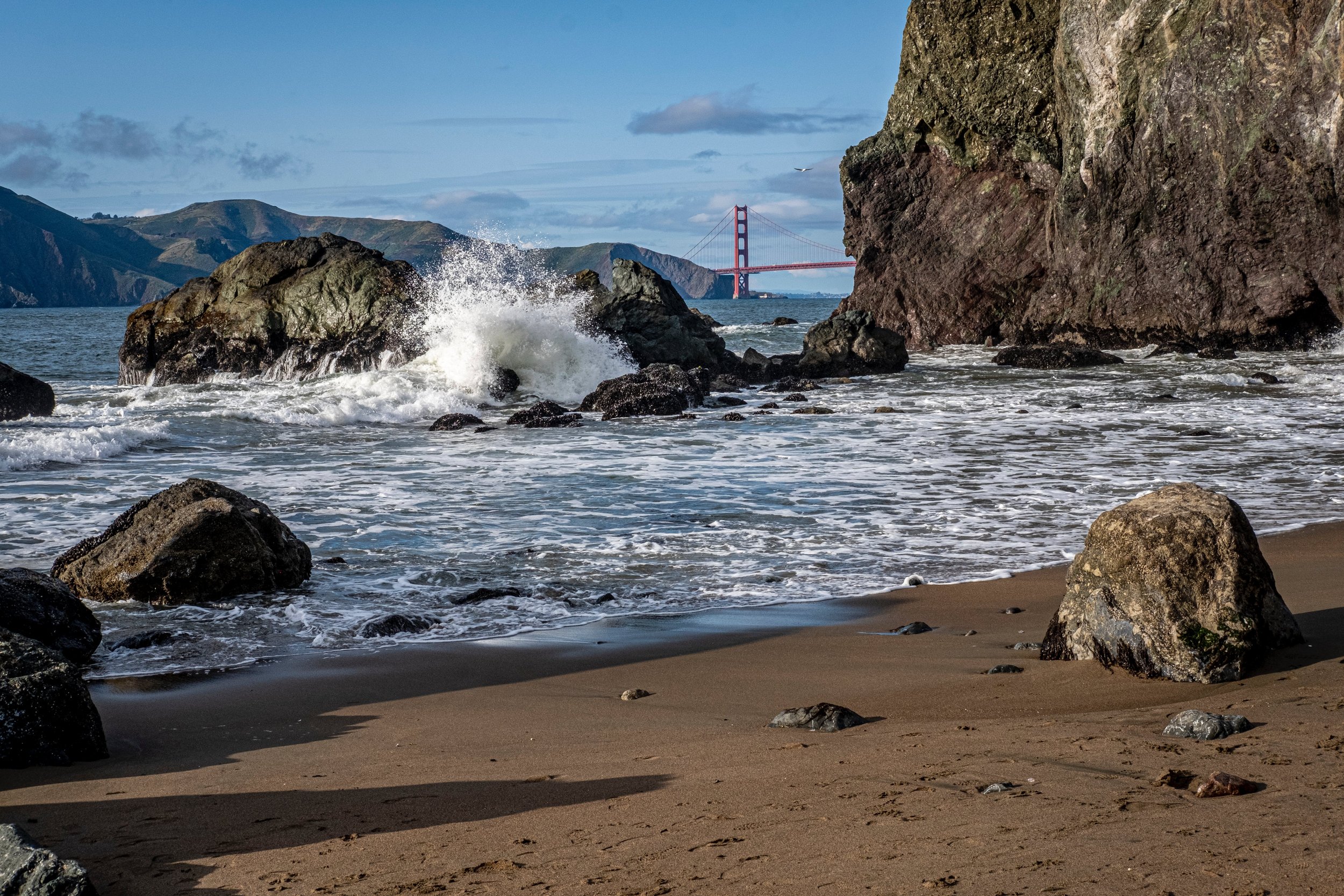
Beaches are the best places for contemplation, don’t you think? A powerful place to experience the power of the shoreline locally is at Lands End and Mile Rock Beach. Hearing the pounding of the crashing waves and seeing the sprays of seawater into the air is a display of an intense event. I think about the energy of the waves and how the shoreline is there to absorb all of that intense energy. Once absorbed, the water then softens and rushes back to the ocean as if carrying away anything that needs to leave or be cleansed.
When I think about being overwhelmed with big emotions I remember the shoreline. I think about having my own shoreline, or space in my mind or body where I can allow these intense emotions to land, absorb, and only hang onto the lesson I needed in that moment. I visualize the waves as those big emotions. The bigger the emotion, the bigger the wave.
Is my shoreline shaped to withstand these impacts?
I take a deep breath and visualize that wave being absorbed into my body as a form of acceptance, then see that thoughts or feelings that don’t belong to me wash away back into the depths of the ocean. Having your own mental shoreline can be that safe landing site for big and intense emotions.
Wetlands

Being in the Bay Area, wetlands are an important part of our natural ecosystem. At one point The San Francisco coastline only had 3% of its original wetland habitats remaining. Today, reclamation efforts have brought that number up, but more importantly, they need to exist because they serve a specific purpose for a healthy watershed system providing rich habitat and clean water from The Sierras to The Pacific Ocean.
Wetlands are that critical and unique boundary where fresh and saltwater mix. Specific plants and habitats soak up and detoxify water as it flows in and out with the tides. This boundary is a reminder that our bodies need regular detoxing and filtering amidst the daily physical and psychological pollution we’re exposed to. From chemicals in our food to the consumption of negative language or media, metaphorically “wetlands” are those places where these impurities can be processed with affirmations, guidance from wise teachers, or literally a cleanse of our gut!
Whether it’s certain toxic people, negative language, bad vibes/energy, or food, cultivating a boundary where you can transition, filter, or cleanse these areas of your life nurtures this boundary allowing you to manage the ebbs and flows of all that life has to offer.
How do I create structures in my life that can discern what is not working for me?
Reflect on the questions below as an alternative way to think about boundaries. Instead of thinking about how to “build up” boundaries and enforce them, try thinking about them more as an area of your mental and emotional wellness that functions to help you navigate life situations.
What “edges” do I have and what is on either side of those edges?
Ex. What brings me towards my limits of comfort or safety? Acceptable/unacceptable behavior or others or myself, etc…
What kind of “shoreline” do I have that can withstand the intensity of emotions that I experience?
Ex. What is my capacity to experience big feelings and emotions? Do I need to increase my capacity to withstand the pressures or impacts I’m experiencing?
How dynamic is my “wetland”?
Ex. Do I have different ways in which I can filter through the information and take what lessons can bring me back to myself or my wholeness?
Comment below and share with me how this post lands for you. Share as much or as little of your reflections. I’d love to know how you’re navigating your life!
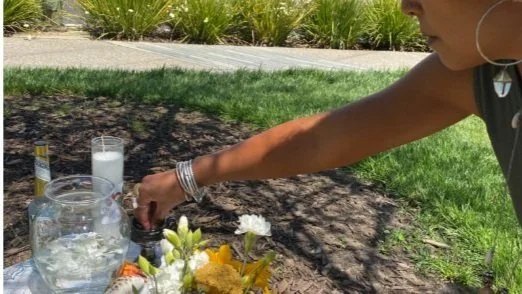
Crafting Your Sacred Space: Nurturing Ancestral Connection and Renewal at Home
Your sacred space is unapologetic, it is a specific location in your home that fosters a practice connecting to your inner wisdom for guidance. A sacred space like an altar is a symbol of your belief and connection to something greater than oneself.
For the past ten years, I have focused more of my energy – being intentional about my living/home space and providing my clients with the same tips. Your sacred space is unapologetic, it is a specific location in your home that fosters a practice connecting to your inner wisdom for guidance. A long standing tradition in all cultures, a sacred space like an altar is a symbol of your belief and connection to something greater than oneself.
Let us embark on a profound journey to support crafting your own sacred space where intention, nature, and ancestral connection intertwine in harmonious resonance. I like to think about it like a special place somewhere in your living area where you can “dial in” and connect to the multiple dimensions that make up your wholeness. An altar is just one way to make the abstract thoughts, feelings, and desires manifest into tangible objects and symbols so that we’re reminded that it’s not only us, in our human bodies, that can make our world the way we want this world to be.
The following are a few basic steps to consider to deepen your connection and communication with other realms of consciousness.
Amplify With Nature's Embrace

Intentionality - it all starts here
Begin this sacred journey with a whispered intention. If you could pick up the phone and call on your support team in other realms of existence, what would you ask them? What do you want them to know about you? Imagine your heart's deepest yearning—your sacred space is a sanctuary for reflection, a tapestry for creativity, an altar for gratitude. Your intention will breathe life into your sacred space, infusing it with purpose and meaning. And having an intention can help design the feeling of this space.
You become the architect of your sacred haven by planting this, a seed in your home- as an act of creation that sets the stage for all that follows.
Amplify With Nature's Embrace
Now, invite nature's elements in, as the language within your sacred sanctuary and tune into your inner wisdom. Because all the wisdom that exists in other dimensions of our awareness communicates as energy. Your sacred space can harness that energy through the elements.
Do you ever wonder what happens to our loved ones when they transition? They become energy. Just like the energy needed to grow a plant or to let that butterfly travel thousands of miles, our ancestors and guides now live as energy found in all parts of nature. You can bring them into your sacred space with the intention that you’ll be able to hear a more clear message.
For example, plants bring the earth's vitality, stones and crystals ground your spirit in the present moment, and a gentle fountain embodies the fluidity of existence. In these elements, you harness the profound energies of earth, air, fire, and water which can serve as metaphors for translating your intention to the deep wisdom nature has to offer.

Nature, being ancient and wise can now become your co-creator in this sacred conversation. Cultivating this partnership between the dimensions and your physical awareness deepens your connection to the world around you, giving you more clarity and a path to understand the very essence of who you are.
Ancestral Connection
As your sacred space takes shape, consider the presence of your specific benevolent ancestors—the guardians of wisdom that reside in your lineage and your environment. They are the echoes of time, offering guidance, protection, and a bridge to your roots. What do they know about you that you don’t know? We can ask them by going to the altar with specific questions.
In your daily devotion, let meditation, journaling, or simple presence be part of your rituals. As you immerse yourself in these practices, remember to invite your ancestors into the space. Pictures of your ancestors, plants traditional to your heritage, or even dry foods in the space can foster a deeper connection. They are your silent companions, offering insights into your history and the path forward. Listen to what they say to you as you recall memories or qualities about them when they were in human form. The conversation can happen in infinite ways, giving you insight as you move about your day.
In crafting your sacred space, you’re employing a spiritual conversation between you, nature, and ancestral wisdom. It becomes a sanctuary where your ordinary thoughts can transform into extraordinary awareness, maybe even opportunities in real life!
And as you conclude each visit with this space, whisper words of gratitude. Thank your sanctuary for holding you, the land for its embrace of this portal, and your ancestors for their guidance. This act of gratitude is not only that cue to “hang up the phone”, but also deepens the sacred connection by filling your heart with a sense of groundedness and renewed purpose.
For more guidance like these altar tips, sign up for my newsletter. You’ll get more guidance and intimate stories of my journey, along with VIP access to upcoming training, events, and healing hikes!
Your Nature-based Coach,
Raynelle

Shapeshifting The Panel - A Post that Set Me on a Trajectory for Racial Justice
I share this story in hopes that it serves as an example that WE CAN recover from harmful requests to be tokenized and shift our focus to impact those that matter the most; our diverse communities instead of the white majority.
A huge part of me has been rejoicing in gratitude that the pandemic caused us to ask really hard and existential questions about our lives and the critical needs for social justice became somewhat of a normalized conversation in this country. Because for such a long part of my career I thought I was the only one pushing for real change to happen. Back in the early 2000’s and 2010’s I felt like my radical voice was usually the loudest in a room full of crickets. Now that we’ve come to a point of no return of the status quo, I look back and remember what shifts I made and what beautiful things unfolded because of them. These are the moments I have to remind myself of why I go hard on making my points, why I choose the words I choose, and what purpose I serve to make this world a better place than I found it. I hope to share this particular story of the harm caused by diversity panels with my community of fierce game changers who love nature and call for social justice in the same room. I hope it serves as an example that WE CAN recover from harmful requests to be tokenized or put on the spot if we shift our focus to impact those that matter the most; our diverse communities instead of the white dominant landscape.

This was the last and final diversity panel I would participate in where I set my own intention to vocalize how harmful creating panels like this are to the efforts of DEIJ and all other efforts. It was held, organized, and moderated by Bay Area Wilderness Training (BAWT) instructors in 2014.
In 2013 I had already been in the industry of science and environmental education for about 15 years. I was in and out of small grassroots organizations, passionate and desperate to find a community of like minded disruptors to commiserate with and cause the wall of white supremacy in the field to fall. I didn’t fit any mold or mission of a particular agency and my ideas and opinions were often acknowledged as “courageous” and “glad you said that”, with an undertone of “but I wouldn’t be so bold myself, thanks for taking one for the team!”.
I have to say, I felt like I had created a small pocket of a following back then (without Instagram or Twitter), but nothing really supported this insatiable appetite I had to say what needed to be said. Some young leaders found me inspirational, some steered clear not knowing how to move forward with the ideas and questions I had presented in conversations about diversifying in the outdoors.
By 2014 I found myself needing to carve out my own voice. I didn’t want to give up and shut up. I knew I had something valuable to say! So I asked myself how can I express my beliefs in ways that others can understand what’s required for true social justice without compromising who I am? What ended up happening was me branching off into my own brand, my own consulting firm to push my radical messages through autonomously. But before my business became my livelihood, I created a blog called, The D Word. No longer active, this blog was a space for me to unleash my frustrations around the lack of diverse voices and stories by highlighting diverse professionals in the sciences and the outdoor industry, documenting deep and frank conversations about, well… “The D-word”, or diversity.
Then when my friends and colleagues at BAWT (Bay Area Wilderness Training) asked me to join a panel of other heavy-hitter POC professionals in the industry, I rolled my eyes and took a deep sigh of “ugh…here we go again…” and I accepted. I accepted because I took a quick pause in that breathe and asked myself, how can I take this opportunity and say what I really needed to say and end this form of harm to me and others like me? Also, I accepted because I had a few friends on the panel with me, including Jose Gonzalez, Founder of Latino Outdoors, Zoe Polk, then one of the Bay Areas first Outdoor Afro Leaders, Kim Bailey, and Ashanti Branch, Founder of Ever Forward Club. But despite it being a party of friends and respected colleagues on the same side as me, I was tired of the performance. I also had nothing to lose being unaffiliated with any specific agency. So, I said f-it! Let’s see what happens!
With a personal intention to have this be my last and final panel participation I went in. I played the part, answered questions as I would always and even mentioned that I was at a point in my career where I knew that working towards answering “the audience’s” (meaning mostly white people) questions and fulfilling their needs wasn’t benefitting me. I told the audience that I made a conscious decision to now put my efforts into supporting my fellow POC professionals (as I gestured to my folks seated on my left and right). That me supporting my own community and their needs was where my work was going. I continued on with an anger boiling up inside me, knowing this was just another show and pony. I needed to write out my thoughts and opinions on the matter.
So I went home heated but determined to speak my mind on paper. But a bigger challenge to myself was to not fall into a camp of disgruntled activists calling out and ascribing to the toxic cancel culture (it wasn’t called this back then). So I had to think really long and hard about creating a post that
(1) came from my own voice instead of blaming or shaming anyone else of the “industry at large”
(2) give solutions and recommendations to my readers instead of an open-ended, “so what are you going to do about it now?” cliff hanger
What I would write below in 2014 was my way of processing the many years of disappointment, heartbreak, fierce determination, and allow the healing of my wounds to show up in a way that was healthier for me and my readers. I won’t lie or sugar coat this, but it took me so much restraint and calming of my angry beating heart so I can come off on higher ground with this one. What saved me were the breathing exercises, the sitting with my anger, and the intuitive digging into my bank of knowledge and toolkit to respond to the hurt that I felt. The gist; it took a lot out of me to hold back my reaction to transform my anger into the proactive words in this piece.
Below is an expert from a previous blog site I created back in 2013 called, The D Word.
There is no epic report, online article, or twitter hash tag that can capture the true essence of this diversity crisis. Nor can they suggest solutions towards a more even participation of our increasingly diverse country. The only way to really understand what’s going on and gain insights on what you can do about it is to RECOGNIZE DIVERSITY AS A LIVED EXPERIENCE.
The very first interview posted on this blog back in April 2013 was with scientist, Yasmin Lucero. She mentioned, “I grew up in Oakland, one of the most diverse places in the world. And that diversity is very front and center and you have to deal with it. It really influences this issue of, “How do you deal with conflict? How do you deal with a difference in opinions? How do you think about it, feel about it, and how do you take care of relationships when people are different from you?”No tool kit, diversity training, or podcast can get you to a place of genuine understanding and ownership of your place in the spectrum of diversity in the environmental movement; you have to live through it.
As a woman of color working in the environmental movement, I am taking a stand against the harmful diversity practices that serve to “educate the majority” rather than “support the minority”. I want us to kill this idea that minorities serve as a resource for mostly white organizations to check their "diversity box" or to strategize a plan of action that might bring more color to their staff and participants. I'm calling for a shift the way panels are conducted and and an end to diversity trainings.
In the 15+ years that I’ve been involved in the sciences and environmental movement, I’ve been asked more than a handful of times to sit on diversity panels or contribute to some symposium on a diversity topic. And each time I find that there are similar questions and almost completely predictable outcomes. The questions often being about, “How did you get involved, what keeps you motivated to stay, and best of all, “How do we get more people like you into our programs/orgs?” The big RECRUITMENT question! One predictable outcome for me was feeling important in some way, having to exemplify myself as a ‘leader’, which in reality just translated into “look! I’m surviving the culture shock of being in a mostly white organization”. Another result was that I relived my academic/organizational journey to an audience of mostly white people because they asked me to. And last, there was nothing more that helped push my environmental career further by participating on these panels. I just kept the hamster wheel of a conversation going.
After all these years of “diversifying” my career field, I realized I was harming myself by sitting on these panels. Now I realize this practice is harmful for allpeople of color. Sure, it seems empowering and a good networking gig to be up there, but in general, I see these panels put together as resources that predominantly white organizations need in order to do at least one of the following: show examples of how they are reaching their “target audience”, gain insights from us on how to do “community outreach”, or prove to others that there are people of color out there doing work, see? How exactly does this serve to directly support our career success?
In a last ditch effort to find some sort of benefit to diversity panels, I participated in one (and final) earlier this year for a wilderness exposure organization. I was recommended by a friend to participate. He too sat at the table with me. I thought, let’s just see where this can go. Perhaps there might be something different that can come out of this one. Plus, I had some good friends up there with me. Sure enough, predictable outcomes. But one thing I did do differently was I took that stance at the end to shapeshift the panel. After the prescription-like questions were asked and somewhat remedied by our responses I chimed in one last time. I stated, that panels are a difficult position to place people of color in; to ask us to sit on and to testify our careers as successful participation and that we have some sort of knowledge on how to get you to be a more diverse organization. This is tokenizing, I reminded the crowd. I went on to say that being a person of color is a lived experience, as is working in a more diverse workplace. I expressed, that earlier in my career I would do my diversity work as a panelist talking to a mostly white audience. Then, there came a point where I realized that I needed to work in diversity, within my community(with the panelists) because that’s what supports me. I further encouraged the people of color in the audience to keep building relationships with each other and that our alliances are what’s going to count in the long run. Recognize that there are good allies to work with and bad allies to be cautious of. But we have to find a way to work that truly supports us.
And as far as diversity trainings go, I’ve organized enough of them with environmental organizations to know that these must die as well. I now realize that my impetus to organize trainings and workshops was to cope with the oppression and disappointments I experienced as a woman of color trying to conform to the majority. I felt I needed to do something about the disparities; to help the white people realize their impact and dominance on people like me. That was working to diversify; that was working with an expectation that other people can change their attitudes towards people of color in just a few activities addressing white privilege and oppression. Often times it just caused a defensive tone towards me or instilled white guilt in the form of comments given to me afterwards.
To work in diversity means I’m working within my diverse community and supporting the work of other people of color to bring our participation to a norm. I find areas for collaboration with other leaders of color and support and mentor younger folks that are passionate. The idea and resource sharing, even program development happens in the context of including cultural aspects and celebrating diversity rather than approaching it with a “lack of” mentality (which often leads back to "checking the diversity box"). Good allies play an important role in supporting people of color with similar intention and cultural awareness.
There are plenty of people of color out there doing great work and have been for many years. We don't need to resort to organizing panel discussions or diversity trainings to help us cope through this reality of a homogenous workplace. We have each other. The stories and interviews on this blog are meant to relate to, get to know, and build relationships with others so that we’re supporting each other through those tough times of disappointments, oppressive behaviors, and amongst other things, avoiding the route of having to educate the dominant culture.”
After getting this piece down and publishing it, the amount of levity that came from my body surprised me. I guess in today’s trauma informed language it may be called somatic healing. I’m no expert, but all I knew was that I was proud of myself for not being reactive towards my anger but finding a way forward that would benefit my well being and purpose as an advocate for inclusion and equity.
How do I know going in this direction of sharing my story and opinion benefitted me? Well, for one I wasn’t met with backlash or trolling. Instead, after several months of this blog post being published I was sent an email from someone in the US Forest Service, requesting my participation in an upcoming project that would involve many diverse constituents across the North and Pacific Northwest states. After the vetting process I would be appointed as an Advisory Council Member for the Pacific Northwest National Scenic Trail (PNNST). For the next couple of years I would serve and travel to different parts of the only National Scenic Trail that ran East to West, across the United States borders. And from this project I was also recruited to be on the Board of High Country News, which I still sit on today, in my 6th year of service.
Now, if this story serves any purpose for you, I hope you can see that voicing your ‘radical’ thoughts and ideas about something you’re passionate about can really work out for you in the long run. I don’t really wonder what would have happened had I not written that blog or said the things I said on the panel because I know what I have to say is worth whatever comes next. It’s just that sometimes It takes practice and a willingness to pause to reflect first before reacting with the next step.
Think about what your purpose means to you based on who you are and who you are fighting for. How will your ideas benefit us all in the long run?
In your mind, play all of the possible scenes over and over again in your mind, thinking about all of the possible outcomes from the steps you want to take after you speak your mind. Who will it benefit?
And last, remember what’s at stake with respect to the change you fight so hard for in this world. If you don’t create change and challenge the status quo, we’ll all be doing the same thing tomorrow.
THANK YOU FOR READING MY STORY!
IF YOU FOUND THIS RESOURCE HELPFUL
PLEASE SHARE WIDELY TO YOUR NETWORKS & FRIENDS
Comment below to dialogue with me!

"Root To Bloom" - A Program Born from My Healing Journey
Like many passionate providers, I thought vocalizing my needs would get me somewhere. But I’m about to share a story about the many years (10+) of a swerve-y, chaotic, and down right traumatic career path.

Each season we hire community healers, & wellness practitioners as guest speakers to add to the wealth of resources around us. Here we are in the EcoCenter with movement healer, Sammay Dizon.
I used to be a community-based service provider and vocal advocate for diversity within land-based organizations. I spoke out, led efforts, formed groups and containers to drive the narrative of “lack of diversity” and hold myself to the fire, challenging my higher ups and the authorities-that-be, for more inclusive space for people like me and the communities I serve, who often looked like me. But I quickly learned through many failed attempts and fallouts that this wasn’t where my fire for change was going to be affective.
Sadly, like many other passionate (I would even say wounded) providers, I thought vocalizing my needs would get me somewhere, but it only left me burnt out. I was left with bigger questions about “Who am I in this work?”, “Why do I feel the need to stay?”, and the most challenging, “Why can’t I be who I am and focus on the actual work of creating change for my community?”. Well, the story I’m about to share below is a story of many years of the unfolding story that answered these questions. And when I say many years, I’m talking about 10+ years of a swervey, chaotic, and down right traumatic career path.
If there’s anything I hope you gain from reading the origin story of Root To Bloom, its that
(1) the path to your true purpose is hella long and arduous. If it’s not, you probably have more to learn and grow from
(2) when you finally surrender and listen to more than your experience, meaning your listening to your heart, your ancestors, your guides beyond the Earthly realm, you begin to listen to the forces of nature that have always been guiding you since you were born. You begin to trust the things that are beyond this world and magic begins to unfold.
So, I’m grateful you can take the time out to hear how this program speaks so much to my journey of healing as woman of color in environmental education work and that’s it is possible to create beautiful things for the people to meet their blooming!
🌺 Years ago when I started my non-profit environmental justice career I worked as a Program Manager in San Francisco's Bayview/Hunters Point neighborhood. I thought it was my dream job and I would be there for a long time. Little did I know, the day I walked into the office on my first day...I was walking into what would be a 2 year nightmare. The organization's leadership had crumbled 2 weeks prior to me starting. Ironically the park site, Heron's Head & the EcoCenter's education programming centered the historic toxicity of SF's Southeast. I was teaching about toxicity and experiencing toxic work environments at the same time.
I don't know if you've ever experienced a level of workplace toxicity that causes you to flee from the community and distance yourself for your own safety and well-being, but I spent many years away from the community except for the few trusted relationships I kept close as I transitioned and explored other avenues of my career.
Almost 10 years after that job I found myself on the same park site, different professional path as an entrepreneur but still working with nature, focused on providing a healing learning space for community-based service providers. I couldn't believe that the path I walked to come back to a site that caused me so much harm would be a place that would not only provide healing for me, but also heal the providers in the program.

Our program theory of change disrupts the cycle and value on productivity in our providers with self care and healing practices
I am always in awe of Root To Bloom being in my life. Being my life's work. It could be that my healing needed this program to be designed to disrupt the toxic work environment of valuing productivity with valuing self care and provider well-being. Because from my experience, I knew that the productivity value that plagues many community-based service centered organizations can perpetuate capitalism’s engine of seeing people as a commodity of labor instead of seeing them as stakeholders of our greater community’s long-term health and wellness. I always wanted someone to acknowledge this in the organizations I worked in, especially those that targeted marginalized communities. So, in the Root To Bloom Program I made sure we talk about colonization’s design to keep us locked into productivity so that we don’t attain the awareness that we can value ourselves as gifted contributors to our own needs for a healthy and fulfilling life. Because if we attain such power, we can’t be controlled.
It always strikes me as my radical stance on loving my community by being able to create this program to say these things and teach emerging leaders to reclaim their power with tools we share in the program. Because I’ve been a product of burn out and being outcasted, “laid-off” or ostracized from leadership in previous organizations where I’ve attempted to integrate these values as was retaliated against in some form or fashion. But something many years ago kept me tethered to my beliefs and stayed steadfast in my search to find a way to still say these things and have autonomy as safety. It just so happened I needed to leave the non-profit structure and create an entity that, to be real, only I can fire myself from, lol!
Root To Bloom has unfolded as this safe place and container for fierce providers like me to have a home for processing and understanding our intergenerational traumas without retaliation or stigmatization; something I wish I had especially when I was providing direct service to adjudicated youth. Now, I have so many people, spirit guides, ancestors to thank for this. More importantly I can thank myself for saying yes to a path most wouldn’t dare step into. That inner voice of my WARRIOR SELF was definitely wounded but committed to my true purpose and I mostly send her rest and gratitude these days.
Testimonial from Denicia, Season 2 graduate
Allowing myself the surrender to other messages in my dreams or the synchronicities showing up in my everyday walk are just some of the reasons why I think Root To Bloom holds such a special vibe and space for the community that surrounds it. Together with my co-creator and conspirator, Kisai of CommUNITY, this program has consistently shown us the power of creating something so unique and exactly what we would have wanted as frontline staff; a holistic and transformative space where we could truly just be and heal.
And as we’ve begun to open our space for the fourth year of Root To Bloom, I’m reminded again of the power of my healing journey to heal some of our community’s deepest wounds. I can’t say that my healing has ended. I don’t believe its even possible to “be healed”. So as long as I’m on this Earth, my healing will continue on. But what I do know is that after these many years of diving into the scary parts, moving through the roller coaster of life and leadership, there are moments that I’m reminded all of my struggles and experiences can serve me later by showing up as healing for others. I just have to keep listening, keep trusting.
So I’ll leave you with some of the coach-y type reflections you can take as you continue on your journey of self discovery and healing in hopes that your journey can find a point of coming full circle. And I hope you can share your thoughts and responses with me below. I’d love to engage with your story of healing.

Click this image to listen to our IG Live session sharing the magic that birthed our program and its impact on our community
Reflections to Reclaim Your Purpose & Power:
🤔 If you were to spend a day doing exactly what brings you complete alignment with who you are and your natural born gifts, what would that day be like and more importantly how are you feeling throughout that whole day?
🤔 If you can speak truth to your power, as in say ALL THE THINGS you want to say to your current workplace/community about what real change looks like, what would you say? Make sure it’s as raw as you would say it if you had all the freedoms to say it all the way you want to say it!
🤔 What do people tend to say or witness in you when they describe who you are or what your leadership is like? You don’t have to agree or believe them because these can be signs of your true gifts and purpose in life whether you like it or not!
THANK YOU FOR READING MY STORY!
IF YOU FOUND THIS RESOURCE HELPFUL
PLEASE SHARE WIDELY TO YOUR NETWORKS & FRIENDS
Comment below to dialogue with me!

5 Steps to Shift From Madness to Mindset
If you’re mindset, or beliefs around your actions aren’t aligned, you’ll often find yourself reverting back to your old ways. We’re going to focus this year on shifting from this madness to developing a strong mindset for making an actual change that is aligned and long lasting.
A few years ago I offered a deep reflection tool that allowed you to recognize when changes in behaviors happened..
And in recognizing those changes in behaviors, my hope is that you’re able to see those as a major step forward. If you haven’t done that exercise, I suggest giving it a try this year. Because you might be surprised by how much growth you’ve been able to accomplish with just behavioral shifts! You can do last year’s activity by reading about it here. It includes some downloadable worksheets too!
Now, to take your reflection even deeper towards transformation this year’s tool will help you understand your mindset. I can talk actions all day long and you can engage with actions that change the way you do things, but if you’re mindset, or beliefs around those actions aren’t aligned, you’ll often find yourself reverting back to your old ways.
Take this beginning of the year season where we typically see folks committing to “a better diet”, “more exercise”, or some other form of better living. When the enthusiasm and stamina around that change wears off, say around February or March, excuses start to take over. Without a strong mindset aligned with that change, belief systems from other people, societal norms, or just those stories you developed on your own can take over a derail your plans. The madness sets in.
So, as a way to make your shift a holistic and solid one, we’re going to focus this year on shifting from this madness of varying beliefs in your head to developing a strong mindset that sets you up for making an actual change that is aligned and long lasting.
So what does a successful shift from madness to mindset look like?
Simply put, these 5 steps can help you put some back into it! Below I give you some examples to help jumpstart your reflection and I also encourage you to download this worksheet and FULLY engage with the activity.
Name what you want to change. Bottom line it.
In 2019 I want to change the way I eat to have a more plant-based diet
What are your beliefs (madness) around that shift? For instance, what goes on in your head when you think about making this change in your life?
a. Plant based diets are healthier and will help me lose weight
b. It takes too much time to prep food for a more plant based diet and I’ too busy
Where did they come from? You, someone else, societal norms, etc…?
a. I see it all the time in the media, a couple of people in my community swear by the a plant-based diet reversing chronic illness and other things, and ever since I started eating more plant based foods I feel better about my overall body
b. I grew up with fast food and TV dinners, so making food from scratch is too time consuming and I’m a really busy person
Determine which of those beliefs serve to your benefit versus ones that result in preventing you from making a successful, long term shift. Can you add an action to take to make that change?
Example
Mindset - I see it all the time in the media, a couple of people in my community swear by the vegan diet reversing chronic illness, and ever since I started eating more plant based foods I feel better about my overall body.
Action - 3 out of 7 days in a week will be a plant-based lunch
Bottom line your mindset in a statement. This is the part that shifts from madness your mindset. Affirm it and ritualize it into an affirmation or reminder to yourself, especially when you have the urge to revert back to old habits. Write or draw this statement out and put it on display in a sacred place in your home so you can see it and recite it at least once a day. Do this for at least 21 days!
a. I make time to have more plant-based foods in my diet because it supports my overall health
Keep yourself accountable by looking back every week and tell someone.
How many times were you able to implement the change?
How many times were you able to state your mantra (mindset) to yourself?
Celebrate the wins and when you’ve been consistent in using this mantra and don’t be hard on yourself if it’s not perfect! Your mind is, after all, conditioning itself to a new norm! But also don’t have a gallon of ice cream, instead, share with someone who supports you that you reached your weekly goal!
Tip: If you’re not consistent, next week, customize the action so that it fits better into your unique life and try again. It’s all good as long as you don’t quit all together!
Finally, its always a good idea to have at least one “transformational buddy”; someone who can witness your change and cheer you on! I personally would shamelessly plug that hiring a coach is the ultimate game changer! But if you’re not yet ready for that type of investment, I’ll leave you with some final tips to identify who that buddy can be:
Someone you trust and has been a natural and true champion of you all along
A person who can keep their personal agenda out of your goals and be an active listener
Someone who can empathize, not sympathize with you
Good luck in the next year of change towards your best life!
THANK YOU FOR READING!
IF YOU FOUND THIS RESOURCE HELPFUL
AND WOULD LIKE MORE LIKE THIS, SUBSCRIBE
TO MY NEWSLETTER BELOW!

What is Trauma Informed Coaching?
Listen in on this conversation I have with Reva Patwardhan, of Greater Good Coaching as we talk about
What trauma informed coaching is
What oppression informed coaching is
What’s important about these aspects of our practice as women coaches of color and how it shows up in ourselves as well as our clients
How we manage and do the work WE are responsible for doing to prevent causing more harm.
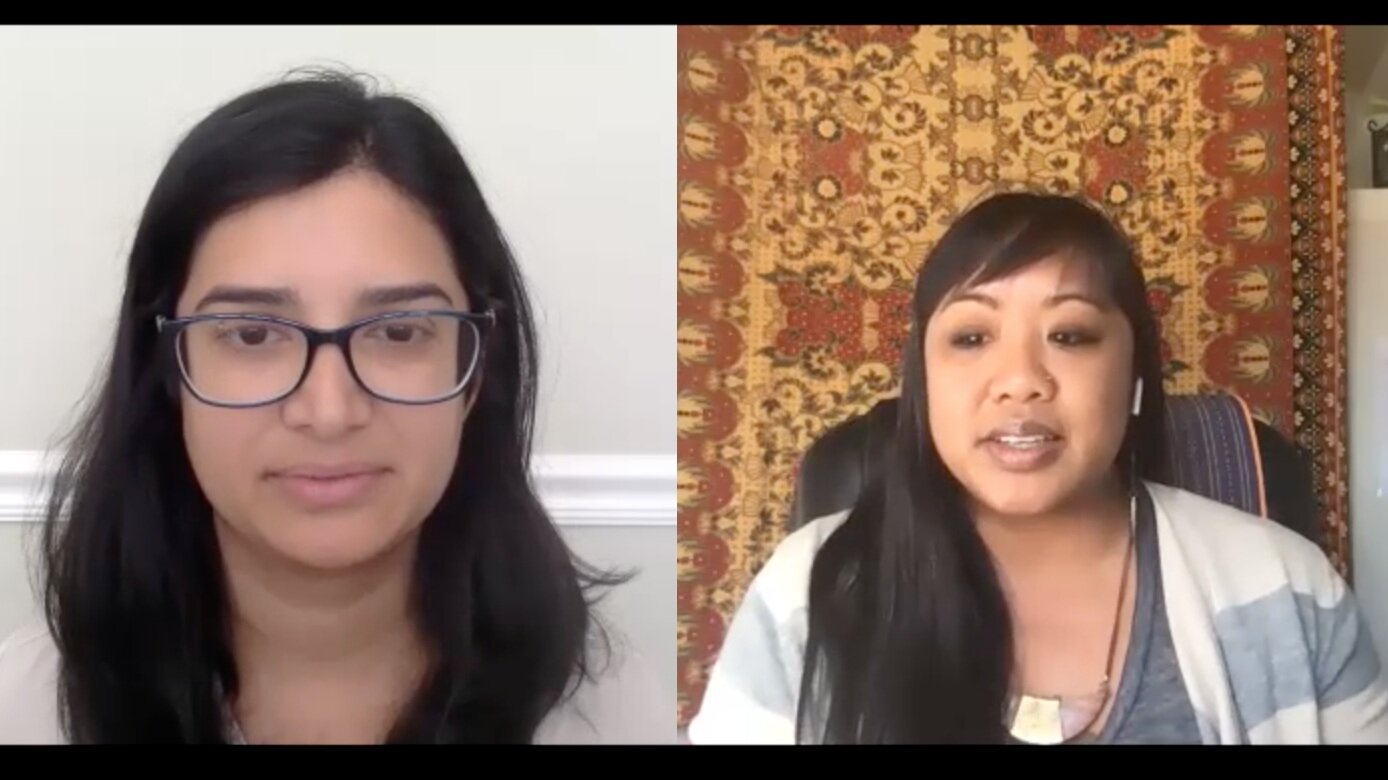
What is Trauma Informed Coaching?
with Coach Reva Patwardhan
Finding the right person to help you through major challenges in both life and career can get a little tricky for a person of color. Lack of options or financial access are certainly barriers. And the importance of representation in professional and personal services is becoming more and more a need and requirement in cultivating a safe and inclusive environment to do work where vulnerability is critical. Often times a disconnect or lack of cultural awareness on the part of the practitioner can cause more harm than help.
Listen in on this conversation I have with Reva Patwardhan, of Greater Good Coaching as we talk about
What trauma informed coaching is
What oppression informed coaching is
What’s important about these aspects of our practice as women coaches of color and how it shows up in ourselves as well as our clients
How we manage and do the work WE are responsible for doing to prevent causing more harm.
This was a really interesting and enjoyable conversation with Reva and I hope it sheds some light for you as you seek or work with practitioners that hold space for the more tender parts of your growth and development!
**Scroll down below the video to see the minute breakdown of the conversation!
00:33 Introductions
03:27 Why we coach
10:03 How healing shows up in our coaching
13:36 Defining trauma
20:20 Being trauma informed in our practice
23:26 Oppression informed coaching
29:23 Consequences of NOT being trauma & oppression informed
31:53 Being there for the client
38:32 It's okay to fire your coach!
41:25 Final messages from each coach
THANK YOU FOR READING!
IF YOU FOUND THIS RESOURCE HELPFUL
AND WOULD LIKE TO KNOW MORE WAYS TO CONNECT TO NATURE,
SUBSCRIBE
TO MY NEWSLETTER BELOW!

Are You Using 'Accountability' Accurately?
Our healing can start with accountability, but it doesn’t end there. Restorative justice requires that RECOVERY and REPAIR become the steps included into a normalized process of healing and transforming the way we relate to each other. It’s fair to say that we become emotionally charged by these harms, BUT facing consequences or being held responsible are not the same thing as being held accountable.

In my coaching certification program it was made more clear to me, this thing called accountability.
You see in my practice, one of the first things to establish in a new coaching relationship is the creation of a safe space to work through challenges. And because vulnerability is required for transformation, part of creating that safety is to establish a safe system of accountability. Not to just say we’ll be accountable for each other’s actions, but to create a system and process so that accountability is used accurately and for the powerful function it has in healthy relationships.
What do I mean? Well, let me ask you, what is accountability?
Simply put, it’s one’s ability to take into account what just happened/what they did/the harm they just caused. And that’s it!
So, when you hear accountability being demanded in response to the hurts and harms done onto ourselves and our communities do you think it’s being used accurately? I personally think that a majority of the time it’s NOT. Typically when I hear the request or demand of accountability, my deep listening tells me that what is really wanted is that the person who caused the harm needs to face the consequences or be held responsible, as in go to jail, or lose their job, etc...
It’s fair to say that we become emotionally charged by these harms, BUT facing consequences or being held responsible is not the same thing as being held accountable. Again, being held accountable is being able to recall what you did. And only this.
And until we get better at saying what we mean and meaning what we say, we’re probably not addressing our issues with each other head on or solving problems efficiently. So, let me add some more pieces to this puzzle...
Accountability is only one piece of establishing a healthy relationship. The other pieces that are often overlooked are
the process of recovery once a hurt or harm is done
the process of repair of the relationship after a hurt or harm
*sidenote: replace hurt or harm with “broken agreement” and you can apply this system to your workplace, or any social institutions
Our healing can start with accountability, but it doesn’t end there. Restorative justice requires that RECOVERY and REPAIR become the steps included into a normalized process of healing and transforming the way we relate to each other.
So I challenge you to (1) think about whether you want accountability or really just want someone to face their consequences and (2) figure out if it’s accountability you know is needed, then ask the leading, critical questions:
What actually happens after accountability is established?
Is there a system in place that takes into account the recovery process for everyone post harm?
Are there agreements in place about how the relationships will be repaired?
Chances are if the critical pieces of recovery and repair aren’t coupled with accountability, then you have a broken or dysfunctional system upholding (or not) that relationship.
Requesting accountability without knowing how the entire system of recovery and repair are involved in that process is like setting off an avalanche of more harm and destruction.
We just end up with more to clean up!
How are you setting up your SYSTEM OF ACCOUNTABILITY for yourself?
How are you setting up your SYSTEM OF ACCOUNTABILITY for your community/work place/organization?
Share in the comments below. I’m curious to know how you can apply this!
THANK YOU FOR READING MY STORY!
IF YOU FOUND THIS RESOURCE HELPFUL
PLEASE SHARE WIDELY TO YOUR NETWORKS & FRIENDS!

Energetic Communication Video Series Part 4 - FINAL Wrap Up & Claim Your FREE Workbook!
In this 4 part video series on Energetic Communication we’re going to take you through several energetic pathways to bring awareness and action to the ways we can get to know our inner emotional landscapes. As we go deeper every month on Energetic Communication, we’ll be examining what happens to us when we share space with other people and how that can impact your ability to be in relationship with ourselves and others.
In Episode 4 this is the finale! Listen in on the full episode 4 of our conversation as we recap the main takeaways of the series and give you your instructions on how to claim your FREE Guided Activity Workbook

HERE’S THE LASTOF OUR COLLABORATIVE ONLINE SERIES
TO HELP YOU LEVEL UP IN YOUR SOCIAL & EMOTIONAL AWARENESS!
Watch the full video to find out what’s included in the FREE downloadable workbook!
Join us right here on the Hike It Out Coaching blogosphere as I get into conversation with Energy Worker and Curandera, Claudia Parada. In this 4 part video series on Energetic Communication we’re going to take you through several energetic pathways to bring awareness and action to the ways we can get to know our inner emotional landscapes. As we go deeper every month on Energetic Communication, we’ll be examining what happens to us when we share space with other people and how that can impact your ability to be in relationship with ourselves and others.
In Episode 4 this is the finale! Listen in on the full episode 4 of our conversation as we recap the main takeaways of the series and give you your instructions on how to claim your FREE Guided Activity Workbook:
Quieting of the Intuition discusses how our intuition can be silenced and ways to connect and grow our intuitive nature
Interpersonal Vibration focuses on interpersonal energetic communication. We talk about how to recognize when and how your energy is interacting with someone else's and what you can do
Communicating Through Trauma discusses what happens to our energetic body when traumatized and the importance of community when moving through traumatic experiences.
Claim your FREE Guided Activity Workbook here! This workbook is specially curated by the coaches to help you practically apply the energetic communication tools in your life.
It’s a wrap! A big thank you everyone who tuned in to our video series. Follow us on social media to stay updated on upcoming events, classes, and giveaways.
Please leave us comments or questions below!
Where to find us:
IG @soylaclandestina
FB www.facebook.com/claudiaholisticlifecoach/
www.communitwellsf.org
IG @hikeitoutcoaching
FB Rino Consulting Solutions
www.rinoconsultingsolutions.com
And if you’re so inspired to get in on the dialogue, please do contribute your thoughts to the comment box below! We’d love to hear from you!

THANK YOU FOR TAKING THE TIME TO VIEW THIS CONVERSATION.
IF YOU ENJOYED THIS PIECE, PLEASE SHARE WITH OTHERS AND JOIN IN THE CONVERSATION BY COMMENTING BELOW!


Energetic Communication Video Series Part 3 - Communication Through Trauma
In this 4 part video series on Energetic Communication we’re going to take you through several energetic pathways to bring awareness and action to the ways we can get to know our inner emotional landscapes. As we go deeper every month on Energetic Communication, we’ll be examining what happens to us when we share space with other people and how that can impact your ability to be in relationship with ourselves and others.

HERE’S THE DEEPEST LESSON OF OUR COLLABORATIVE ONLINE SERIES
TO HELP YOU LEVEL UP IN YOUR SOCIAL & EMOTIONAL AWARENESS!
STAY TUNED FOR OUR LAST VIDEO OF THIS PROFOUND SERIES
AS WE OFFER YOU A CULMINATING CONVERSATION NEXT MONTH!
Join us right here on the Hike It Out Coaching blogosphere as I get into conversation with Energy Worker and Curandera, Claudia Parada. In this 4 part video series on Energetic Communication we’re going to take you through several energetic pathways to bring awareness and action to the ways we can get to know our inner emotional landscapes. As we go deeper every month on Energetic Communication, we’ll be examining what happens to us when we share space with other people and how that can impact your ability to be in relationship with ourselves and others.
In Episode 3 this is it! We are deep down into this series and facing trauma head on! Here, we focus on is our ability to recognize the experience of our energetic bodies in the moment of trauma so we can get to a point of attuning to its impacts on us. Naming our trauma can help us identify a way forward, through it.
By now we hope you’ve been able to view episodes 1 and 2 as an awareness about your intuitive skills and your ability to recognize energetic vibrations between you and another person. By viewing these two before watching this month’s video, you’re sure to gain a solid grounding on energetic communication to be well on your way to a higher emotional awareness in your everyday!
In video 4 of 4, we talk about how we each view trauma in the context of an energetic experience and its importance in the work we do as practitioners. Acknowledging that there are many different ways and disciplines in approaching trauma, we offer our own experiences and insights for processing through these events. In this episode we cover:
The work of trauma is important and so prevalent in our communities, AND we are always working towards the healing through it
An important part of re-grounding from trauma is the process of reparenting and inviting back in the spirit that was lost from that trauma
Being able to be seen and validated in the trauma and reach out to our communities for support empowers us to heal holistically
And if you’re so inspired to get in on the dialogue, please do contribute your thoughts to the comment box below! We’d love to hear from you!
What has been your experience with trauma?
What were the key takeaways in this video for you?
What have been some powerful examples of your ability to recognize your trauma and did you feel safe and able to process and heal through your experience(s)?
What’s important to you in learning this ABOUT YOURSELF that can elevate your ability to SUPPORT OTHERS?
THANK YOU FOR TAKING THE TIME TO VIEW THIS CONVERSATION.
IF YOU ENJOYED THIS PIECE, PLEASE SHARE WITH OTHERS AND JOIN IN THE CONVERSATION BY COMMENTING BELOW!

Energetic Communication Video Series Part 1 - Quieting of the Intuition
In this 4 part video series on Energetic Communication we’re going to take you through several energetic pathways to bring awareness and action to the ways we can get to know our inner emotional landscapes. As we go deeper every month on Energetic Communication, we’ll be examining what happens to us when we share space with other people and how that can impact your ability to be in relationship with ourselves and others.

WE’RE STARTING 2019 OFF WITH A COLLABORATIVE ONLINE SERIES
TO HELP YOU LEVEL UP IN YOUR SOCIAL & EMOTIONAL AWARENESS!
HERE IS PART 1 ON “QUIETING OF THE INTUITION”
Join us right here on the Hike It Out Coaching blogosphere as I get into conversation with Energy Worker and Curandera, Claudia Prada. In this 4 part video series on Energetic Communication we’re going to take you through several energetic pathways to bring awareness and action to the ways we can get to know our inner emotional landscapes. As we go deeper every month on Energetic Communication, we’ll be examining what happens to us when we share space with other people and how that can impact your ability to be in relationship with ourselves and others.
We begin our series with a talk about what a “QUIETING OF THE INTUITION” means, how we’ve noticed it’s presence in our work, and what simple solutions we can offer to begin awakening our inner wisdom.
We all have intuition. It’s the part of us that says, “fight or flight”. It’s that gut instinct that sends you a message about something you’re observing or experiencing. When it comes to creating ways to navigate situations, create boundaries with others, it’s often intuition that tells you what you should do. But, more often than not, if we don’t recognize this message from our bodies, what are the consequences.
In video 1 of 4 below, we talk about the various reasons for our intuition may be quieted down, which can often lead us to make decisions that are either misguided, or divert us from a decision we originally wanted to make. Listen in on the full episode of our conversation as we hit three points:
How can we recognize when our own intuition is quieted, dimmed, or dismissed?
How we’ve learned from real life situations when we’ve quieted our intuition.
Awakening of the intuition is something we can implement as a practice of empowerment.
And if you’re so inspired to get in on the dialogue, please do contribute your thoughts to the comment box below! We’d love to hear from you!
How has this quieting shown up in your life?
What do you notice about yourself when you decide to NOT go with your intuition?
What have been some powerful examples of your intuition allowing you to thrive in who you are?
THANK YOU FOR TAKING THE TIME TO VIEW THIS CONVERSATION.
IF YOU ENJOYED THIS PIECE, PLEASE SHARE WITH OTHERS AND JOIN IN THE CONVERSATION BY COMMENTING BELOW!
5 Steps to Shift From Madness to Mindset
This year’s tool will help you understand your mindset. I can talk actions all day long and you can engage with actions that change the way you do things, but if you’re mindset, or beliefs around those actions aren’t aligned, you’ll often find yourself reverting back to your old ways. As a way to make your shift a holistic and solid one, we’re going to focus this year on shifting from this madness of varying beliefs in your head to developing a strong mindset that sets you up for making an actual change that is aligned and long lasting.
“The definition of insanity is doing the same thing over and over again expecting the same results”
At the end of last year (2017) I offered you a deep reflection tool that allowed you to recognize the changes in behaviors you were able to make that year...

And in recognizing those changes in behaviors, I hope you were able to see those as a major step forward. If you haven’t done that exercise, I suggest giving it a try before doing this year’s activity. Because you might be surprised by how much growth you’ve been able to accomplish with just behavioral shifts! You can do last year’s activity by reading about it here. It includes some downloadable worksheets too!
Now, to take your reflection even deeper towards
transformation, this year’s tool will help you understand your mindset. I can talk actions all day long and you can engage with actions that change the way you do things, but if you’re mindset, or beliefs around those actions aren’t aligned, you’ll often find yourself reverting back to your old ways.
Take this upcoming “New Years Resolutions” season where we typically see folks committing to “a better diet”, “more exercise”, or some other form of better living. When the enthusiasm and stamina around that change wears off, say around February or March, excuses start to take over. Without a strong mindset aligned with that change, belief systems from other people, societal norms, or just those stories you developed on your own can take over a derail your plans. The madness sets in.
So, as a way to make your shift a holistic and solid one, we’re going to focus this year on shifting from this madness of varying beliefs in your head to developing a strong mindset that sets you up for making an actual change that is aligned and long lasting.
So what does a successful shift from madness to mindset look like?
Simply put, these 5 steps can help you put some back into it! Below I give you some examples to help jumpstart your reflection and I also encourage you to download this worksheet and FULLY engage with the activity.
Name what you want to change. Bottom line it.
In 2019 I want to change the way I eat to have a more plant-based diet
What are your beliefs (madness) around that shift? For instance, what goes on in your head when you think about making this change in your life?
a. Plant based diets are healthier and will help me lose weight
b. It takes too much time to prep food for a more plant based diet and I’ too busy
Where did they come from? You, someone else, societal norms, etc…?
a. I see it all the time in the media, a couple of people in my community swear by the a plant-based diet reversing chronic illness and other things, and ever since I started eating more plant based foods I feel better about my overall body
b. I grew up with fast food and TV dinners, so making food from scratch is too time consuming and I’m a really busy person
Determine which of those beliefs serve to your benefit versus ones that result in preventing you from making a successful, long term shift. Can you add an action to take to make that change?
Example
Mindset - I see it all the time in the media, a couple of people in my community swear by the vegan diet reversing chronic illness, and ever since I started eating more plant based foods I feel better about my overall body.
Action - 3 out of 7 days in a week will be a plant-based lunch
Bottom line your mindset in a statement. This is the part that shifts from madness your mindset. Affirm it and ritualize it into an affirmation or reminder to yourself, especially when you have the urge to revert back to old habits. Write or draw this statement out and put it on display in a sacred place in your home so you can see it and recite it at least once a day. Do this for at least 21 days!
a. I make time to have more plant-based foods in my diet because it supports my overall health
Keep yourself accountable by looking back every week and tell someone.
How many times were you able to implement the change?
How many times were you able to state your mantra (mindset) to yourself?
Celebrate the wins and when you’ve been consistent in using this mantra and don’t be hard on yourself if it’s not perfect! Your mind is, after all, conditioning itself to a new norm! But also don’t have a gallon of ice cream, instead, share with someone who supports you that you reached your weekly goal!
Tip: If you’re not consistent, next week, customize the action so that it fits better into your unique life and try again. It’s all good as long as you don’t quit all together!
Finally, its always a good idea to have at least one “transformational buddy”; someone who can witness your change and cheer you on! I personally would shamelessly plug that hiring a coach is the ultimate game changer! But if you’re not yet ready for that type of investment, I’ll leave you with some final tips to identify who that buddy can be:
Someone you trust and has been a natural and true champion of you all along
A person who can keep their personal agenda out of your goals and be an active listener
Someone who can empathize, not sympathize with you
Good luck in the next year of change towards your best life!
THANK YOU FOR READING!
IF YOU FOUND THIS RESOURCE HELPFUL
AND WOULD LIKE MORE LIKE THIS, SUBSCRIBE
TO MY NEWSLETTER BELOW!

The Last Episode of Your Telenovela
Over the years I’ve discovered more of the complexities that played a role in this self-deprecating language. There’s so much ongoing work I do in self-reflection, healing, reframing simple sentences in email responses, the list goes on and...it’s FOR REAL challenging sometimes. But if I can offer you three simple ways to reflect on your own story language, we can add so much more to this world by telling a more empowering story of ourselves!
Here are some reflections I offer you...
I used to joke about Filipino melodramas and movies because the story lines were always so predictable. Given I have minimal understanding of the Tagalog language I knew in general that the stories were always the same; lots of crying, cheating, lying, someone's parent always dies, there's several verbal altercations and insults thrown around and like all melodramas (or as they're called in Latin America, The Telenovela) the story takes FOR-EVER to progress. That's how they get you craving for more until you're hooked!
As I became a mother I began investing more time on improving my communication skills, engaging in my own healing, and leveling up in my professionalism. Then, I started seeing these shows in a different light. I started to realize just how toxic these stories were. As a conscious woman of color I couldn’t simply see The Telenovela as entertainment. They were negative and disempowering messages of women and relationships.
I've always craved positive portrayals of women and
healthy relationships because that’s
what I would want more of in my life
So speaking about my “leveling-up” in my career, I came across a really hard lesson in how I was portraying myself during presentations. After one of my training I shared my background then a colleague of mine offered her feedback and said I was using a lot of “self-deprecating” language. I guess I wasn’t thinking about how I talked about myself, but naively would just talk about my story the best way I knew how. But her feedback put me on this mission to find out what was behind all the negative self-talk and figure out what I needed to do to change my story language.
Living in a patriarchal family structure and society were obvious components influencing my disempowered female stance. And maybe cultural components played a part in being “humble” about my accomplishments, maybe not even acknowledging them at all. At the end of the day I knew I had to understand myself more deeply to know how to SHIFT and talk about me in a positive and impactful way.
Language has energy and words carry weight
So, when I reflected back on that self deprecating talk, I remembered that the story about my not finishing graduate school or not wanting this or that in my career, revealed language that focused on the negative aspects of my life. But in my mind at that time, I didn’t think it was a big deal because it was my truth. The biggest lesson was that it really didn’t matter what the outcome was of my specific story, people will remember more of the energy you bring to the room.
"I've learned that people will forget what you said, people will forget what you did, but people will never forget how you made them feel" - Maya Angelou
When I do deep listening with clients I pay attention to the language and words they choose when telling a story or giving a response. Just like my colleague pointed out for me, these are the underlying ways our notions of self-worth can manifest. It can passively reveal some of the hidden beliefs we have about ourselves that may not necessarily come from our own beliefs, but beliefs that other people/society have about us. So when negative self talk happens acknowledge it then get curious about it; where does it come from? How has it served you?
Over the years I’ve discovered more of the complexities that have played a role in this self-deprecating language. There’s so much ongoing work I do like self-reflection, spiritual healing, even reframing simple sentences in email responses, the list goes on and on...it’s FOR REAL challenging sometimes. But if I can offer you three simple ways to reflect on your own story language perhaps we can see how our empowering stories can add so much more to this world, YES?
Here are some reflections I offer you...
What you choose to talk about is what’s most important to you
Without judging yourself or having any expectations about your story, think about those stories you tend to tell others about yourself. Continually sharing specific stories that focus almost entirely on the situation (vs. how it impacts you) is a sign that something hasn’t been resolved in that story. Bring awareness to the drama.
Are they mostly positive or negative accounts, opinions, or beliefs?
Can you still feel the rawness in the emotion from that situation each time you tell it?
What larger lesson is attached to this repeated story or topic?
What’s important to you about the stories you choose to talk about?
Listen to yourself
There’s no harm in simply recording yourself talk. Oddly enough this action can reveal a lot about how you sound to yourself! Or if you have a trusty mentor or friend who is willing to actively listen to your stories, share with them the stories you hang onto. Ask them for some constructive feedback. You can even have them just ask the questions above after you talk.
Time to level up. Write the last episode of your Telenovela! NO MORE DRAMA!
Write that final episode about the person you were before you realized you were in a telenovela! Gather all your main characters and predictable scenarios for this episode. Consider this your character’s last chance to stay the same cycle of drama, or story line. Then set them free with an epic ending.
What disheartening stories do you have about your life?
What happened to you that created the negative outlook?
Have you given yourself permission to accept these situations?
Now, the challenge; create a new path with a different story language!
How will you put an end to the drama? Do you (as the main character) die? Transform?
And who is this new person you’re writing about NOW?
THANK YOU FOR READING!
IF YOU FOUND THIS RESOURCE HELPFUL
AND WOULD LIKE MORE LIKE THIS, SUBSCRIBE
TO MY NEWSLETTER BELOW!
MEET THE COACH
Raynelle Rino, CPC

A long time social sector professional, Raynelle began her career in the sciences as an ecology field researcher then moved onto environmental education and social justice at the grassroots organizational level in the Bay Area. Her love for nature and youth development brought her to teach in unique settings like alternative high schools, environmental justice neighborhoods, parks, and juvenile justice facilities.
In 2016 Raynelle started Rino Consulting Solutions, a nature-based consulting firm that provides coaching and consulting services for professionals and other businesses. It’s mission is to support and inspire the leaders of today to live in the confidence of their identities as they move through a world in the midst of social, racial, and environmental transformation. Raynelle is a graduate of Humboldt State University with a BS in Biology, a Rising Leaders and 2042 Today fellow, and lives in Oakland with her husband and daughter.