
Strengthen Your Relationship to Land With These Resources
Ultimately, this work is about healing our relationship to land. I share some resources critical in shaping my decolonization journey, my relationship to nature on unceeded Oholone Territory that influences how I guide others to reclaim an identity to their own nature.
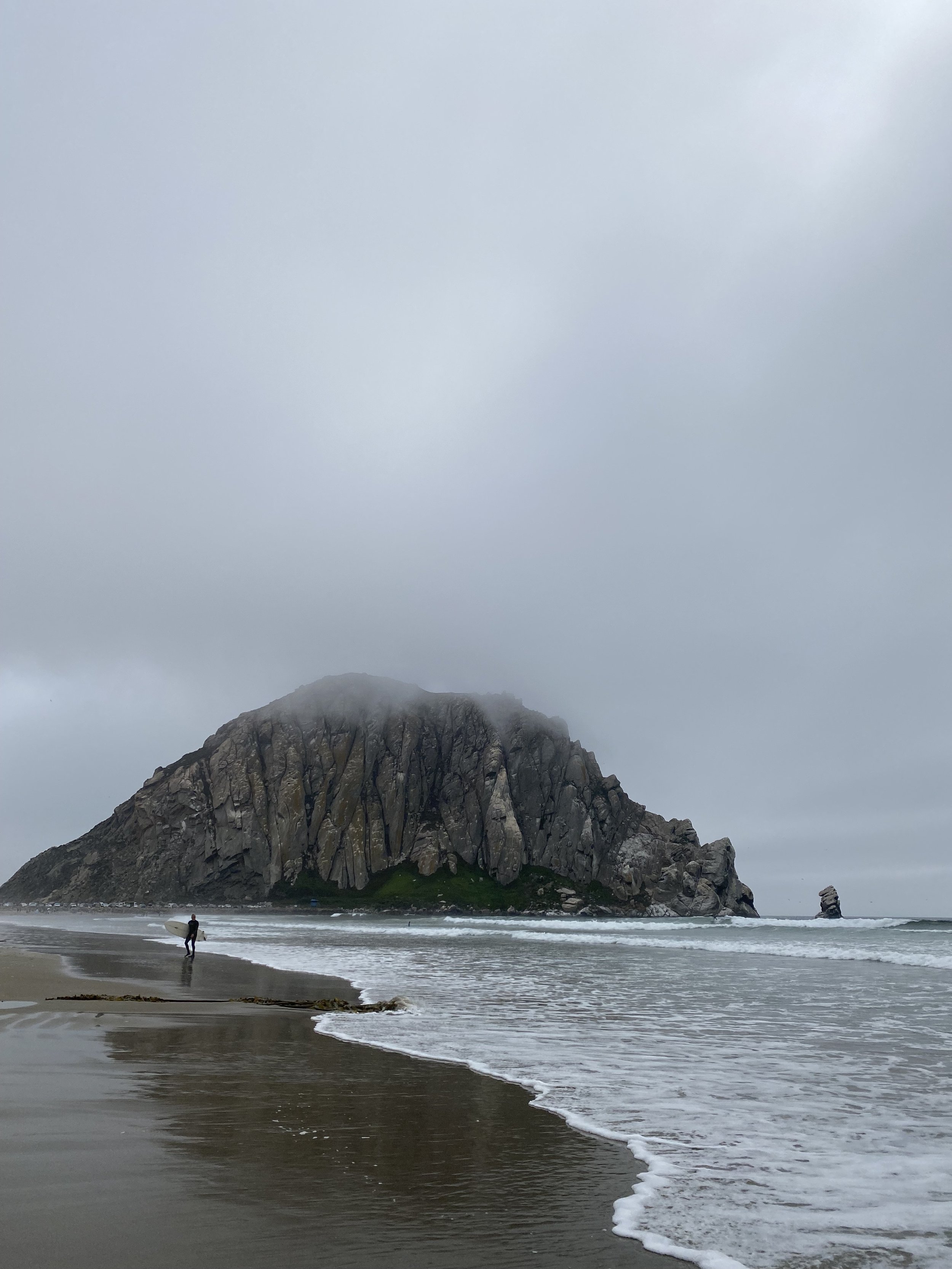
Morro Bay, CA. the site of the first landing of filipinos onto turtle island on October 18, 1587.
My practice offers many resources and cultivates stories of communities healing themselves with the support and guidance of nature’s lessons. And I think its an important topic to center wellness with nature, but I’d be remiss if I did this work without bringing in the opportunities to heal WITH the land we occupy and benefit from, whether that’d be learning the historical events and impacts on and from the Native community or partnering with communities to leverage what we can offer to be in solidarity to their sovereignty. So, in short what I’m saying is that it’s an important value I hold in my work have the Native perspective especially if we’re working directly with the land such as in stewardship, education, or movement building. This upcoming year is going to be my intentional effort to cultivate more direct relationships with groups and local descendants as best as I could.
Ultimately, this work is about healing our relationship to land. So I'd love to share some resources I found critical in shaping my decolonization journey, my relationship to nature and this land of unceeded Huichin Oholone Territory that influences so much in how I guide others to reclaim an identity to their own nature.
As a second-generation Pinay my parents immigrated to the Bay Area/Ohlone Territories in the late 70's. I was born and raised here and most of my life I've been a settler in this lovely West Coast. Being drawn to the nature around me and drive to have a career working in some capacity with nature, I have a special relationship to this landscape. But it wasn't until I really had to figure out my true path, did I start thinking about how much I felt like I did or didn't belong here.
Growing up in the South Bay (San Jose/Muwekma Territory) I experienced a lot of hurt and violence. So much so, I thought "the land" didn't want me there because every time I tried to lay down roots more hurt came. A dear healer friend of mine reframe this as, "perhaps the land was telling you to flee from the hurt and violence instead. Knowing how much you care for nature and love it, it may have been looking out for you."
Have you ever felt that sense of the a place "claiming you" as in, called you to come be there and it felt right?
Now that I've found a true sense of belonging and purpose here in Oakland/Confederated Villages of Lisjan, and lead most of the healing hikes around here, I try to deepen my knowledge of this place, connect to it's people, history, and land back efforts. But building relationships with native communities no matter where I am is important to me and to my relationship to any land I walk on. Because all land we walk on is native land.
So, some of the resources I'll share below have been places where I find resonance and a confirmation of my spiritual connection to nature. It makes me feel like I've been validated with the feelings and inner knowledge I hold within me, particularly about my love and advocacy for nature. Many of the teachings I've come to know from my dreams and life experiences feel like they have a home when I tap into these stories. It also activates the healing around my own lineage and search for similar stories and teachings about my own ancestral lands.
This winter as we reflect on our lives, honor and mourn the stories of our native relatives' violent loss of their lands, I hope you find that time to create connection and resonance with your own migration story, your lineage, and to the lands you occupy today. Connect to the resources and native communities in your own area as I'll share the resources that help me.
Book Recommendation: Dina Gilio-Whitaker, As Long As Grass Grows, The Indigenous Fight for Environmental Justice, from Colonization to Standing Rock, 2019
This book is really full of some critical and historical points that connect the fight for sovereignty of Native Americans to the culture of environmental justice, with reference to the events of Standing Rock. I think its also important to mention the author also offers the way forward and what that needs to look like for both natives and non-natives. It's definitely worth the read and offers details of the historical injustices that mainstream media might not include in their storytelling. I recommend this for your winter break!
Webinars: Indigenous Education Institute
I love, love, love listening to these talks while I take my lunch breaks or short walks. Knowing who the indigenous scholars and elders are and what teachings they have to offer help me get into my mind thinking about similarities I can see across other cosmologies and especially those I learn about my own lineage. Sign up for their newsletter to get notified of the latest talks to warm yourself into Traditional Ecological Knowledge (TEK).
In Person Event/Ceremony: Alcatraz Sunrise Ceremony
This might be sold out by now, but its good to know this happens as an opportunity to practice solidarity and participate in the Red Movement with our local native relatives. If you can't make this commitment (and I usually can't) I encourage you to think about your own version of honoring this land and the fight for native sovereignty and sit in a private ceremony of your own at sunset on the 24th.
Local Park: Coyote Hills in Fremont, CA
There's a reason why this is a frequented park for our healing hikes. I've mentioned this in other issues, but this park is still actively managed by its native community. The designated 'archeological site' is a protected sacred site of the community in which you can visit peripherally on the Chochenyo Trail. Every hike we visit the site to offer blessings and reflect on our relationship to the land and its people. The park is heavily visited but it's really easy to miss the location of the sweat lodge. If you do find it, make sure to make at least an energetic offering of gratitude and blessings for sovereignty.
THANK YOU FOR READING!
IF YOU FOUND THIS RESOURCE HELPFUL
AND WOULD LIKE MORE LIKE THIS, SUBSCRIBE
TO MY NEWSLETTER BELOW!

Shapeshifting The Panel - A Post that Set Me on a Trajectory for Racial Justice
I share this story in hopes that it serves as an example that WE CAN recover from harmful requests to be tokenized and shift our focus to impact those that matter the most; our diverse communities instead of the white majority.
A huge part of me has been rejoicing in gratitude that the pandemic caused us to ask really hard and existential questions about our lives and the critical needs for social justice became somewhat of a normalized conversation in this country. Because for such a long part of my career I thought I was the only one pushing for real change to happen. Back in the early 2000’s and 2010’s I felt like my radical voice was usually the loudest in a room full of crickets. Now that we’ve come to a point of no return of the status quo, I look back and remember what shifts I made and what beautiful things unfolded because of them. These are the moments I have to remind myself of why I go hard on making my points, why I choose the words I choose, and what purpose I serve to make this world a better place than I found it. I hope to share this particular story of the harm caused by diversity panels with my community of fierce game changers who love nature and call for social justice in the same room. I hope it serves as an example that WE CAN recover from harmful requests to be tokenized or put on the spot if we shift our focus to impact those that matter the most; our diverse communities instead of the white dominant landscape.

This was the last and final diversity panel I would participate in where I set my own intention to vocalize how harmful creating panels like this are to the efforts of DEIJ and all other efforts. It was held, organized, and moderated by Bay Area Wilderness Training (BAWT) instructors in 2014.
In 2013 I had already been in the industry of science and environmental education for about 15 years. I was in and out of small grassroots organizations, passionate and desperate to find a community of like minded disruptors to commiserate with and cause the wall of white supremacy in the field to fall. I didn’t fit any mold or mission of a particular agency and my ideas and opinions were often acknowledged as “courageous” and “glad you said that”, with an undertone of “but I wouldn’t be so bold myself, thanks for taking one for the team!”.
I have to say, I felt like I had created a small pocket of a following back then (without Instagram or Twitter), but nothing really supported this insatiable appetite I had to say what needed to be said. Some young leaders found me inspirational, some steered clear not knowing how to move forward with the ideas and questions I had presented in conversations about diversifying in the outdoors.
By 2014 I found myself needing to carve out my own voice. I didn’t want to give up and shut up. I knew I had something valuable to say! So I asked myself how can I express my beliefs in ways that others can understand what’s required for true social justice without compromising who I am? What ended up happening was me branching off into my own brand, my own consulting firm to push my radical messages through autonomously. But before my business became my livelihood, I created a blog called, The D Word. No longer active, this blog was a space for me to unleash my frustrations around the lack of diverse voices and stories by highlighting diverse professionals in the sciences and the outdoor industry, documenting deep and frank conversations about, well… “The D-word”, or diversity.
Then when my friends and colleagues at BAWT (Bay Area Wilderness Training) asked me to join a panel of other heavy-hitter POC professionals in the industry, I rolled my eyes and took a deep sigh of “ugh…here we go again…” and I accepted. I accepted because I took a quick pause in that breathe and asked myself, how can I take this opportunity and say what I really needed to say and end this form of harm to me and others like me? Also, I accepted because I had a few friends on the panel with me, including Jose Gonzalez, Founder of Latino Outdoors, Zoe Polk, then one of the Bay Areas first Outdoor Afro Leaders, Kim Bailey, and Ashanti Branch, Founder of Ever Forward Club. But despite it being a party of friends and respected colleagues on the same side as me, I was tired of the performance. I also had nothing to lose being unaffiliated with any specific agency. So, I said f-it! Let’s see what happens!
With a personal intention to have this be my last and final panel participation I went in. I played the part, answered questions as I would always and even mentioned that I was at a point in my career where I knew that working towards answering “the audience’s” (meaning mostly white people) questions and fulfilling their needs wasn’t benefitting me. I told the audience that I made a conscious decision to now put my efforts into supporting my fellow POC professionals (as I gestured to my folks seated on my left and right). That me supporting my own community and their needs was where my work was going. I continued on with an anger boiling up inside me, knowing this was just another show and pony. I needed to write out my thoughts and opinions on the matter.
So I went home heated but determined to speak my mind on paper. But a bigger challenge to myself was to not fall into a camp of disgruntled activists calling out and ascribing to the toxic cancel culture (it wasn’t called this back then). So I had to think really long and hard about creating a post that
(1) came from my own voice instead of blaming or shaming anyone else of the “industry at large”
(2) give solutions and recommendations to my readers instead of an open-ended, “so what are you going to do about it now?” cliff hanger
What I would write below in 2014 was my way of processing the many years of disappointment, heartbreak, fierce determination, and allow the healing of my wounds to show up in a way that was healthier for me and my readers. I won’t lie or sugar coat this, but it took me so much restraint and calming of my angry beating heart so I can come off on higher ground with this one. What saved me were the breathing exercises, the sitting with my anger, and the intuitive digging into my bank of knowledge and toolkit to respond to the hurt that I felt. The gist; it took a lot out of me to hold back my reaction to transform my anger into the proactive words in this piece.
Below is an expert from a previous blog site I created back in 2013 called, The D Word.
There is no epic report, online article, or twitter hash tag that can capture the true essence of this diversity crisis. Nor can they suggest solutions towards a more even participation of our increasingly diverse country. The only way to really understand what’s going on and gain insights on what you can do about it is to RECOGNIZE DIVERSITY AS A LIVED EXPERIENCE.
The very first interview posted on this blog back in April 2013 was with scientist, Yasmin Lucero. She mentioned, “I grew up in Oakland, one of the most diverse places in the world. And that diversity is very front and center and you have to deal with it. It really influences this issue of, “How do you deal with conflict? How do you deal with a difference in opinions? How do you think about it, feel about it, and how do you take care of relationships when people are different from you?”No tool kit, diversity training, or podcast can get you to a place of genuine understanding and ownership of your place in the spectrum of diversity in the environmental movement; you have to live through it.
As a woman of color working in the environmental movement, I am taking a stand against the harmful diversity practices that serve to “educate the majority” rather than “support the minority”. I want us to kill this idea that minorities serve as a resource for mostly white organizations to check their "diversity box" or to strategize a plan of action that might bring more color to their staff and participants. I'm calling for a shift the way panels are conducted and and an end to diversity trainings.
In the 15+ years that I’ve been involved in the sciences and environmental movement, I’ve been asked more than a handful of times to sit on diversity panels or contribute to some symposium on a diversity topic. And each time I find that there are similar questions and almost completely predictable outcomes. The questions often being about, “How did you get involved, what keeps you motivated to stay, and best of all, “How do we get more people like you into our programs/orgs?” The big RECRUITMENT question! One predictable outcome for me was feeling important in some way, having to exemplify myself as a ‘leader’, which in reality just translated into “look! I’m surviving the culture shock of being in a mostly white organization”. Another result was that I relived my academic/organizational journey to an audience of mostly white people because they asked me to. And last, there was nothing more that helped push my environmental career further by participating on these panels. I just kept the hamster wheel of a conversation going.
After all these years of “diversifying” my career field, I realized I was harming myself by sitting on these panels. Now I realize this practice is harmful for allpeople of color. Sure, it seems empowering and a good networking gig to be up there, but in general, I see these panels put together as resources that predominantly white organizations need in order to do at least one of the following: show examples of how they are reaching their “target audience”, gain insights from us on how to do “community outreach”, or prove to others that there are people of color out there doing work, see? How exactly does this serve to directly support our career success?
In a last ditch effort to find some sort of benefit to diversity panels, I participated in one (and final) earlier this year for a wilderness exposure organization. I was recommended by a friend to participate. He too sat at the table with me. I thought, let’s just see where this can go. Perhaps there might be something different that can come out of this one. Plus, I had some good friends up there with me. Sure enough, predictable outcomes. But one thing I did do differently was I took that stance at the end to shapeshift the panel. After the prescription-like questions were asked and somewhat remedied by our responses I chimed in one last time. I stated, that panels are a difficult position to place people of color in; to ask us to sit on and to testify our careers as successful participation and that we have some sort of knowledge on how to get you to be a more diverse organization. This is tokenizing, I reminded the crowd. I went on to say that being a person of color is a lived experience, as is working in a more diverse workplace. I expressed, that earlier in my career I would do my diversity work as a panelist talking to a mostly white audience. Then, there came a point where I realized that I needed to work in diversity, within my community(with the panelists) because that’s what supports me. I further encouraged the people of color in the audience to keep building relationships with each other and that our alliances are what’s going to count in the long run. Recognize that there are good allies to work with and bad allies to be cautious of. But we have to find a way to work that truly supports us.
And as far as diversity trainings go, I’ve organized enough of them with environmental organizations to know that these must die as well. I now realize that my impetus to organize trainings and workshops was to cope with the oppression and disappointments I experienced as a woman of color trying to conform to the majority. I felt I needed to do something about the disparities; to help the white people realize their impact and dominance on people like me. That was working to diversify; that was working with an expectation that other people can change their attitudes towards people of color in just a few activities addressing white privilege and oppression. Often times it just caused a defensive tone towards me or instilled white guilt in the form of comments given to me afterwards.
To work in diversity means I’m working within my diverse community and supporting the work of other people of color to bring our participation to a norm. I find areas for collaboration with other leaders of color and support and mentor younger folks that are passionate. The idea and resource sharing, even program development happens in the context of including cultural aspects and celebrating diversity rather than approaching it with a “lack of” mentality (which often leads back to "checking the diversity box"). Good allies play an important role in supporting people of color with similar intention and cultural awareness.
There are plenty of people of color out there doing great work and have been for many years. We don't need to resort to organizing panel discussions or diversity trainings to help us cope through this reality of a homogenous workplace. We have each other. The stories and interviews on this blog are meant to relate to, get to know, and build relationships with others so that we’re supporting each other through those tough times of disappointments, oppressive behaviors, and amongst other things, avoiding the route of having to educate the dominant culture.”
After getting this piece down and publishing it, the amount of levity that came from my body surprised me. I guess in today’s trauma informed language it may be called somatic healing. I’m no expert, but all I knew was that I was proud of myself for not being reactive towards my anger but finding a way forward that would benefit my well being and purpose as an advocate for inclusion and equity.
How do I know going in this direction of sharing my story and opinion benefitted me? Well, for one I wasn’t met with backlash or trolling. Instead, after several months of this blog post being published I was sent an email from someone in the US Forest Service, requesting my participation in an upcoming project that would involve many diverse constituents across the North and Pacific Northwest states. After the vetting process I would be appointed as an Advisory Council Member for the Pacific Northwest National Scenic Trail (PNNST). For the next couple of years I would serve and travel to different parts of the only National Scenic Trail that ran East to West, across the United States borders. And from this project I was also recruited to be on the Board of High Country News, which I still sit on today, in my 6th year of service.
Now, if this story serves any purpose for you, I hope you can see that voicing your ‘radical’ thoughts and ideas about something you’re passionate about can really work out for you in the long run. I don’t really wonder what would have happened had I not written that blog or said the things I said on the panel because I know what I have to say is worth whatever comes next. It’s just that sometimes It takes practice and a willingness to pause to reflect first before reacting with the next step.
Think about what your purpose means to you based on who you are and who you are fighting for. How will your ideas benefit us all in the long run?
In your mind, play all of the possible scenes over and over again in your mind, thinking about all of the possible outcomes from the steps you want to take after you speak your mind. Who will it benefit?
And last, remember what’s at stake with respect to the change you fight so hard for in this world. If you don’t create change and challenge the status quo, we’ll all be doing the same thing tomorrow.
THANK YOU FOR READING MY STORY!
IF YOU FOUND THIS RESOURCE HELPFUL
PLEASE SHARE WIDELY TO YOUR NETWORKS & FRIENDS
Comment below to dialogue with me!


"Root To Bloom" - A Program Born from My Healing Journey
Like many passionate providers, I thought vocalizing my needs would get me somewhere. But I’m about to share a story about the many years (10+) of a swerve-y, chaotic, and down right traumatic career path.

Each season we hire community healers, & wellness practitioners as guest speakers to add to the wealth of resources around us. Here we are in the EcoCenter with movement healer, Sammay Dizon.
I used to be a community-based service provider and vocal advocate for diversity within land-based organizations. I spoke out, led efforts, formed groups and containers to drive the narrative of “lack of diversity” and hold myself to the fire, challenging my higher ups and the authorities-that-be, for more inclusive space for people like me and the communities I serve, who often looked like me. But I quickly learned through many failed attempts and fallouts that this wasn’t where my fire for change was going to be affective.
Sadly, like many other passionate (I would even say wounded) providers, I thought vocalizing my needs would get me somewhere, but it only left me burnt out. I was left with bigger questions about “Who am I in this work?”, “Why do I feel the need to stay?”, and the most challenging, “Why can’t I be who I am and focus on the actual work of creating change for my community?”. Well, the story I’m about to share below is a story of many years of the unfolding story that answered these questions. And when I say many years, I’m talking about 10+ years of a swervey, chaotic, and down right traumatic career path.
If there’s anything I hope you gain from reading the origin story of Root To Bloom, its that
(1) the path to your true purpose is hella long and arduous. If it’s not, you probably have more to learn and grow from
(2) when you finally surrender and listen to more than your experience, meaning your listening to your heart, your ancestors, your guides beyond the Earthly realm, you begin to listen to the forces of nature that have always been guiding you since you were born. You begin to trust the things that are beyond this world and magic begins to unfold.
So, I’m grateful you can take the time out to hear how this program speaks so much to my journey of healing as woman of color in environmental education work and that’s it is possible to create beautiful things for the people to meet their blooming!
🌺 Years ago when I started my non-profit environmental justice career I worked as a Program Manager in San Francisco's Bayview/Hunters Point neighborhood. I thought it was my dream job and I would be there for a long time. Little did I know, the day I walked into the office on my first day...I was walking into what would be a 2 year nightmare. The organization's leadership had crumbled 2 weeks prior to me starting. Ironically the park site, Heron's Head & the EcoCenter's education programming centered the historic toxicity of SF's Southeast. I was teaching about toxicity and experiencing toxic work environments at the same time.
I don't know if you've ever experienced a level of workplace toxicity that causes you to flee from the community and distance yourself for your own safety and well-being, but I spent many years away from the community except for the few trusted relationships I kept close as I transitioned and explored other avenues of my career.
Almost 10 years after that job I found myself on the same park site, different professional path as an entrepreneur but still working with nature, focused on providing a healing learning space for community-based service providers. I couldn't believe that the path I walked to come back to a site that caused me so much harm would be a place that would not only provide healing for me, but also heal the providers in the program.

Our program theory of change disrupts the cycle and value on productivity in our providers with self care and healing practices
I am always in awe of Root To Bloom being in my life. Being my life's work. It could be that my healing needed this program to be designed to disrupt the toxic work environment of valuing productivity with valuing self care and provider well-being. Because from my experience, I knew that the productivity value that plagues many community-based service centered organizations can perpetuate capitalism’s engine of seeing people as a commodity of labor instead of seeing them as stakeholders of our greater community’s long-term health and wellness. I always wanted someone to acknowledge this in the organizations I worked in, especially those that targeted marginalized communities. So, in the Root To Bloom Program I made sure we talk about colonization’s design to keep us locked into productivity so that we don’t attain the awareness that we can value ourselves as gifted contributors to our own needs for a healthy and fulfilling life. Because if we attain such power, we can’t be controlled.
It always strikes me as my radical stance on loving my community by being able to create this program to say these things and teach emerging leaders to reclaim their power with tools we share in the program. Because I’ve been a product of burn out and being outcasted, “laid-off” or ostracized from leadership in previous organizations where I’ve attempted to integrate these values as was retaliated against in some form or fashion. But something many years ago kept me tethered to my beliefs and stayed steadfast in my search to find a way to still say these things and have autonomy as safety. It just so happened I needed to leave the non-profit structure and create an entity that, to be real, only I can fire myself from, lol!
Root To Bloom has unfolded as this safe place and container for fierce providers like me to have a home for processing and understanding our intergenerational traumas without retaliation or stigmatization; something I wish I had especially when I was providing direct service to adjudicated youth. Now, I have so many people, spirit guides, ancestors to thank for this. More importantly I can thank myself for saying yes to a path most wouldn’t dare step into. That inner voice of my WARRIOR SELF was definitely wounded but committed to my true purpose and I mostly send her rest and gratitude these days.
Testimonial from Denicia, Season 2 graduate
Allowing myself the surrender to other messages in my dreams or the synchronicities showing up in my everyday walk are just some of the reasons why I think Root To Bloom holds such a special vibe and space for the community that surrounds it. Together with my co-creator and conspirator, Kisai of CommUNITY, this program has consistently shown us the power of creating something so unique and exactly what we would have wanted as frontline staff; a holistic and transformative space where we could truly just be and heal.
And as we’ve begun to open our space for the fourth year of Root To Bloom, I’m reminded again of the power of my healing journey to heal some of our community’s deepest wounds. I can’t say that my healing has ended. I don’t believe its even possible to “be healed”. So as long as I’m on this Earth, my healing will continue on. But what I do know is that after these many years of diving into the scary parts, moving through the roller coaster of life and leadership, there are moments that I’m reminded all of my struggles and experiences can serve me later by showing up as healing for others. I just have to keep listening, keep trusting.
So I’ll leave you with some of the coach-y type reflections you can take as you continue on your journey of self discovery and healing in hopes that your journey can find a point of coming full circle. And I hope you can share your thoughts and responses with me below. I’d love to engage with your story of healing.

Click this image to listen to our IG Live session sharing the magic that birthed our program and its impact on our community
Reflections to Reclaim Your Purpose & Power:
🤔 If you were to spend a day doing exactly what brings you complete alignment with who you are and your natural born gifts, what would that day be like and more importantly how are you feeling throughout that whole day?
🤔 If you can speak truth to your power, as in say ALL THE THINGS you want to say to your current workplace/community about what real change looks like, what would you say? Make sure it’s as raw as you would say it if you had all the freedoms to say it all the way you want to say it!
🤔 What do people tend to say or witness in you when they describe who you are or what your leadership is like? You don’t have to agree or believe them because these can be signs of your true gifts and purpose in life whether you like it or not!
THANK YOU FOR READING MY STORY!
IF YOU FOUND THIS RESOURCE HELPFUL
PLEASE SHARE WIDELY TO YOUR NETWORKS & FRIENDS
Comment below to dialogue with me!

How You Know It's Time to Heal
But it took a lot of years and life experience to get to a point where I decided to engage in some real and deep healing. For a long time I thought certain reactions or ways of viewing people were normal, until I realized I can do things differently. I’ll be share with you a couple of ways that helped me embark on a healing journey that proved to me, worth charting unknown territory.

How You Know It’s Time to Heal
3 Signs that say you’re there
Someone once asked me, "What's the most challenging part of working in community?" I answered, "When community doesn't believe healing is needed."
All I could think about were times where I witnessed normalized violence and toxicity in my family. For a long time I thought certain reactions or ways of viewing people were normal. Like, road raging as a young adult. I knew it was dangerous and violent, but I grew up with a road raging father. At the time it seemed normal to be around that. But then somewhere in my body and psyche, I began to agree with this attitude and response and I adopted it when I was younger. It wasn't until I started to give myself permission to pay attention to how I was impacting the world, that I realized I can do things differently. Mostly this was because my impacts on others were sometimes negative.
But it took a lot of years and life experience to get to a point where I decided to engage in some real and deep healing. So, I wanted to share with you a couple of ways that helped me embark on a healing journey that proved to me, worth charting unknown territory. And FYI, these things still happen to me all-the-time! We don’t reach a point of being “healed”, rather healing is a constant journey throughout life; there’s always something to work on.

Here are just three signs that let you know when it's time to heal.
You find yourself frustrated and overwhelmed by things that normally don't bug you - here's a sign that where you are in life is just not enough. You want more and you know more is possible.
How does this translate to what needs healing? If you can thread your frustrations back into its origin, what we’re really being presented with is our sense of value and self worth. Frustrations about how things are done or how you’re observing them can give you clues into what you know to be possible. What exactly are you frustrated about? Have you felt similarly in the past and what was the core of that frustration? Find common threads in moments that left you feeling the same type of emotion and it can lead you to a place in life where you felt like you knew something was better or possible for yourself.
You're going through or have just come out of a major life event or situation - life has just thrown you a bunch of information and opportunity to flex your abilities. Here's life showing you your capacity and IT showing you that you are made for more.
It could feel more like you’re in survival mode, but doesn’t survival mode also put us in a place to search urgently for extra resources and support? Like clamoring for something to help you in times of great need, we’re also pushed out of our comfort zones or edges just to make it through the next step. Oftentimes, stepping back from the situation or reflecting back on what just happened can help reveal what needed healing from those events. Like having a realization that you just survived something tremendous, or that you just made it through those tough times. Finding out exactly what you did or what you were thinking in those critical times can bring so much awareness to your capacity to hold challenges now that you’ve overcome them. You’ve just gone through some kind of healing when you’re able to wisely observe key points in your life.
More than a few things in your external environment seem chaotic, but not always directly because of you - this is the Universe's way of saying, "I know you see this! Now, what are you going to do about it, oh wise and gifted one?"
I went through a lot of these types of messages when I was younger, about the time of my first Saturn return (typically happens around ages 28-32). So many things imploding, exploding, relationships going awry, structures and institutions unraveling…sound familiar these days?
Now, pandemic times have certainly played a perfect example in what I’m saying here. So what healing has this pandemic revealed to us? Much of what we see today in our external environment is causing us to go inward and ask ourselves, “what went wrong?” , the challenges around this pandemic have been around the care for others and the long brewing tensions between us racially and culturally. So, when it seems like the world around us is about to topple over, we can begin asking ourselves,
What did I miss?
What was I not paying attention to or investing my time in that caused me to not see beneath the surface and now this is what would be the outcome?”
Because life is actively showing us that we’ve missed the assignment. So, what can you do now to get back on track and focus on your well-being?
In many ways, the signs that you're ready to deepen your life experience and skills require you to FIRST know and believe that healing is needed; that you simply want things to be different. What stops us from diving into a true healing journey can be the facts that
you’re not really ready to face the dark stuff, the shadows, the traumas, the yucky feelings
you may be intimidated by your level up; like knowing that the different you will be more powerful puts you in a place of resistance
you just don’t know where to start
More often than not, the majority of us WON’T sign onto a healing journey because of the reasons I just pointed out. What’s more common is to find yourself at rock bottom or in a situation where you’re left with no other choice but to begin healing. So no matter what, we all have the capacity to get started on some version of a healing journey.
And healing isn't just about when you are directly harmed and in need of support. Healing can also mean that younger versions of you still need tending to because you're not able to access your full and whole self today, as an adult. The latter scenario is one of the biggest areas I tackle with leaders in private sessions!
As a leadership coach with healing centered approaches, I always advocate for the normalization of these challenging times and yucky feelings because the more we ignore them, the more those feelings will start to nag at us to get to the healing it needs before you can level up. This is where triggers come from; unhealed parts of our past that get signaled to come back to us as adults. Now, have you cultivated the tools and wisdom to now offer your younger, hurt parts? That’s where someone like me can be that support for you.
If you want to know more about where you are in your time to heal through barriers and blocks preventing you from the life of liberation you crave, you check out my offerings below
sign up for the next cohort of Trailheads To Healing
book a quick consultation with me to explore private coaching
join any type of healing hike to put you in direct connection to the Universe’s messages for you
check out other events or workshops to get to know more about my work
THANK YOU FOR READING!
IF YOU FOUND THIS RESOURCE HELPFUL
AND WOULD LIKE MORE LIKE THIS, SUBSCRIBE
TO MY NEWSLETTER BELOW!


Healing Hella Hurts
If you’re really serious and ready to invest in the real work of healing, then get ready for ALL THE FEELS. In relation to those around you, since you’re changing/transforming yourself, the people around you might not recognize you and that can be hurtful for everyone. This post focuses more on the physical affects of doing your transformative work, or healing.
“If you don’t hurt, then you don’t know”
Since I like to keep it real, it think its Important to talk about the reality of the healing process. Because it’s not all rose baths and massages.
If you’re really serious and ready to invest in the real work of healing, then get ready for ALL THE FEELS. It’s no wonder few people will dive deeply into their healing process because there’s risk in what happens getting pretty ugly or uncomfortable. In relation to your own body, things may come up, quite literally as I explain more later. In relation to those around you, since you’re changing/transforming yourself, the people around you might not recognize you and that can be hurtful for everyone.
In this post, I’d like to focus more on the physical affects of doing your transformative work, or healing. For instance, the after care piece of a healing hike, can be overlooked. I wanted to be transparent about the possibilities and encourage you to trust that if something physical and out of the ordinary does come up with your body, this is a good sign of energetic movement, change in perception, or release of toxins. Remember, our emotions are directly connected to our physical bodies, but that doesn’t mean you’re necessarily aware of what those connections are and how they can show up after doing healing work like processing through emotional baggage.
We can protect ourselves by being prepared, paying attention, and having an after-care plan. Here’s what it is:
THE REALITY
Healing work is hard because it can literally hurt. Sore muscles, migraines, even vomiting can happen after processing through some deep emotional stuff! That’s because our emotional energy can exist in particular parts of our bodies, more noticeably when there’s stuck energy. Engaging in the unseen mediums such as energetic, metaphysical, or ancestral modalities can result in some unanticipated and non-symptomatic-like bodily responses. Crazy, right? But its true.

Additionally, our thoughts can pay a big part in how our bodies feel/react to our environment. Have you read/heard the news today? Was your heart beating with frustration?
As an example, if we engage with a deep seeded trauma and work to bring up something buried so deep, then release it, this can feel a certain way. Perhaps, even resulting in the body reacting the way it needs to so the energy can move out. Like, “purging a trauma” out of your body can literally play out like vomiting all those negativities out.
So, What is needed for a safe journey ahead? Well, every person is different and has their own emotional and physical process. But here are some things we can talk about…
Let’s first talk about AFFECTS, not effects, but AFFECTS. And I use affects here because its a verb and it means to influence something. Your healing actions should influence your healing process, not result in an effect (noun) to your healing process. If we’re engaging in non-symptomatic shifts in your well-being, then expect non-symptomatic things to happen.
AFFECTS ARE SIGNS OF MOVEMENT/ADAPTATION
No pain, no gain, right? Right.
It doesn’t always have to happen painfully. What I’m trying to emphasize here is that if it does happen, trust in the nature of things. A waaay long time ago I wrote about how “stressors” in the environment cause mutations to happen in plants. It’s part of the natural process of Resilience and Adaptation. I said,
“Stress (or stressors) are actually those signs we have in life that something is happening and is calling us to adapt. Something is happening that needs some attention because a change is about to happen. And only then, when the stressors make themselves known is when we are called to do some work to figure out how to adapt.”
Just like our plant relatives, we are resilient and we adapt. The good thing about us being conscious of our environment and able to move and search for help or resources in the face of “stressors”, is that we can consciously prepare ourselves for the journey of engaging with a “safe” and “sacred” stressor, such as a coaching session, healing hike, spiritual journey, etc…
Now that we’ve started with some language and natural law, let’s talk about preparation and protection.
PREPARATION & PROTECTION
I can’t express enough, the importance of preparation; know what you’re getting into, how to find the right practitioner, and try to get a sense of how ready and how deep you’re willing to go into your healing journey. This also helps the practitioner know if you’re the right fit for them. Do your research, get your recommendations and referrals to the right practitioner or do some sample sessions! If you’ve been on one of my hikes you know that I send everyone a pretty extensive preparation welcome letter before arrival. This is key to having a good session!
Your healing journey needs a protected container. This is why the opening and closing circles of our healing hikes are soo important to the entire experience. It’s an essential part of building the sacredness of our time as well as setting the tone (or intention) for our experience. It’s also a good way for us to protect ourselves from any distractions or interruptions from other park visitors. Think of this process as a metaphor for your process of any type of healing session you engage with. Get grounded, call in your source(s) and proceed with faith.
AFTER CARE
I often mention this at the end of our hikes or sessions, especially if we’ve just had some deep emotional experience in nature;
pay close attention to how your body is reacting and what your emotional state is like for the next few days
The affects of emotional processing sometimes takes a few days to cycle through or reveal itself. It’s important to take note (no matter how subtle) of any changes you might be feeling or if any unexpected physical or emotional things bubble up. This again, is a good sign and it might not feel good or look pretty.
Here are some of my after care tips for healing hikes or private sessions:
always stay hydrated, before and after; water is a good “leveler” of energetic exchange/change. You might notice after an emotional session you’re super thirsty. Know that you just did a lot of work!
rest well after a session, especially if you felt a sudden onset of fatigue or lethargy. This could be a sign of an emotional hangover or detox. Take a day off if you can’t concentrate or function well at work
if your gut instinct is telling you your physical or emotional affect is from the session, trust it is from the session and will pass as you take care of yourself
if your gut instinct is telling you your physical or emotional affect is from another person, trust it is from another person and will pass as you take care of yourself. You might be more sensitive to others’ energy than you thought!
the most important in this container is to PAY CLOSE ATTENTION to yourself with the intention of understanding more about how you process through things.
This is where you’ll benefit the most and one of the main reasons why I always say, this is a JOURNEY, not a cure.
You can heal yourself!
*always seek advise from a medical professional in any case that you feel like what you’re experience is something more serious. The after care and advise I give here and throughout my website is not meant to diagnose or prevent or cure any clinical ailments.
THANK YOU FOR READING!
IF YOU FOUND THIS RESOURCE HELPFUL
AND WOULD LIKE MORE LIKE THIS, SUBSCRIBE
TO MY NEWSLETTER BELOW!

5 Steps to Shift From Madness to Mindset
If you’re mindset, or beliefs around your actions aren’t aligned, you’ll often find yourself reverting back to your old ways. We’re going to focus this year on shifting from this madness to developing a strong mindset for making an actual change that is aligned and long lasting.
A few years ago I offered a deep reflection tool that allowed you to recognize when changes in behaviors happened..
And in recognizing those changes in behaviors, my hope is that you’re able to see those as a major step forward. If you haven’t done that exercise, I suggest giving it a try this year. Because you might be surprised by how much growth you’ve been able to accomplish with just behavioral shifts! You can do last year’s activity by reading about it here. It includes some downloadable worksheets too!
Now, to take your reflection even deeper towards transformation this year’s tool will help you understand your mindset. I can talk actions all day long and you can engage with actions that change the way you do things, but if you’re mindset, or beliefs around those actions aren’t aligned, you’ll often find yourself reverting back to your old ways.
Take this beginning of the year season where we typically see folks committing to “a better diet”, “more exercise”, or some other form of better living. When the enthusiasm and stamina around that change wears off, say around February or March, excuses start to take over. Without a strong mindset aligned with that change, belief systems from other people, societal norms, or just those stories you developed on your own can take over a derail your plans. The madness sets in.
So, as a way to make your shift a holistic and solid one, we’re going to focus this year on shifting from this madness of varying beliefs in your head to developing a strong mindset that sets you up for making an actual change that is aligned and long lasting.
So what does a successful shift from madness to mindset look like?
Simply put, these 5 steps can help you put some back into it! Below I give you some examples to help jumpstart your reflection and I also encourage you to download this worksheet and FULLY engage with the activity.
Name what you want to change. Bottom line it.
In 2019 I want to change the way I eat to have a more plant-based diet
What are your beliefs (madness) around that shift? For instance, what goes on in your head when you think about making this change in your life?
a. Plant based diets are healthier and will help me lose weight
b. It takes too much time to prep food for a more plant based diet and I’ too busy
Where did they come from? You, someone else, societal norms, etc…?
a. I see it all the time in the media, a couple of people in my community swear by the a plant-based diet reversing chronic illness and other things, and ever since I started eating more plant based foods I feel better about my overall body
b. I grew up with fast food and TV dinners, so making food from scratch is too time consuming and I’m a really busy person
Determine which of those beliefs serve to your benefit versus ones that result in preventing you from making a successful, long term shift. Can you add an action to take to make that change?
Example
Mindset - I see it all the time in the media, a couple of people in my community swear by the vegan diet reversing chronic illness, and ever since I started eating more plant based foods I feel better about my overall body.
Action - 3 out of 7 days in a week will be a plant-based lunch
Bottom line your mindset in a statement. This is the part that shifts from madness your mindset. Affirm it and ritualize it into an affirmation or reminder to yourself, especially when you have the urge to revert back to old habits. Write or draw this statement out and put it on display in a sacred place in your home so you can see it and recite it at least once a day. Do this for at least 21 days!
a. I make time to have more plant-based foods in my diet because it supports my overall health
Keep yourself accountable by looking back every week and tell someone.
How many times were you able to implement the change?
How many times were you able to state your mantra (mindset) to yourself?
Celebrate the wins and when you’ve been consistent in using this mantra and don’t be hard on yourself if it’s not perfect! Your mind is, after all, conditioning itself to a new norm! But also don’t have a gallon of ice cream, instead, share with someone who supports you that you reached your weekly goal!
Tip: If you’re not consistent, next week, customize the action so that it fits better into your unique life and try again. It’s all good as long as you don’t quit all together!
Finally, its always a good idea to have at least one “transformational buddy”; someone who can witness your change and cheer you on! I personally would shamelessly plug that hiring a coach is the ultimate game changer! But if you’re not yet ready for that type of investment, I’ll leave you with some final tips to identify who that buddy can be:
Someone you trust and has been a natural and true champion of you all along
A person who can keep their personal agenda out of your goals and be an active listener
Someone who can empathize, not sympathize with you
Good luck in the next year of change towards your best life!
THANK YOU FOR READING!
IF YOU FOUND THIS RESOURCE HELPFUL
AND WOULD LIKE MORE LIKE THIS, SUBSCRIBE
TO MY NEWSLETTER BELOW!
Healing Our Soul Wounds
I first came across the concept of Soul Wounds when I saw this conference posted on Facebook. I was at the beginning stages of my healing journey, triggered by all the happenings in my life, mostly difficult circumstances. I was teaching at a juvenile detention center…
I first came across the concept of Soul Wounds when I saw this conference posted on Facebook. I was at the beginning stages of my healing journey, triggered by all the happenings in my life, mostly difficult circumstances. I was teaching at a juvenile detention center, going to therapy and practicing personal spiritual healing, and unearthing my ancestral information awaiting my DNA results. Seeing the two words, 'soul' and 'wounds' created a deep visceral response in my mind. I identified with it.
The stories of struggle and pain I held throughout my life now had a name AND I was able to see that the stories of trauma experienced by my ancestors helped shape who I am today

Click on the conference's website to listen to all the amazing talks
The fascinating information I listened to on this website gave me insights to things such as
Epigenetic research showing that the traumas my ancestors experienced are passed down as memories in our DNA molecules
How collective trauma recovery can be done with community support
And trauma, in essence, is when our sense of our identity is compromised by a tragic event,
And so much more
What was missing for me in some of the research was the aspect of the healing I will always believe in, which is incorporating nature as a tool for healing trauma. I did, however come across this article highlighting the author and psychologist, Eduardo Duran as he wrote about soul wounds from a Native American perspective. This online article in Counseling Today, Trauma and the soul wound: a multicultural and social justice perspective reveals a non-traditional approach to understanding trauma. From the article,
"Duran encourages mental health practitioners to address three levels of interventions when working with people who are suffering from trauma:
Working with individual clients who are experiencing problems due to trauma
Providing outreach, advocacy and healing services to the larger community of which the client is a part
Engaging in efforts that are aimed at what he calls “healing the land”
...Duran discusses the importance of counselors working to “heal the land.” He emphasizes the American Indian belief in the vital interconnections that exist among all animate beings and inanimate entities, as well as the spiritual energetic connections that exist between all people and Mother Earth. He further notes that the current trauma being inflicted on the Earth by our collective polluting and poisoning of the global environment has a significantly negative and traumatizing impact on our own mental health and sense of psychological well-being. "

Our steps towards healing trauma heal our soul wounds when we hike. You can also say we are healing the land by being there, drawing upon a heightened awareness of the surrounding environment, giving gratitude, and asking for permission are ways we are healing our relationship with the land. Walking in meditation reclaims the same ancestral practices of communicating with the elements and all the life around us. Sure, it may be more evident on our vicarious trauma healing hikes, but in every gathering, in every circle and dialog we are practicing the steps that allow us to heal as we endure our everyday suffering. The simple act of acknowledging the four directions is one initial step in our ceremony.
Finally, as we exist in a world in which traumatic news and events are now somewhat normalized, we must remember that our collective healing is an important part of our continued effort to keep fighting for justice through this transitioning time. As some researchers discussed in the conference, we must recognize the different types of dissonance that comes from our trauma and find ways to reintegrate into our societal structures stronger than before our trauma entered our lives. This is the goal; to be more equip in navigating our lives and live in our true and full identities as whole, complex, and beautiful beings.
WANT MORE TOOLS AND INFORMATION LIKE THIS? SIGN UP FOR THE MONTHLY NEWSLETTER AND FOR TOOLS, INFO, & OPPORTUNITIES LIKE THIS DIRECTLY TO YOUR INBOX

Booklist 2: The Insatiable Human Nature Connection
I’ve been asked many times to share what books I read. So here’s a very short list of the key guides that have really shaped my work today. It’s not a long list, but they are the very few that have played a big impact on my worldview by informing my nature-based coaching process. Enjoy looking through this with some of the key teachings I’ve drawn out of each book.
I’m sure many of us have experienced their own scale of life lessons throughout this pandemic. For me, my life has recently gone through some major shifts. Earlier this year I made the courageous move (literally) to unburden myself from the things in my life limiting me from my highest potential. I recently separated from my husband, moved my daughter and I out of the home we were sharing for 6 years and found myself a gorgeous apartment in Downtown Oakland.
Along this journey I realized I was also RECLAIMING who I was before this marriage. The house we lived in was so small that a lot of my beloved books and personal belongings were left in boxes the whole time! Now that I was able to find a place of my own with much more physical space then the previous home, I found myself resurfacing these personal belongings and also resurfacing things I had loved so much about who I am and what my passions were.
And that’s when I started to reunite with some of the books I always loved having around. These books are what kept me so close to the wonders of the natural world. And as a kid who didn’t enjoy humans so much, it was nature that kept me safe and fed my insatiable appetite for curiosity of the natural world.
So with this short book list #2, I want to share with you some of the most intriguing finds I’ve kept over the many years. Enjoy looking through this and the key teachings I’ve drawn out of each book and continue on to see what I’m currently reading! You can also follow me on my Goodreads site to look at a bunch more brain food items I’ve got listed!
OUR TRUE NATURE AS LOVING BEINGS
Biological Exuberance
Bruce Bagemihl

My college Bio 101 teacher once told me that the point of all animal life is to eat, shit, and reproduce. A few years later my Mammalogy professor shared with us this book that defies all scientific belief about animals, showing that most animal groups have shown evidence of same sex interactions and gender bending behaviors. And this book is a THICK 655 pages of research articles, without the Appendix! It's a fascinating reference book.
If you ever need the evidence that nature isn’t as simple as you think, this is the book to pick up! At least rummage through it by checking it out from the library. I find it very fascinating every time I come across information about nature I never expected.
Like a text book on animal behavior and sexuality, this book covers it all and in fashion of a sort of field guide on the matters. Where each animal species is catalogued for their biology and researched sexual behavior, the studies behind the evidence are also a part of the book that makes it a solid source of information!
Dabble a little more into the book and you’ll find some interesting references related to the findings where articles cite other aspects of explaining the behavior in animals, often referencing indigenous cosmologies and beliefs about sexual behavior. Or other forms of psychoanalysis from other areas of study.
What I really appreciate in this book is that it continually keeps teaching me things that also make me think about the many different ways us humans find intimacy, sexual interaction, and even domination and power in social context. I highly recommend it!

LISTENING TO OUR ANCESTORS
Listening to Whales, what the Orcas Have Taught Us
Alexandra Morton
Science researcher and author, Alexandra Morton shares with us the years of experience and knowledge following families of Orcas and the unethical practices of marine aquatic attractions like Sea World. This book is super intense at times and reveals just how much Orcas are just like us, deeply connected to their family systems and emotional life experiences.
This book is also close to my experience and beliefs about whales and our relationship with them. As a scientist it’s fascinating to know that structurally (by examining whale bones) they are physically our ancestors. Fused bones in their fins indicate a connection to our own human feet and hands! Spiritually, these beings represent our ancestors. Being connected to them spiritually, many of my dreams where whales have been there have been dreams of messages being sent my way. That each time I had a dream about whales I looked at the context and paid attention to what they wanted me to know. They have always shown up in times of seeking guidance! To me, they are our protectors!

PLANTS HAVE FEELINGS TOO
The Secret Life of Plants
Peter Tompkins & Christopher Bird
I call this the OG of plant studies showing that we can form close bonds with plants, essentially a book about how plants have feelings AND that we surely influence those feelings in them. Think Emoto's water experiment, but the plant version. I love this book as it takes you through story after story of how scientists measured plant "feelings" and reactions to negative and positive emotions AND relationships with humans.
How many of you have increased the amount of plants or time with plants since the pandemic? Plants have surely shown up as those organisms in this world that can provide healing in many forms. From the need to care and nurture something outside of you, to needing a thing to talk to while in isolation, this book is the proof that it’s not a one-way interaction!
Read this one to take you through many experiments where plants were put to the feelings tests and probed to track reactions to things like a negative or violent person in the room to sending your beloved plants loving affirmations from afar, resulting in synchronous “good feelings”! I absolutely love the stories in this book and can surely do without some of the dry science explanations, especially in the last half of the book.
Either way, if you can find this original version, great! But chances are you’ll be picking up a newer version of this book if you can find it!
THANK YOU FOR READING!
IF YOU FOUND THIS RESOURCE HELPFUL
AND WOULD LIKE MORE LIKE THIS, SUBSCRIBE
TO MY NEWSLETTER BELOW!


Booklist 1: Gathering the Guides
I’ve been asked many times to share what books I read. So here’s a very short list of the key guides that have really shaped my work today. It’s not a long list, but they are the very few that have played a big impact on my worldview by informing my nature-based coaching process. Enjoy looking through this with some of the key teachings I’ve drawn out of each book.
I get asked a lot to share what books I read. So here’s a very short list of the key guides that have really shaped my work today. It’s not the whole list, but they are the few that have informed my nature-based coaching process. Keep in mind they’re not newly released books, best sellers per se, or on some trend right now; that’s not really how I pick books.
Enjoy looking through this and the key teachings I’ve drawn out of each book and continue on to see what I’m currently reading! You can also follow me on my Goodreads site to look at a bunch more brain food items I’ve got listed!
THE DIFFERENCE BETWEEN CARE & LOVE
All About Love New Visions
bell hooks

“Without love there is no justice” -bell hooks
My master guide, right here! Ever since I’ve read this one, I’ve recommended it, shared physical copies of it, talked about it, heard other people share how mind-blowing it is, and I just think its one to keep on your shelves forever. bell hooks is one of my “crucible guides”. You know, those key people or creators that offer you those precious gifts that heal you all along the way? You might see me quote her often!
This book in particular really shined the light on what parenting really is about and why we see the needs of youth of color show up the way they do. It also shines the light on what the consequences are for adult relationships if we don’t get THIS LOVE THING down, like fo’-real, fo’-real.
At the time I really read this book I was just beginning my career of youth education and development as a program manager with Standford University. I was also full-on in the dating game! But I was new to teaching teens and I had all the responsibilities; designing their program, partnering with the teacher community, remembering my science, booking field trips and interns, etc...I knew I wanted to get it right with the youth so I stared reading bell hooks. I wanted (and had the autonomy) to bring in whatever pedagogy felt right to make my program successful.
What I realized about my work after reading this book was that as a child, I WAS CARED FOR WELL, BUT NOT LOVED. Heartbreaking, yes. Most importantly, validating. There wasn’t as much “love” in my household as I thought. No one really said “I love you”. And I realized I was cared for well into my adulthood with a super middle class amount of privilege all around. But love in my family, well it was uncomfortable to really go there, resulting in all kinds of relationship experiences all the way into my marriage.
Read it if you haven’t. You might find it a fierce approach to love as well as…
drawing up a strong connection between knowing what love is to justice work
truly understanding what to be aware of when it comes to love and youth’s needs to be taught how to love
hard truths about how we go about our relationships, not knowing or naming the things that are missing or that are impacting our behaviors

NATURE’S NOT INVENTED, BUT I GET IT
The Invention of Nature, Alexander von Humboldt’s New World
Andrea Wulf
This book blew my mind personally because when I picked it up, I was many years an alum of Humboldt State University and would have had the tattoo on my arm for over 10 years already. This tattoo, I realized was connected to my passion for science and to Alexander von Humboldt’s work!
Anyway, the gist is that I’ve always loved existentialist views and writing. I was always drawn to the works of Ralph Waldo Emerson, Thoreau, Coolidge, etc...but didn’t know much about Humboldt, let alone that he was a major influence on these Existentialists. Well, this book took care of that and then some.
The things I most appreciate about this book is that it brings back the forgotten and powerful stories of this man’s expeditions, his discoveries as it relates to civilization/society during his time, and the immense influence he had on the people he worked with. He was one of those that advocated for natural law being the sustainable way for us humans to interact with the planet and very outspoken about the injustice of slavery and ‘monopoly’ as referenced during his time.
“Humboldt claimed that the colonies could only be liberated and self-sufficient when they were ‘freed from the fetters of the odious monopolyI’. It was the ‘European barbarity’, Humboldt insisted, that had created this unjust world.”
As a result of reading it I found it most empowering to know that Humboldt:
Used to be globally celebrated because of his infectious love for nature, science, and its diversity and advocated for indigenous people from whatever land he was exploring
Influenced Simon Bolivar to liberate his people of Venezuela from Spanish rule, slavery, and the destruction of his country’s natural resources
In the context of what was happening around the world at the time the US was becoming the “United States” I appreciated that he was always in disagreement with how the country was being built; off of exploitation and slavery of its people. He was one of the first and few voices to take a strong stance against the “European barbarity” and injustice he was observing in the locations he visited.
RECONCILING THE REMAINS OF ANCESTORS
Trace; Memory, History, Race, and the American Landscape
Lauret Savoy

This one’s a quick, informative, memoir-like poetic read. I love that it was a personal journey for Savoy, well equip with a historical lens on places, historical events, including the time’s social norms around land and race politics. I do recommend this book for folks doing work with land-based agencies like Trusts, Conservation, Stewardship, Recreation because it adds depth to the present experience of how we make decisions, create policies, and honor those who have been directly tied to this land in some way. She uncovers the past (her past) and connects it directly to where we are today as a society.
Some key things I think this book informed me about was:
The African American perspective of seeing, reclaiming, and bringing dignity back to her people, her specific family of origin
Additional context to our current struggle with anti-blackness and the origins of this ‘land ethic’
How and why places were named what they are
The common theme amongst people of color on this land is the feeling of not belonging to a land and not really having another option from that
How even a Geologist can bring her identity into her analysis, love this!
“How a society remembers can’t be separated from how it wants to be remembered or from what it wishes it was - that is, if we believe stories of ancestors reflect who we are and how we came to be. The past is remembered and told by desire.”
HOW REAL IS THIS DNA STUFF?
The Invisible History of the Human Race
Christine Kenneally

I literally had just landed in Washington State when my DNA results came to my inbox. I was there for a weekend meeting and remember getting into the rental car, astonished but not surprised by the results. I was slightly distracted the whole weekend with questions about myself and my past and ancestors. As soon as I had a break I hit the bookstore and this book popped out to me and screamed, “pick me up!”
This book has soo much intriguing information about the study of genealogy and the origins of DNA testing. The depth and detail about human history and how DNA provides the evidence of our migration are some of the more impressive parts of the author’s research, in my opinion. She doesn’t shy away from the history of genealogy’s hard truths and the destructive and evil acts that have occurred over time due to certain ideologies. There are some real truth bombs in this book!
The one thing I did leave myself a tiny bit disappointing is that this book is coming from a Eurocentric analysis of DNA. Although much of the data of DNA and human migration include points from China, I kept wondering if samples were taken of my people of East Asia and the Pacific Islands. But, perhaps the research for that is happening now, or has happened and I don’t know of it. Can someone please tell me where THAT book is?
Read this one, especially if you’ve done your DNA test and I promise it’ll add more life to your journey! Key teachings for me are:
“DNA confirmation” that racism is a social construct and genealogy has a much richer and disarming past
So much harm has been done to each other all because of the ideas we have in our mind about who is worthy or belonging to a particular group
There’s a subculture of people claiming to be decendents of Ganges Kahn, to the point of lawsuits and such. Like whoa, had no idea!
From a spiritual perspective, looking at DNA data only scratches the surface of who we are as a human organism in this world, a good stepping stone for a deeper exploration of Self
I’m really excited about what’s next for DNA research because she does talk about some of the work being done to further our understanding of our history and identity such as the intergenerational impacts to our search for ‘ourselves’. I’ve always been really interested in understanding the impacts of intergenerational trauma on our health and well-being as I wrote about in a previous blog on Soul Wounds. This book is like a good recourse to understanding the complexities of our identities!
WHAT I’M CURRENTLY READING…
Way of the Ancient Healer, Sacred Teachings from the Philippine Ancestral Traditions
Virgil Mayor Apostol

Words can’t even begin to describe how precious this book is to me right now. I think my love for my people is becoming even more profound now that I’m deep into some ancestral healing and discovering the ways that my people worked to heal others and what our relationship was like to our land. This book is such a comprehensive, yet surface dwelling understanding of how my people moved about this world. I’m floored by the information and how much I really identify with all the things I’m reading in this book!
And by surface dwelling, I mean I don’t honestly know how one book can really capture the depth and power of my people. So this book leaves me so intrigued by the traditions and stories included in here. Sometimes it’s soo hard to believe, the ways in which my ancestors did their healing work and to know that I can possibly bring some of these back. I can tell we come from a long line of very deeply rooted origins to this Universe.
If you are finding yourself on any level of spiritual awakening or curiosity to indigenous ways, I highly encourage you to pick this one up. And be open to the information as it may bring up some triggers or limited beliefs that come with a colonized mind!
How to Be an Adult in Relationships
David Richo

As a Transformational Coach I always drool at the opportunity to know more about struggles in ourselves and our shadows. This book, although its title sounds like it’s stuck in an industry of self help books, it’s SOOOO GOOD!!! It really is. Break into it and you’ll find page after page of truth bombs and stylistic prose like,
“Nature cannot afford to lose any of her stewards, so she has calibrated the heart so it is never permanently fulfilled”
Or
“Can I stand in the moonlight and feel its reflection as nature’s mirroring and let that be enough for now?
I just broke this open a few months ago and try really hard not to highlight almost every other sentence. It’s dense but in the best way possible! This, no doubt is going to be another permanent one on my bookshelf!
THANK YOU FOR READING!
IF YOU FOUND THIS RESOURCE HELPFUL
AND WOULD LIKE MORE LIKE THIS, SUBSCRIBE
TO MY NEWSLETTER BELOW!

Intention at the Core
Hiking without intention is like walking with the aforementioned notion; that being outdoors is healing in itself. That’s true and important for sure, AND I’m claiming my unique gift of being able to guide others through a healing process that is unapologetic about going inwards for personal growth. I’m focused on my connection to support you in living your their best life and to walk through the trenches and climb up the mountains. In a sense, I’m taking hiking from a recreational activity into a deep healing process. And that requires and demands intentionality.

Intention at the Core
How healing hikes are not your typical experience in nature
My healing hikes go deeper than a walk in nature with a group of like minded folks that seek an escape from the everyday hustle and bustle of life. We go inward from the notion that being outside/doors is healing in itself. During my healing hikes you are actually engaging in a contained self healing process. And it’s a process I guide with ritual and ceremony throughout; from before the hike is scheduled to the moments when we close and I, myself must engage in my own self care to realign my energy.
What I mean by intentionality
From my perspective, hiking with an intention is the most accessible way to reconnect to nature to a point that we are RELEARNING OUR COMMUNICATION to the elements. And to reconnect this way is to practice the very ways our ancestors lived with nature, pre-colonization.
One of the most important steps during the hike is the pause to really think about your intention. “What exactly are you here for? What are you needing from nature today?” I always remind hikers, the more direct (or bottom-lined) your intention, the more access nature has to send you its messages. Hiking without intention is like walking with the aforementioned notion; that being outdoors is healing in itself. That’s true and important for sure, AND I’m claiming my unique gift of being able to guide others through a healing process that is unapologetic about going inwards for personal growth. I’m focused on my connection to support you in living your their best life and to walk through the trenches and climb up the mountains. In a sense, I’m taking hiking from a recreational activity into a deep healing process. And that requires and demands intentionality.
The importance of intentionality being at the core of my hikes is that it heals us as a people on so many levels.
Having an intention during my hikes…
creates a clear purpose for why are you’re even here and you know something is going to happen
creates meaning in the experience and doesn’t waste energy. Nature never wastes energy, it’s just transformed into something else; a law of Nature we often don’t realize or remember. For instance, when we release our trauma/negative energies from our bodies, we ask Nature to take it and transform it to something new
brings back the importance and process of paying more attention to the world around you, resulting in better navigating your world. Essentially it creates more awareness
allows us to practice and reclaim our pre-colonial ways of connecting to nature. It acknowledges that we ALL are indigenous to some land on this planet and ALL had some way, form, ritual, ceremony, tradition that honored and worked in accordance to Nature’s laws and elements. Our ancestors practiced specific rituals and ceremonies, many of them in direct connection to seasons, cosmic events, patterns in the environment, etc… There was intention in everything our ancestors did
allows a process that requires the reconditioning of our instincts and beliefs as our personal power because we’re going back to basics. Instincts, looking at nature, feeling the universality of it, and applying it to your life with intention can heal any broken relationships in our life as well as the disconnection from nature and land caused by colonization. We are a part of nature, so we function as it does.
Intention in all the things

Intention at the core of my hikes is important in getting the most out of the experience and I also want to emphasize how intention is needed in all the things we do, especially for the choices you make for your wellness. Just as I mentioned our ancestors had intention for everything…in today’s world of hyper information, abundance in ways to go about things, and the capitalist system…our ability to hone in on an intention for any one thing gets more difficult.
I see our struggle to regain our ability for intentionality when I see the need for rituals to come back into life. For instance, when clients are challenged with overwhelm or a heavy work load, often times its routine, structure, or balance that is wanted and needed to manage the chaos. This, to me is call to bring in ritual to the day. As a universal approach, ritual is like your quick morning meditation, your breath exercise to ground you mid-day, your soothing stone…whatever it is, we all have a need to find an anchor.
It starts with your intention for that anchor
So, what exactly do you intend to get out of ______________ [insert wellness activity here] _________________?
If you’ve picked up a healing tool like a stone or amulet, what exactly is your intent in using it? How exactly are you connected to it?
Giving yourself permission to take time to really connect to the things we do and choices we make, allows for more power to engage with the tool and its support for us
THANK YOU FOR READING!
IF YOU FOUND THIS RESOURCE HELPFUL
AND WOULD LIKE MORE LIKE THIS, SUBSCRIBE
TO MY NEWSLETTER BELOW!

What is Trauma Informed Coaching?
Listen in on this conversation I have with Reva Patwardhan, of Greater Good Coaching as we talk about
What trauma informed coaching is
What oppression informed coaching is
What’s important about these aspects of our practice as women coaches of color and how it shows up in ourselves as well as our clients
How we manage and do the work WE are responsible for doing to prevent causing more harm.
What is Trauma Informed Coaching?
with Coach Reva Patwardhan
Finding the right person to help you through major challenges in both life and career can get a little tricky for a person of color. Lack of options or financial access are certainly barriers. And the importance of representation in professional and personal services is becoming more and more a need and requirement in cultivating a safe and inclusive environment to do work where vulnerability is critical. Often times a disconnect or lack of cultural awareness on the part of the practitioner can cause more harm than help.
Listen in on this conversation I have with Reva Patwardhan, of Greater Good Coaching as we talk about
What trauma informed coaching is
What oppression informed coaching is
What’s important about these aspects of our practice as women coaches of color and how it shows up in ourselves as well as our clients
How we manage and do the work WE are responsible for doing to prevent causing more harm.
This was a really interesting and enjoyable conversation with Reva and I hope it sheds some light for you as you seek or work with practitioners that hold space for the more tender parts of your growth and development!
**Scroll down below the video to see the minute breakdown of the conversation!
00:33 Introductions
03:27 Why we coach
10:03 How healing shows up in our coaching
13:36 Defining trauma
20:20 Being trauma informed in our practice
23:26 Oppression informed coaching
29:23 Consequences of NOT being trauma & oppression informed
31:53 Being there for the client
38:32 It's okay to fire your coach!
41:25 Final messages from each coach
THANK YOU FOR READING!
IF YOU FOUND THIS RESOURCE HELPFUL
AND WOULD LIKE TO KNOW MORE WAYS TO CONNECT TO NATURE,
SUBSCRIBE
TO MY NEWSLETTER BELOW!
Mastering the "Homeskhool Hustle" with Papalodown Agency
As an entrepreneur we’re already set up to build a flexible schedule, the autonomy in decision-making, and being responsive to changes through innovation. But not doubt, the impacts of this pandemic have added an extra layer as a parent and holder of space for those going through emotional rollercoasters. It’s a lot for the Mompreneurs like Paloma and I and I want to provide some insights from my journey and navigating the beginnings of this pandemic.
“Homeskool Hustle” Episode
with Paloma of Papalodown Agency
“Homeskool Hustle” is a space for live conversations with entrepreneurs hustling and parenting in the pandemic.
When Paloma Concordia, CEO and Founder of PapaLoDown Agency, a premier and boutique public relations company for the BIPOC community, asked me to sit down with her to talk about parenting in the pandemic, I was quick to say “Yes, of coarse!” Because if I could keep it real for you all about these times, I WILL take up that space!
As an entrepreneur we’re already set up to build a flexible schedule, the autonomy in decision-making, and being responsive to changes through innovation. But not doubt, the impacts of this pandemic have added an extra layer as a parent and holder of space for those going through emotional rollercoasters. It’s a lot for the Mompreneurs like Paloma and I and I want to provide some insights from my journey and navigating the beginnings of this pandemic.
Note: this live conversation was recorded in August 2020.
To break it down, we touch on some of the topics below and scroll on down to see the minute breakdown of the talk. And I offer you some questions to reflect on for yourself. Let me know how these land and leave a comment below. I’d love to know how you answered these!
Parenting right now is really hard and it’s bringing up a lot about our capacity
What have you learned about your capacity to hold it together for yourself and those around you?
Starting a new business in the pandemic
Pivoting in the pandemic has been necessary to survive. What have you successfully pivoted in your life or business to make it through? Did you get any support from anyone?
Parenting triggers your inner and wounded child
For the parents out there, now that we’re home all the time in more intimate ways and more narrow spaces of cohabitation, have you found that you’re getting triggered by your children in ways you didn’t expect? Take note of these moments, reflect, and take a deep breathe! This is normal AND a signal that some sort of childhood healing is showing up and needing some TLC. Go to my online school, Radical Nature, and check out my “Working With Your Triggers” mini course to support you through this healing!
1:20 Grounding Acknowledgement
6:07 Introducing myself & viewpoint on reading nature for leadership development
12:26 Parenting as an entrepreneur in the pandemic - Boss mama life!
17:40 Being your own boss in these times
20:56 Culturally relevant resources, like POC coaches
22:42 Starting a business with my 10 yr old daughter
31:00 Home schooling & going back to the village
35:06 What can parents do to tap into their own source to figure out home schooling
41:38 What values is my child getting being raised by an entrepreneur?
45:47 Tapping into nature to find a way forward & how to work with me
52:18 What’s one tip to get you grounded during these times?
THANK YOU FOR READING!
IF YOU FOUND THIS RESOURCE HELPFUL
AND WOULD LIKE TO KNOW MORE WAYS TO CONNECT TO NATURE,
SUBSCRIBE
TO MY NEWSLETTER BELOW!

How Nature Deals with Stress - A lesson of nature mirroring human capacity
Nature has many lessons that we humans can surely benefit from, especially today. One of the more critical lessons that can help us manage these times is to understand how stress is a natural process in nature as well as a natural emotion for humans to experience. How does stress exist in nature? And how can humans apply these lessons to our own navigation through life?

How Nature Deals with Stress
A lesson of nature mirroring human capacity
Nature has many lessons that we humans can surely benefit from, especially today. One of the more critical lessons that can help us manage these times is to understand how stress is a natural process in nature as well as a natural emotion for humans to experience. How does stress exist in nature? And how can humans apply these lessons to our own navigation through life?
Let’s take plants as a great example…
In the science world, plants are often referred to as sessile. Meaning, they are “planted” in one place for their entire lives. They aren’t mobile. So how do they survive the phases of growth, survival, and reproduction? Well, we all know the process of pollination and yes, that is a process in nature where plants can still reproduce and be sessile. In essence, what is happening is that they’ve adapted ways to live through all of the phases of the cycle of life because they are sessile.
For example, in the tropics you might see large green leaves with huge gaping holes in the middle. This is the plant’s adaptation to avoid water logging that causes rot and breakage from heavy rain. Succulents have water filled, thick leaves to store water in their dry arid environments. When you examine seeds, different seeds have adapted different needs in order to germinate. One seed might need to freeze before it germinates, another might need fire to crack open its hard shell because those are common ecosystems in their environment. How does this relate to us humans and our behaviors?

Tropical leaf naturally grows with holes

A flowering stone plant where leaves look like stones

A closed pine cone will open up, exposing seeds after a fire
Now, the adaptations in plants form after thousands and thousands of years and many, many generations. But that’s not to say that we, as humans (who often think about how to adapt to life’s challenges as something that needs to happen NOW, or within one single lifetime) can’t use this process of adaptation to our own lives. How so?
“We create our belief systems, we are influenced by our life stories, our mindsets become those things and we hold onto them. But when the world around us starts changing our mindsets can often leave us feeling stuck. And the work of getting “unstuck” often means that we need to change something about our mindsets, or adapt to the situation. ”
Well, take the elements that cause these adaptations in the plants above. In the tropics the threat to the leaf is water logging that can lead to rot and death, the stone plant is threatened by lack of water, and the pine cone can’t reproduce if there isn’t fire. All of these elements; too much water, not enough water, fire suppression are all STRESSORS in the environment that are needed in order to get to the next phase of growth and development.
In Ecology all of these adaptations are actually a result of those plants having environmental stressors imposed on them. In plants, over a long period of time, if the plant species goes through the same stressors over many generations, an adaptation is born which is then passed down to the next generation.
Now lets pause and think about how this can apply to our, single lifetime experience, as humans when it comes to the stressors in our lives…
If you think about our mind, or even better...our mindsets. It can often feel pretty sessile, or stuck in one place or state of mind when we’re stressed out. Usually it’s the negative thoughts or anxiety that stifles us and makes us “sessile”. These situations may not be a matter of life and death (or can it?), but they are definitely situations where a “stressor” is presented to us and we have to figure out a way to either adapt to it or flee the situation.
I believe this a mirroring of the experience of stress in plants to the stressors we humans experience in order to survive our daily environments:
Many of the STRESSORS in our social environment are those in which we can’t immediately run away from so we end up having to figure out how to live with them or resolve our position in them. We adapt. And some of these adaptations can change our environment over time; think the resilience from trauma.
So, what in your environment is a stressor?
How are you managing being around these stressors to survive the day?
What ‘way of being’ will you have to adapt into that will support you in growing from the situation?
The stressors can have an accumulative effects from social pressures, racism, challenges in relationships, difficult financial situations, all of that. We tend to focus on the bad stuff that is happening to us, which can leave us stifled and ‘sessile’. And we can also look back to the ecological, nature’s view of stress to know how to move through the stressors and feeling of being stuck.
Stress (or stressors) are actually those signs we have in life that something is happening and is calling us to adapt. Something is happening that needs some attention because a change is about to happen, or needs to happen. And only then, when the stressors make themselves known is when we can find and name what’s happening in our experience to find the next step towards evolving.
Our ABILITY to adapt is what makes us RESILIENT beings. We can get through the challenges, we can learn how to manage the situation, we CAN adapt. But in order to reach resilience we must understand the FUNCTION of stress in our lives.
So, circling back I hope you’re able to see clear similarities between plant ecology and human behavior. It’s a lesson that’s helped me sit better with the stressful times in life, to remind myself that I am adaptable and resilient that keep me grounded.
What tools do you use to tap into your ability to adapt to challenging situations or situations where stressors are present?
Let me know by leaving a comment below!
THANK YOU FOR READING
IF YOU FOUND THIS RESOURCE HELPFUL
AND WOULD LIKE MORE LIKE THIS, SUBSCRIBE
TO MY NEWSLETTER!


Nature & the Apocalypse - Tapping Into Your Untapped Resources
In apocalyptic times it’s easy to forget about the multiple dimensions of resources we all have to make it through challenging times.
So I thought I’d break down these dimensions unique to my message and what I created as a pillar of the Radical Nature Framework. It’s like a breath of fresh air to just acknowledge that we exist on multiple planes.

Nature & the Apocalypse
Your Untapped Resources
In apocalyptic times it’s easy to forget about the multiple dimensions of resources we all have to make it through challenging times.
So I thought I’d break down these dimensions unique to my message and what I created as a pillar of the Radical Nature Framework.

Click this image of Terry Crews & Jameela Jamil in conversation about toxic masculinity and an emphasis on 2 ways that people get inspired (1:34).
I remember talking to my business coach and he asked me, ”What is it that actually motivates people to get a real start on their true life’s work and invest in the real support needed to get there?”. And I responded and told him that we typically don’t take a leap until we get to our extremes. So, near-death experiences or arriving at what might seem like the lowest point in your life will get someone to take action. Those are usually the times when we generally see people create their businesses or “launch” their life’s work. Not everyone needs to get to extremes, but I see it as an example of a general human tendency.
Today, I’d say there’s also this apocalypse. And by apocalypse, I’m taking its root definition, below. Our ability to now see the truths of our world has caused us to face, head-on the many things we need to repair and heal to move forward.
Not what we expected as an apocalypse the way Hollywood depicted it? What we’re faced with is an existential crisis. And this existential crisis requires us to ask the deeper questions about WHO WE ARE and WHAT OUR PURPOSE IS while we’re here on this Earth.
I think this is why when I introduce my “Belonging & Identity” diagram to groups it seems to be the illustration that hits people viscerally in what work needs to happen to make it through to see what world we’ll arrive to after all of this chaos.

Source: etymonline.com
Why does it seem to hit home for most? I’m guessing that this is the missing piece in the narrative of leadership, organizational development, or entrepreneurship;
the fact that we are made up of more than just our human existence
We have multiple dimensions of being and our sense of belonging to things not ONLY this Earth. It’s like a breath of fresh air to just acknowledge that we exist on multiple planes. And this is what came to me when I took a deeper look into nature’s systems from multiple disciplines; science, spiritually, coaching, etc…
So let me break down each of the dimensions as they relate to our human sense of identity and belonging and leave you with some ways to start thinking about this for yourself.
The goal is that you can find the many untapped resources of your resilience and begin engaging with these dimensions as the world as we know it begins to dissolve….
Look at the multiple dimensions of your being, from the human self all the way into the expansion of your place in the Quantum or Universal Realm.
How do you relate to each dimension?
How does each dimension show up in your life?

Consider answering the questions posed with the breakdown of each of these dimensions below:
SELF - your body, DNA, physical abilities, capacity to intellectualize, living family, existence in your specific life time
REGION/LAND - the place on the planet where your ancestors come from, your lineage, all the specific plants and animals found in that region, your capacity to relate to particular plants and animals because they are part of your origin story
GLOBAL - the world’s resources, the things we all have as a global human species like emotions, basic needs, our capacity to see yourself in others (kapwa), our connection to land and water on this Earth
PLANETARY - your connection to the stars/planets/solar system, your birth chart, your capacity to see your spiritual position in relation to the Earth and other starts
QUANTUM/UNIVERSAL - our collective consciousness, the place where everything exists and belongs to, beyond the stars. It’s the universal energy of our existence, your capacity to reach your ancestors and become one and back and forth...
Take this resource with you and your answers and apply your multiple dimensions the next time you need to find answers to take the next step during the apocalypse! And let me know what shows up by commenting below!
THANK YOU FOR READING!
IF YOU FOUND THIS RESOURCE HELPFUL
AND WOULD LIKE MORE LIKE THIS, SUBSCRIBE
TO MY NEWSLETTER BELOW!

Access this "Trauma Response Toolkit" That Includes My Healing Hike Activity!
I invite you to check out the entire Trauma Response Toolkit online series where other experts, including myself, were interviewed to talk about ways in which we can tap into our personal power to overcome the many challenges of our lives and current societal turbulence. MyLife is a meditation app used widely and especially with youth and schools. Check it out!

This year has yet to fail in its epic and ongoing show of turbulence.
So I must assure you that in these times, we pull together and offer up our best support. As a trauma-informed coach, its really important to know what tools and approaches are out there and how the deep healing work we do can provide some accessible and practical tools. In the case of referring out services or sending extra tools and resources during sessions, it’s critical to know where to send folks.

That’s why when I was invited into contribute to MyLife’s Trauma Response Toolkit, I was really excited about providing the opportunity to experience nature’s healing abilities via technology! Now you can access a healing walk through the meditation app, MyLife and connect with nature anywhere!
I had already experienced the need to pivot the in-person healing hikes into virtual space in 2017 when the first episode of CA wildfires ravaged The Bay Area. No, it wasn’t actually the pandemic that initiated the pivot although the virtual healing hikes did ramp up this year due to the pandemic!
So I invite you to check out the entire Trauma Response Toolkit online series where many other experts, including myself, were interviewed to talk about ways in which we can tap into our personal power to overcome the many challenges of our lives and current societal turbulence.
Also, to be real about this experience for me, you better believe the imposter syndrome came in strong! I leaned in, took a deep breathe, and let the experience flow. Because when I saw the list of experts in this series, I couldn’t help but notice how I was one of two “experts” in the series without a PhD! That darn imposter syndrome had a brief nano-second guest appearance into my mind and I quickly ninja-chopped it out and replaced it with a healthy dose of empowerment. I told myself that this was something to celebrate, loudly and proudly! That I was really proud of myself in being visible enough for a company to recognize me in this way. And I became overwhelmed with gratitude for being part of this spread of awesome experts. I definitely gave myself so love this week! Most importantly, I know it can be a testament to encourage others that have deep, maybe disabling or toxic relationships with their ‘imposter syndrome’ thoughts. That commitment to your truth and life experience is also important to stand by amidst the norms of this world needing credibility in the form of degrees or publications.
I truly do believe that if the support you’re getting from anyone makes sense to you and does something to shift you into your truth and healing, then it’s valid. It’s worthy. It’s real.

Here’s a breakdown of some of the other guest experts:
Some of the other topics I cover in this interview for the first time, publicly is the connection to our ancestors when we heal with nature and how important ancestral healing is to our efforts to heal relationships with each other and the land we live on.
You don’t want to miss this conversation!
Now, go ahead and head on over to MyLife’s YouTube channel and check out my interview alongside other amazing practitioners offering up their perspectives and tools. And don’t forget…each practitioner has an activity in the Trauma Response Toolkit, FREE for you to access by downloading the app! Just click the links below to access all of this good stuff!
THANK YOU FOR READING!
IF YOU FOUND THIS RESOURCE HELPFUL
AND WOULD LIKE MORE LIKE THIS, SUBSCRIBE
TO MY NEWSLETTER BELOW!

Are You Using 'Accountability' Accurately?
Our healing can start with accountability, but it doesn’t end there. Restorative justice requires that RECOVERY and REPAIR become the steps included into a normalized process of healing and transforming the way we relate to each other. It’s fair to say that we become emotionally charged by these harms, BUT facing consequences or being held responsible are not the same thing as being held accountable.
In my coaching certification program it was made more clear to me, this thing called accountability.
You see in my practice, one of the first things to establish in a new coaching relationship is the creation of a safe space to work through challenges. And because vulnerability is required for transformation, part of creating that safety is to establish a safe system of accountability. Not to just say we’ll be accountable for each other’s actions, but to create a system and process so that accountability is used accurately and for the powerful function it has in healthy relationships.
What do I mean? Well, let me ask you, what is accountability?
Simply put, it’s one’s ability to take into account what just happened/what they did/the harm they just caused. And that’s it!
So, when you hear accountability being demanded in response to the hurts and harms done onto ourselves and our communities do you think it’s being used accurately? I personally think that a majority of the time it’s NOT. Typically when I hear the request or demand of accountability, my deep listening tells me that what is really wanted is that the person who caused the harm needs to face the consequences or be held responsible, as in go to jail, or lose their job, etc...
It’s fair to say that we become emotionally charged by these harms, BUT facing consequences or being held responsible is not the same thing as being held accountable. Again, being held accountable is being able to recall what you did. And only this.
And until we get better at saying what we mean and meaning what we say, we’re probably not addressing our issues with each other head on or solving problems efficiently. So, let me add some more pieces to this puzzle...
Accountability is only one piece of establishing a healthy relationship. The other pieces that are often overlooked are
the process of recovery once a hurt or harm is done
the process of repair of the relationship after a hurt or harm
*sidenote: replace hurt or harm with “broken agreement” and you can apply this system to your workplace, or any social institutions
Our healing can start with accountability, but it doesn’t end there. Restorative justice requires that RECOVERY and REPAIR become the steps included into a normalized process of healing and transforming the way we relate to each other.
So I challenge you to (1) think about whether you want accountability or really just want someone to face their consequences and (2) figure out if it’s accountability you know is needed, then ask the leading, critical questions:
What actually happens after accountability is established?
Is there a system in place that takes into account the recovery process for everyone post harm?
Are there agreements in place about how the relationships will be repaired?
Chances are if the critical pieces of recovery and repair aren’t coupled with accountability, then you have a broken or dysfunctional system upholding (or not) that relationship.
Requesting accountability without knowing how the entire system of recovery and repair are involved in that process is like setting off an avalanche of more harm and destruction.
We just end up with more to clean up!
How are you setting up your SYSTEM OF ACCOUNTABILITY for yourself?
How are you setting up your SYSTEM OF ACCOUNTABILITY for your community/work place/organization?
Share in the comments below. I’m curious to know how you can apply this!
THANK YOU FOR READING MY STORY!
IF YOU FOUND THIS RESOURCE HELPFUL
PLEASE SHARE WIDELY TO YOUR NETWORKS & FRIENDS!

The Greatest Threat to Colonization is the Indigenous Woman: Part 1, Black Liberation
To understand a world in the midst of racial, social, and environmental transformation we must look into the belly of the beast and work to understand where the beast comes from, how it functions, and what its agenda is. The forces of Colonization and White Supremacy are those beasts. And the greatest threat to that is WHO WE WERE BEFORE those forces came in. Here’s part one of how I’ve lived through and view this battle.
To understand a world in the midst of racial, social, and environmental transformation we must look into the belly of the beast and work to understand where these negative forces come from, how it functions, and its agenda. The forces of colonization and white supremacy are those forces. And the greatest threat to that is WHO WE WERE BEFORE those forces came in. Here’s part one of how I’ve lived through and view this battle.

Quick Google Search
What I’m about to share with you is what my eyes have seen, what words I’ve listened to, what life experiences have taught me about our humanity and the state of the world today. My views are a result of the guidance from many of my teachers and elders, schooling, educating youth, as well as my abilities to see things this way. I’m grateful fro all of those gifts and I welcome dialogue around this post.
MY LIVED EXPERIENCE
When I was in my mid-20’s I was dating a Black man. My father caught wind of this and give me the silent treatment for about 6 months. I had no idea what his reason was for the silence. Then my mother asked me one day, “Do you have a black boyfriend?” I confirmed. And the next thing she said shocked me, but didn’t throw me off completely. She said, “Well Dad’s not talking to you because he doesn’t want Black in the family.” My response was, “Wow, you both are racist!” I felt safe enough to continue with her by telling her, “I don’t get why you think this wouldn’t happen when you raised me here in the Bay Area.” Even though in the back of my head I knew racism was very much alive in the Filipino culture, and in particular, anti-Blackness.
This was a “crucible moment” in my life that taught me that anti-Blackness was global. Because up until that point I was a brown girl navigating my life as a Filipino American. I wasn’t yet exposed to the histories and the stories of anti-Blackness outside of the United States. But it was clear to me in that moment in my parents’ faces, in their words, knowing their migration story, and the belief in anti-Blackness that it was an ideology they adopted from somewhere else. But where did they learn this? Back home in the Philippines? Or was it something they learned after immigrating here? I didn’t care to ask at that time. I was too disgusted and disappointed.
We never resolved anything around this situation, but I knew that for myself, resolution was not even an option. I had to just continue on with my life however I chose because I chose my free will.
OUR TRAVELING DNA
As a socially conscious educator and ecologist, my lens has always been one of curiosity and connection. I see things in terms of systems, inter-relatedness, and interdependence. So, personally as I went about my years teaching our youth, expanding my experiences, and getting to know me, who I am, and where I come from (because a lot of my work placed me in direct interaction with racism), I decided to take my own DNA test for ethnicity. This is where I began to understand my family’s history as well as our identity as it related to colonization.

My initial DNA results
While I was waiting for my results to come in from Ancestry.com I began asking my parents how much they knew about our ancestors. To my surprise, neither of them could tell me much more past their grandparents’ names (my great grandparents). Not much was recorded. If I wanted to dig deeper into their stories I’d have to actually go to the Philippines, maybe go to the Catholic Church for records. What was also striking for me was to see that all of my relatives had Spanish names, not Malay or indigenous in origin.
A sudden wave of emotion and information came to me and I realized
(1) they lost so much including the ability to retain indigenous names (i.e., because of assimilation),
(2) what they endured compared to what I’m enduring in this life was so much more deeper and heavier on their soul and
(3) what they endured brought me and my family to be here, now. I couldn’t help but be sad about this. But it also ignited more curiosity about ancestry, migration stories, and global race relations.
Shortly after my results came in I picked up this book by Christine Kenneally, “The Invisible History of the Human Race”. It was common knowledge to me that all of us have that <1% African DNA in us, but she confirmed it for me when she opens her Chapter 12 on The History of the World,
“When you visualize the human tree, picture its trunk firmly planted in African soil. Modern humans emerged there several hundred thousand years ago and lived only there from 250,000 years ago for at least 150,000 years - much longer span of time than we have lived across the globe.”
The chapter goes on to describe where this <1% comes from and how the band of humans that made the migration out of the land we know of as Africa remains in our DNA today. Kenneally goes on and says,
“Around sixty thousand years ago a small band of them - perhaps not much more than one thousand to two thousand five hundred individuals- went traveling. We don’t know why they left or if they had any sense that they were going somewhere new, but we do know their decision kicked off one of the biggest events in the history of the human genome.
Those who remained are the ancestors of most of the one billion people who live in Africa today. The small band that left are the ancestors of everyone else in the world, and the suite of NDA they carried was only a small sample of the variety of human genomes that existed in Africa at the time of their departure. Indeed, we know the migration occurred because even now we can see that the genomes of everyone in the world outside of Africa is a subset of the genomic variation still found in Africa.”
So basically what that book was telling me was that we all come from the land which we call Africa. Which means, WE ALL COME FROM A MOTHER FROM AFRICA. As trivial as it may seem, realizing it like this blew my mind!
ANTI-BLACKNESS
So, we all come from a Black mother. The DNA shows us that she is our most common ancestor, whoever that woman was on the land we know of as Africa. But this revelation always brought me back to this perplexing ideology of racism that globally, being Black, especially was bad.
Why is it that you can find anti-Blackness around the globe and ingrained in the beliefs of many cultures? Because I couldn’t see that there were other examples of other races being seen as so inferior in the same way. Well, the first reason is probably obvious: colonization.
THE COLONIZED MIND
There’s no other way colonization can happen successfully unless you also control the minds of the people that come from that land. Not only in Africa, but in all colonized countries (most land masses) if you don’t have pride in yourself and the land you come from, you won’t fight for it.
Colonization’s goal is to separate people from their connection to their land therefore severing a connection to themselves & their identity. This is how the colonizer can take all the power over that land and its people.
For Africa, it’s our human origin. It’s where our expansion to create and populate the rest of the world comes from.
There is a certain power that exists when you know you come from a story that began creating this world.
And that’s the type of power the colonizer DOESN’T want you to have.
The second reason is our need to …
RECONCILE WITH OURSELVES
This one is the more spiritual and existential reason.
It wasn’t until I had this frank conversation with a peer healer and Ancestral Healing practitioner, Dumbei Okonji, where I realized what the ultimate teaching was around anti-Blackness. I shared what I knew about migration, DNA, indigeneity, connections to our land and ancestry, and asked her frankly,
“But why Black? Why do we hate on Blackness so much and why is it uniquely global? I just don’t get it.”
And her profound response,
“Well when it comes down to it, we just don’t like who we are.”
Knowing this, I began to understand the deeply seeded weaponry of self hate. The more we choose to accept and adopt all forms of self hate, the more we perpetuate our separation from each other, fulfilling the colonizer’s agenda.
BLACK LIBERATION
When the evidence showed me the origins of humans coming firmly from Africa, I began to understand the importance of Black Liberation.
To support and advocate for Black Liberation is to connect us back to who we are as humans.
And this can be a form of radical healing
Knowing the history of Black people over time, what they’ve endured, their ancestral story, and the impacts that continue to destroy and perpetuate destruction due to enslavement and colonization, lives within their bones, blood, and DNA of their descendants. WE are all their descendants.
Over time, as our origin from Africa migrated out to populate the rest of the land globally, our lineages began with our own indigenous mothers, giving each lineage their own origin story. Each of our lineages have their own grandeur family tree deeply rooted and planted in the land that we each came from. This also helped me understand the importance of indigeneity as the greatest threat to colonization, but that’s for Part 2!
So, in partial conclusion, this exploration of my own individual identity has opened up so much learning and unlearning about who I am and how my identity can show up event in how we relate with each other.
I hope you’re able to gain a little bit more for yourself after my share.
Please comment and add to the conversation in the comments below!
In Part 2 we’ll go even deeper into the concept and cover:
INDIGENOUS SOVEREIGNTY & THE INDIGENOUS WOMAN
THANK YOU FOR READING MY STORY!
IF YOU FOUND THIS RESOURCE HELPFUL
PLEASE SHARE WIDELY WITH YOUR NETWORKS & FRIENDS!

How the Signs of Self Hate Deepens Our Understanding of Self Love
This journey of understanding my identity more deeply has surely brought up some stuff I really could not have anticipated. In this month's blog I share with you signs of self hate that I recognized and how it reinforced my current sense of urgency to do the work of self healing. In the process of really understanding the origins of my self hate, I'm reminded that the lesson is (1) it was a long road in history that brought me to this place of self hate, (2) there were/are many factors involved, and (3) we could have a long and windy road ahead of us, but it can also be so simple.
Just as much as we aim for the bright light and positivity around us, we must honor our full selves and our experiences even if it means visiting our dark and shadow sides

How the Signs of Self Hate
Deepens Our Understanding of Self Love
SELF HATE isn’t your typical coffee-table topic.
Maybe it’s a Red Table Talk type of topic, but not something we tend to bring out in casual conversations. But the thing about deep topics is that they allow you to take a courageous step on the path to truly understanding SELF LOVE. The origins of our need to do better are often born out of our stories of SELF HATE.
As a Transformational Coach, I’ve seen breakthroughs happen within myself as well as my clients when even just a little bit of exploration of shadow parts occurs. Because we are whole people, meaning made up of many parts of our personalities, life experiences, and past stories, we don’t have access to our highest potential if we don’t spend the time understanding shadow parts such as self hate that are usually hidden deep within our psyche . We just continue on having missing pieces.
Self Hate is often referred to as one of our Shadow Parts because they are the parts of us that live in the depths and darkness of our
shame, guilt, judgement, and self criticism. Shadows don’t come out because it’s usually not safe to do so, none the less, they are there when light is present.
What I’ve come to learn and realize in the profoundness of this transformational journey, is that by better understanding the ORIGINS of my shadows like SELF HATE, we
acknowledge that they are an actual PART of us, but NOT WHO WE ARE in our wholeness. In other words they may come from something else outside of us and are not of our truest, most highest vibration, or true SELF
can explore our dark sides safely for the opportunity to NAME IT (our specific dark sides), or call it what it is. Because when we’re able to name what something is, its gives us access to the next step or action we need to take with it in order to work on ourselves
can understand our WHOLE SELF, not just the good parts, without judgement, criticism, or retaliation. And that can be liberating! It is in this freedom that allows us to SURRENDER to who we truly need to be in this world
So how did self hate show up for me?
Well, as a second generation, dark skinned Pinay life hasn’t been the most enjoyable or empowering experience. Not until most recently, thanks, Entrepinays! What it has been is a deep and serendipitous journey. At a certain point in my leadership development I felt stifled by all the bad things that happened to me. I kept coming back to my thoughts of self-depreciation, especially after I gave a presentation about my career path. The feedback I received from a colleague afterwards was that I was using a lot of self-depreciating language. I felt really sad and embarrassed by it, which probably didn’t help.
You see, up until that point I was focusing on all the negative outcomes in my career. The not finishing grad school, the layoffs, the ways in which I didn’t fit in the normalized career path. And my presentation would stop there. I didn’t talk about what each of those experiences taught me, what beauty they led me to. Probably because I wasn’t recognizing them at the time. So, what the feedback from my colleague offered me was a prompt for me to really question why those were my choice of words, why were those choices my tendencies? (Notice the shift I invited in; from WHY to HOW)
Breaking through these tendencies didn’t happen quickly thought. It’s been many, many years of processing, seeking guidance, professional development trainings, relationship fails that have brought me more awareness about how and why I feel the way I do about myself. When it comes down to it, the critical piece for me is to get down to the ROOT CAUSE of our shadows and do the work from there.
When tracing behind me, then back, then further back into my history
the origins begin to shed light on what BIRTHED MY SELF HATE

L-R: Dad, Mom, Me
For me it was about the family I grew up in. I come from an upbringing that comes from a culture of self hate. (Not uncommon for people who have a history of colonization and displacement, btw)
So in my experience,
growing up dark skinned, I was affectionately called Black Beauty, not really understanding why I even needed to have a name emphasizing my different skin tone from the rest of my family
I was expected to do well in school, make the grades, get a good and stable job, have a happy family and kids in suburban comforts and luxuries
I wasn’t supposed to be too vocal about things or, “rock the boat”. My mom would say, “Well, that’s just the way it is. They [white people] are like that”
I also was less celebrated, championed, and allowed to socialize in comparison to my older brother
For all of these points above, my inner voice understood me to be the exact opposite of the expectations. So in all the moments that I had relationships with diverse friends and lovers, was mediocre in school, didn’t land a stable or cush job situation or family, constantly rocked the boat in politics and work, celebrate myself…I began to silently hate myself for not being what was expected of me.
When it came to being in relationship with my family of origin, who have adopted the cultural norms of self hate, my subconscious began to believe that I was inadequate, disappointing, too loud, too this and that. And I began to believe that for myself and allow the bad relationships, job layoffs, and lack of confidence convince me that this is my reality; that this is the disappointment I came out to be. So much so, that when I presented my story to groups, that’s how I would talk about myself.
So now in the throws of my self healing journey and development of my nature-based practice, I know for sure, that IT IS NOT in our true nature to hate ourselves. But what is in our nature is CURIOSITY. So, I began asking and searching and tuning into my inner wisdom and gathering resources. And in that process I found where that sadness came from and found a lot of heartbreak in being reminded that the origins are a far more bigger force than in my immediate family. The act of hating on oneself was associated with the linear function and heirarchy that deems white and male as supreme in this world. It was that force that took away our understanding of self love and self pride in order to control the human mind for development and growth on land.
As the author and Filipino traditional healer of, “Way of the Ancient Healer”, Virgil Apostol puts it,
“…to restore our “pride of identity” means to respect who and what we are and where we come from, and to embrace and promote our fading traditions, which other cultures are both hungry and searching for.”
This book validated self hate to be a thing in my culture so engrained in our psyche that
“Ironically, it is usually when our Filipino traditions are practiced by foreigners that we remove our masks of share and claim these traditions as our own.”
Of coarse, there were more ways than one that validated self hate as a part of a bigger system. AND knowing that also allowed be to refocus my thoughts and actions for change to be one of my own journey. I was able to let go of the blame onto my family, onto certain individuals for shaping my world in whatever way I gave them consent. I took ownership of my own healing.
So, in order to restore my pride and identity, I started asking more intentionally, “Who am I, who are my people, and where do I come from?”
I became selfish and unapologetic about it. It’s where the Audre Lorde guidance comes from
“Caring for myself is not self indulgence. It is self preservation. And that is an act of political warfare”
Today, I’m more able to recognize different ways that SELF HATE can show up in my everyday life. But getting to SELF LOVE is definitely NOT a rose colored path and what often shows up as a road block can take the form of
self sabotage
undervaluing of myself in my work and language
tendency to feel imposter syndrome
the lack of boundaries and saying “no”
But since I know more about where these parts of me may be coming from, I can explore old stories, narratives, tactics, skills, reflections, and self-healing practices that help me move through these quicker. I appreciate these road blocks because they’re the triggers that come up, letting me know that there are parts within myself that need some sort of working out. They’re showing up needing some sort of process to help me move through them.
And honestly, it may sound cliche, but I really do believe it is SELF LOVE that will liberate us from the grasps of our SELF HATE.
“Letting love through us makes us the path love takes”
If you’ve ever felt the grips of self hate, you could start transforming it into self love by asking the same questions I asked myself long ago:
What’s causing me to do/say things that diminish me? Where did it come from?
Was this self hate something I learned from another?
When exactly did I begin believing this about myself?
What other influences around me reinforce or convince me about my self hate?
How do I want to view myself, if it is not in a hateful way?
Who can I call on to provide me gentle and loving support to work through my self hate and arrive to self love?
Get curious (instead of judgmental) about yourself and your life story.
Be open and accepting that there are things that cannot be re-written, but can be re-visited with a stronger sense of Self and compassion!
If you’ve enjoyed this post and would like to know more about moving through your Shadow Parts, book a quick consultation with me below to embark on your transformative journey!
Click below to check out the recent feature on Outside Magazine!


Energetic Communication Video Series Part 4 - FINAL Wrap Up & Claim Your FREE Workbook!
In this 4 part video series on Energetic Communication we’re going to take you through several energetic pathways to bring awareness and action to the ways we can get to know our inner emotional landscapes. As we go deeper every month on Energetic Communication, we’ll be examining what happens to us when we share space with other people and how that can impact your ability to be in relationship with ourselves and others.
In Episode 4 this is the finale! Listen in on the full episode 4 of our conversation as we recap the main takeaways of the series and give you your instructions on how to claim your FREE Guided Activity Workbook

HERE’S THE LASTOF OUR COLLABORATIVE ONLINE SERIES
TO HELP YOU LEVEL UP IN YOUR SOCIAL & EMOTIONAL AWARENESS!
Watch the full video to find out what’s included in the FREE downloadable workbook!
Join us right here on the Hike It Out Coaching blogosphere as I get into conversation with Energy Worker and Curandera, Claudia Parada. In this 4 part video series on Energetic Communication we’re going to take you through several energetic pathways to bring awareness and action to the ways we can get to know our inner emotional landscapes. As we go deeper every month on Energetic Communication, we’ll be examining what happens to us when we share space with other people and how that can impact your ability to be in relationship with ourselves and others.
In Episode 4 this is the finale! Listen in on the full episode 4 of our conversation as we recap the main takeaways of the series and give you your instructions on how to claim your FREE Guided Activity Workbook:
Quieting of the Intuition discusses how our intuition can be silenced and ways to connect and grow our intuitive nature
Interpersonal Vibration focuses on interpersonal energetic communication. We talk about how to recognize when and how your energy is interacting with someone else's and what you can do
Communicating Through Trauma discusses what happens to our energetic body when traumatized and the importance of community when moving through traumatic experiences.
Claim your FREE Guided Activity Workbook here! This workbook is specially curated by the coaches to help you practically apply the energetic communication tools in your life.
It’s a wrap! A big thank you everyone who tuned in to our video series. Follow us on social media to stay updated on upcoming events, classes, and giveaways.
Please leave us comments or questions below!
Where to find us:
IG @soylaclandestina
FB www.facebook.com/claudiaholisticlifecoach/
www.communitwellsf.org
IG @hikeitoutcoaching
FB Rino Consulting Solutions
www.rinoconsultingsolutions.com
And if you’re so inspired to get in on the dialogue, please do contribute your thoughts to the comment box below! We’d love to hear from you!

THANK YOU FOR TAKING THE TIME TO VIEW THIS CONVERSATION.
IF YOU ENJOYED THIS PIECE, PLEASE SHARE WITH OTHERS AND JOIN IN THE CONVERSATION BY COMMENTING BELOW!


Energetic Communication Video Series Part 3 - Communication Through Trauma
In this 4 part video series on Energetic Communication we’re going to take you through several energetic pathways to bring awareness and action to the ways we can get to know our inner emotional landscapes. As we go deeper every month on Energetic Communication, we’ll be examining what happens to us when we share space with other people and how that can impact your ability to be in relationship with ourselves and others.

HERE’S THE DEEPEST LESSON OF OUR COLLABORATIVE ONLINE SERIES
TO HELP YOU LEVEL UP IN YOUR SOCIAL & EMOTIONAL AWARENESS!
STAY TUNED FOR OUR LAST VIDEO OF THIS PROFOUND SERIES
AS WE OFFER YOU A CULMINATING CONVERSATION NEXT MONTH!
Join us right here on the Hike It Out Coaching blogosphere as I get into conversation with Energy Worker and Curandera, Claudia Parada. In this 4 part video series on Energetic Communication we’re going to take you through several energetic pathways to bring awareness and action to the ways we can get to know our inner emotional landscapes. As we go deeper every month on Energetic Communication, we’ll be examining what happens to us when we share space with other people and how that can impact your ability to be in relationship with ourselves and others.
In Episode 3 this is it! We are deep down into this series and facing trauma head on! Here, we focus on is our ability to recognize the experience of our energetic bodies in the moment of trauma so we can get to a point of attuning to its impacts on us. Naming our trauma can help us identify a way forward, through it.
By now we hope you’ve been able to view episodes 1 and 2 as an awareness about your intuitive skills and your ability to recognize energetic vibrations between you and another person. By viewing these two before watching this month’s video, you’re sure to gain a solid grounding on energetic communication to be well on your way to a higher emotional awareness in your everyday!
In video 4 of 4, we talk about how we each view trauma in the context of an energetic experience and its importance in the work we do as practitioners. Acknowledging that there are many different ways and disciplines in approaching trauma, we offer our own experiences and insights for processing through these events. In this episode we cover:
The work of trauma is important and so prevalent in our communities, AND we are always working towards the healing through it
An important part of re-grounding from trauma is the process of reparenting and inviting back in the spirit that was lost from that trauma
Being able to be seen and validated in the trauma and reach out to our communities for support empowers us to heal holistically
And if you’re so inspired to get in on the dialogue, please do contribute your thoughts to the comment box below! We’d love to hear from you!
What has been your experience with trauma?
What were the key takeaways in this video for you?
What have been some powerful examples of your ability to recognize your trauma and did you feel safe and able to process and heal through your experience(s)?
What’s important to you in learning this ABOUT YOURSELF that can elevate your ability to SUPPORT OTHERS?